Singapore Expands LNG Bunkering Network With Eight New Licenses
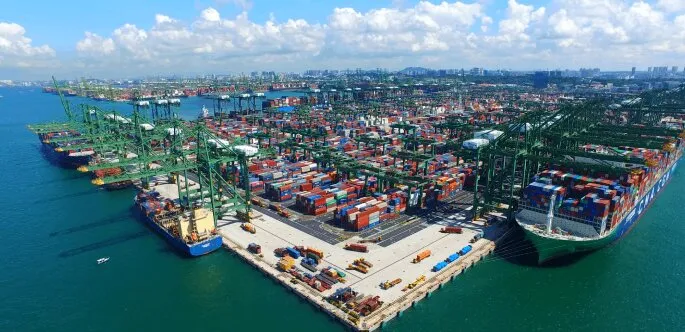
Singapore is strengthening its position as a leading alternative-fuel bunkering hub with eight new LNG supplier licenses set to begin in September. The move expands supplier choice while also raising the bar for safety, emissions control and crew competency.
Singapore broadens its LNG fuel supply base
The Maritime and Port Authority of Singapore (MPA) has awarded eight new five-year licenses for LNG bunkering, effective from 1 September 2026 through 31 August 2031.
The successful suppliers are Aramco Trading Singapore, Equatorial Marine Fuel Management Services, ExxonMobil Asia Pacific, PetroChina International Singapore, Shell Eastern Trading, Sinopec Fuel Oil Singapore, Vitol Bunkers, and a joint venture between Total Energies Gas & Power Asia and Sembcorp Fuels.
Existing LNG bunker licenses will remain in force until the end of 2026, allowing the transition to the expanded supplier framework to take place without disrupting current operations.
A key requirement for the new licensees is the ability to provide an end-to-end LNG bunkering service. This includes managing fuel supply and storage, cargo transfer and final delivery to vessels.
For ship operators, that integrated capability can make LNG bunkering more predictable and easier to coordinate, particularly as vessel calls and fuel requirements become increasingly complex.
Methane emissions become part of the equation
Singapore's latest licensing exercise also places greater emphasis on the environmental performance of LNG as a marine fuel.
Applicants were assessed on their ability to manage methane slip, an important consideration because methane has a much higher short-term warming impact than carbon dioxide. Suppliers were also evaluated on their capability to handle lower-emission methane-based fuels such as liquefied biomethane and e-methane.
This signals a broader shift in the LNG bunkering market. The focus is no longer simply on whether a port can supply LNG, but increasingly on how efficiently and cleanly that fuel can be produced, handled and used onboard.
New national LNG bunkering standard
The expansion also coincides with an important regulatory development in Singapore.
In August, the country is scheduled to replace its existing technical reference for LNG bunkering with a full national standard. The updated framework will address areas including bunkering safety, custody transfer, operating procedures and crew competency requirements.
For masters, deck officers, engineers and bunker personnel, these requirements are particularly relevant. LNG operations demand specialized procedures for fuel transfer, communication, emergency response and safe handling of cryogenic fuel. A clearer national framework should help standardize expectations across the growing supplier network.
More LNG bunker capacity is coming
Singapore's decision comes as the port continues to handle exceptionally large volumes of marine fuel. Total marine fuel sales reached a record 56.77 million tones in 2025, while alternative-fuel sales increased by 44% to 1.95 million tones.
The port is developing separate supply ecosystems for LNG, methanol and eventually ammonia, reflecting the industry's increasingly diversified fuel mix.
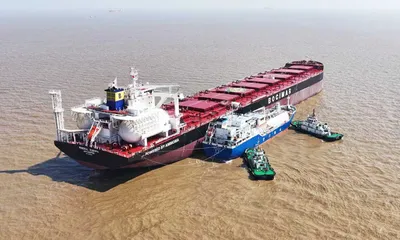
Several newly licensed suppliers are also preparing additional physical capacity. Equatorial has an LNG bunker vessel of around 20,000 cu m under construction at CIMC Sino-pacific Offshore & Engineering.
Shell has also chartered two 18,900 cu m LNG bunker vessels from Purus Marine, with delivery expected in 2028. These vessels are intended for operations across several bunkering hubs, including Singapore.
The investment suggests that LNG bunkering is moving beyond an early-adopter phase towards a more established global supply network.
Why this matters
- For shipowners: More licensed suppliers can improve fuel availability, competition and operational flexibility when planning LNG-fueled voyages.
- For seafarers: Updated national standards will increase the importance of consistent LNG bunkering procedures, safety practices and crew competency.
- For operators: Integrated supply, storage and delivery capabilities can simplify bunker planning and reduce operational friction during port calls.
- For the wider fuel transition: Singapore's approach shows how LNG infrastructure can increasingly accommodate biomethane and e-methane while the industry prepares for future fuels such as ammonia.
Conclusion
Singapore is building more than additional LNG supply capacity—it is developing a more structured and regulated alternative-fuel ecosystem.
For the maritime industry, the direction is clear: future bunkering will increasingly depend on fuel availability, safety, emissions performance and crew readiness working together.
Source: splash247
Related Articles