Greenland Moves to Ban Scrubber Discharges, Tightening Environmental Rules for Arctic Shipping
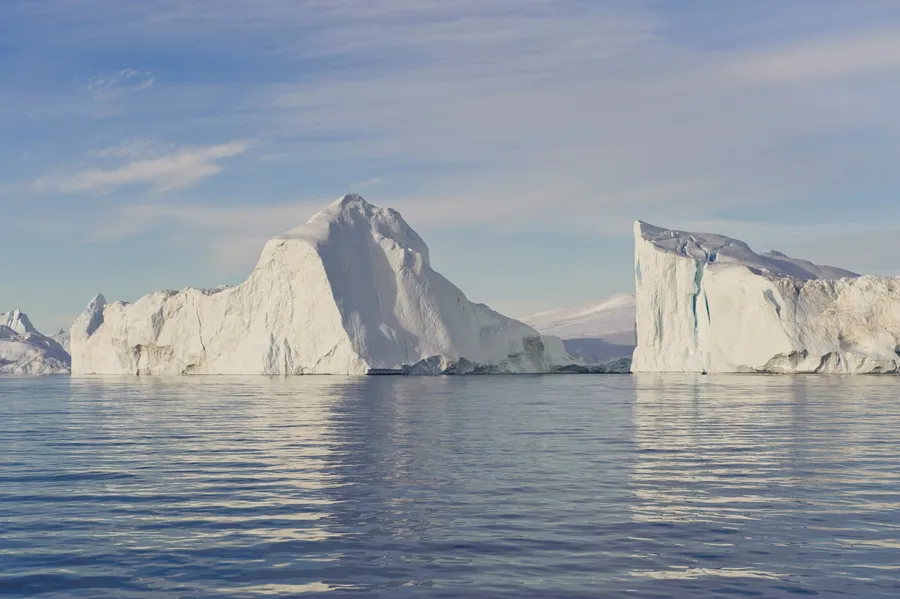
Greenland is moving to restrict pollution from ships’ exhaust gas cleaning systems, introducing a phased prohibition on scrubber wastewater discharges in its waters.
The decision adds to the growing environmental requirements facing Arctic operators, particularly cruise lines and shipowners that rely on scrubbers to continue using higher-sulfur marine fuels.
Greenland Sets Two-Stage Scrubber Discharge Ban
Greenland’s parliament, Inatsisartut, unanimously supported a proposal on November 4, 2026, directing the government to introduce restrictions on discharges from exhaust gas cleaning systems (EGCS).
The adopted timetable establishes two key compliance dates:
- July 1, 2027: Discharges from open-loop scrubbers will be prohibited in Greenland’s ports, internal waters and territorial sea.
- July 1, 2029: The prohibition will extend to all scrubber systems, including closed-loop installations.
The proposal was introduced by parliamentarian Justus Hansen of the Demokraatit party. The phased approach follows a proposed regional direction under the OSPAR Convention, which addresses marine environmental protection in the Northeast Atlantic.
For vessel operators, the change means that scrubber compliance will increasingly depend not only on meeting atmospheric emission limits, but also on where a vessel operates and whether its exhaust-cleaning system can be used without discharging wastewater.
Scrubbers Under Environmental Scrutiny
Exhaust gas cleaning systems allow ships to remove sulfur oxides from engine exhaust gases, enabling them to continue using fuels with higher sulfur content while meeting applicable sulfur-emission requirements.
However, the treatment process can create another environmental challenge.
Open-loop scrubbers use seawater to clean exhaust gases before discharging the resulting washwater overboard. This wastewater can contain sulfur compounds, heavy metals and other contaminants.
Closed-loop systems recirculate washwater, reducing the need for continuous overboard discharge. Nevertheless, they generate waste streams that must be collected, stored and disposed of appropriately.
The Clean Arctic Alliance welcomed Greenland’s decision, arguing that scrubbers allow ships to continue burning more polluting fuels while transferring part of the pollution burden from the atmosphere to the marine environment.
The alliance also highlights concerns about particulate matter and black carbon emissions associated with residual fuels, particularly in sensitive Arctic environments.
The decision therefore reflects a broader debate over whether exhaust-cleaning technology should be treated as a long-term environmental solution or a transitional compliance measure.
Arctic Shipping Faces a More Complex Regulatory Landscape
Greenland’s decision comes as environmental controls across Arctic and northern waters continue to expand. However, several regulatory measures address different types of pollution and should not be treated as interchangeable.
On March 1, 2026, the Canadian Arctic and Norwegian Sea became IMO-designated Emission Control Areas (ECAs). These designations introduce stricter requirements for sulfur oxides and nitrogen oxides, including a maximum sulfur content of 0.10% in marine fuel.
Svalbard has also maintained restrictions on petroleum-based fuels exceeding the properties permitted for marine gas oil in its territorial waters since January 2022.
Separately, the IMO’s Arctic heavy fuel oil (HFO) prohibition began taking effect in July 2024 for certain vessels under MARPOL Annex I. Some ships meeting specified fuel-tank protection standards have until July 1, 2029, to comply.
These measures address different risks:
- Emission Control Areas: Control atmospheric emissions, including sulfur oxides and nitrogen oxides.
- Arctic HFO prohibition: Addresses the environmental consequences of heavy fuel oil spills.
- Greenland’s scrubber restrictions: Target pollution associated with scrubber wastewater discharges.
Despite these developments, the Arctic does not yet have a single comprehensive ECA covering the entire region. Scrubber-equipped ships can generally continue using residual fuels to meet sulfur limits in areas where scrubber operation and discharge are permitted.
Greenland’s decision introduces an additional operational consideration for vessels trading in the region.
What It Means for Cruise Operators and Shipowners
Greenland received approximately 94,000 cruise passengers across 232 voyages in 2025, according to the Arctic Council.
The potential impact on cruise operators remains uncertain, as publicly available data does not provide a complete breakdown of scrubber-equipped vessels calling at Greenland.
Global fleet data compiled by S&P Global in 2025 identified 338 passenger and cruise ships equipped with scrubbers.
However, the new restrictions do not necessarily require affected vessels to abandon Greenlandic itineraries or remove their exhaust-cleaning equipment.
Operators could instead switch to compliant lower-sulfur fuels, such as marine gas oil (MGO), and avoid discharging scrubber wastewater.
For shipowners and technical managers, this creates several practical considerations:
- Fuel procurement and availability in remote Arctic ports.
- Fuel changeover procedures and machinery compatibility.
- Additional operating costs associated with compliant fuels.
- Voyage planning to ensure scrubber systems are operated in accordance with local restrictions.
For vessels with closed-loop systems, operators will also need to consider how retained wastewater and other residues are managed without prohibited discharges.
Why this matters
- For shipowners: The phased ban could increase fuel costs and influence the economics of scrubber-equipped vessels operating in Greenland.
- For chief engineers: Fuel changeover planning, scrubber operating procedures and waste management will become increasingly important for Arctic voyages.
- For cruise operators: Greenland itineraries may remain viable, but vessels could need revised fuel strategies and operational planning.
- For the maritime industry: The decision reinforces the growing importance of geographically specific environmental regulations, particularly in sensitive polar regions.
Conclusion
Greenland’s scrubber discharge ban highlights the increasing scrutiny of technologies that reduce atmospheric emissions while creating other environmental impacts.
For Arctic operators, maintaining compliance will require a closer alignment between fuel strategy, vessel equipment, voyage planning and local environmental regulations.
Source: gCaptain
Related Articles