Seaspan and Maersk Invest in Smarter Retrofits to Boost Fleet Efficiency and Cut Emissions
Improving existing ships is becoming just as important as building new, greener vessels. Seaspan and Maersk are taking that approach forward with a major retrofit program designed to enhance fuel efficiency, increase cargo capacity, and prepare vessels for future environmental regulations.
Major Upgrade Program Targets Long-Term Performance
Seaspan Corporation and Maersk have launched a comprehensive vessel efficiency program covering 18 Seaspan-owned container ships operating under long-term charter to Maersk. The initiative is focused on improving operational performance, lowering emissions, and delivering better commercial returns through targeted technical upgrades.
At the heart of the program is a retrofit package developed jointly for four 13,000 TEU container vessels. The upgrades combine propulsion improvements, energy-saving technologies, and cargo capacity enhancements to deliver measurable gains across multiple areas of vessel performance.
One of the key additions is the installation of shaft generators, which reduce reliance on auxiliary engines by generating electrical power directly from the main engine. The retrofit package also includes optimization of the main engine, the installation of high-efficiency propellers, and pre-swirl devices that improve water flow into the propeller, reducing energy losses and increasing propulsion efficiency.
Looking beyond today's regulatory requirements, the vessels will also be made carbon capture ready, enabling easier integration of onboard carbon capture systems as the technology becomes commercially viable and emissions regulations become more stringent.
The program extends beyond machinery upgrades. The lashing bridges on the vessels will be raised to accommodate more containers, while increased deadweight capacity will allow higher cargo loads. Collectively, these modifications are expected to improve slot costs by approximately 10–13%, while delivering lower fuel consumption, stronger operational performance, and greater regulatory preparedness.
Seaspan has already committed around US$75 million to completed and planned upgrades across the 18-vessel fleet, with additional efficiency projects currently under development as part of its broader decarbonization strategy.
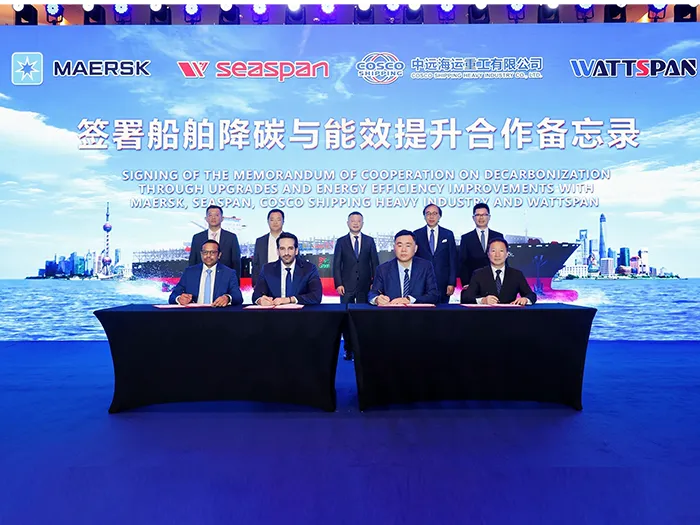
Alongside the retrofit program, WattSpan—a maritime technology and engineering joint venture between Seaspan and Watts Energy—has signed a non-binding Memorandum of Cooperation with Maersk and COSCO Shipyard. The one-year collaboration will focus on vessel modernization, energy efficiency technologies, and decarbonization initiatives, including joint research, technical knowledge sharing, and the development of future commercial projects.
Seaspan says the partnership demonstrates how close cooperation between shipowners, charterers, technology providers, and shipyards can accelerate practical decarbonization while maintaining fleet competitiveness. Maersk also highlighted that improving fuel efficiency, reducing greenhouse gas emissions, and increasing cargo capacity are key priorities for strengthening the long-term performance of its chartered fleet.
Why this matters
- Retrofits are becoming a key decarbonization strategy, allowing existing vessels to reduce emissions without waiting for newbuild deliveries.
- Lower fuel consumption and improved slot costs can significantly enhance profitability for both shipowners and charterers.
- Carbon capture readiness positions vessels to adapt more easily to future environmental regulations and emerging technologies.
- Industry collaboration between owners, charterers, technology firms, and shipyards is accelerating practical solutions for a more sustainable shipping sector.
Conclusion
The Seaspan–Maersk efficiency program highlights how targeted retrofits can extend vessel life while improving commercial performance and environmental compliance. As regulations tighten and fuel costs remain a challenge, modernizing existing fleets is becoming an essential part of shipping's decarbonization journey.
Source: Marine Log
Related Articles