MOL and Vale Plan Tri-Fuel Ore Carriers to Cut Emissions on Global Iron Ore Routes
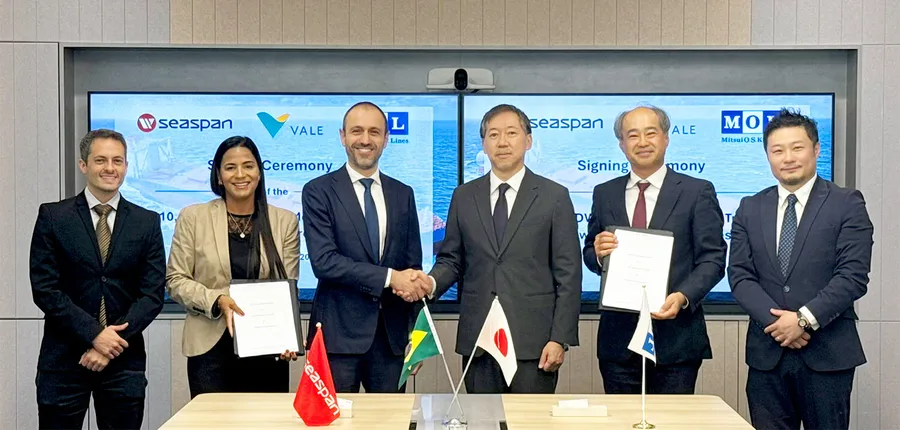
Mitsui O.S.K. Lines (MOL) and Brazilian mining giant Vale are advancing low-carbon bulk shipping with two 210,000-tonne ore carriers designed to operate on ethanol, methanol or conventional heavy fuel oil. Scheduled for delivery in 2030, the vessels will introduce greater fuel flexibility to long-haul iron ore transportation, particularly on routes from Brazil to China.
The project reflects a broader shift in maritime decarbonization: instead of relying on a single alternative fuel, shipowners are exploring vessels capable of adapting as fuel availability, infrastructure and costs evolve.
25-Year Contract Supports Long-Term Deployment
MOL Ocean Bulk, part of the MOL Group, has signed a 25-year transportation agreement with Vale International covering the operation of the two new buildings.
The vessels are described by the companies as the first ore carriers of their size to feature tri-fuel propulsion using ethanol, methanol and conventional heavy fuel oil.
Each ship will measure approximately 299.95 meters in length and 50 meters in breadth, with a carrying capacity of 210,000 tones. Their principal role will be transporting Vale's iron ore from Brazil to international markets, especially China.
The long-term contract provides a framework for deploying the vessels in Vale's shipping network while supporting its efforts to reduce emissions associated with transporting bulk commodities.
Three Fuel Options Offer Greater Flexibility
The defining feature is the ability to use three fuels, allowing operators to consider fuel availability, price and emissions performance when planning vessel operations.
Ethanol is a particularly important option. According to information provided by Vale, it could reduce lifecycle carbon emissions by up to approximately 90% compared with heavy fuel oil. The actual reduction will depend on how the ethanol is produced, its supply chain and the methodology used to calculate lifecycle emissions.
Methanol provides another alternative, although its environmental benefits also depend on whether it is produced from fossil or renewable sources.
Heavy fuel oil remains part of the design, giving operators a conventional option when alternative fuels are unavailable or commercially impractical.
The ships will also incorporate energy-saving technologies intended to improve efficiency and reduce fuel consumption.
LNG- and Ammonia-Ready for Future Conversion
Beyond their initial tri-fuel capability, the new buildings will feature an LNG- and ammonia-ready design. This is intended to provide a pathway for adapting the vessels to use either fuel in the future.
Such readiness can offer strategic flexibility as the availability of alternative marine fuels develops. However, future conversion would depend on the final design specifications, technical requirements, regulatory approvals and the economics of retrofitting.
For shipowners, the challenge is balancing investment in emerging technologies today against uncertainty over which fuels will become commercially viable across different trading routes.
MOL Extends Its Decarbonization Strategy
MOL has set a target of achieving net-zero greenhouse gas emissions by 2050 and plans to collaborate with customers and industry partners across the ethanol and methanol supply chains.
That work includes fuel procurement, supply arrangements and bunkering infrastructure — essential elements in turning alternative-fuel vessel designs into practical commercial operations.
The project also highlights the role of cargo owners in shipping's energy transition. Long-term freight agreements can give shipowners greater confidence to invest in new technology, while mining companies can use their transport contracts to support lower-emission logistics.
Why This Matters
- For shipowners: Tri-fuel capability offers operational choices as alternative-fuel prices and availability change, although it introduces additional technical and fuel-management considerations.
- For seafarers and engineers: Alternative-fuel vessels may require specialized training, new operating procedures and careful management of fuel-system safety.
- For charterers and cargo owners: Long-term contracts can help support investment in lower-emission shipping while reducing uncertainty around vessel deployment.
- For maritime decarbonization: The project shows how fuel flexibility, energy-saving technology and supply-chain partnerships can contribute to emissions reduction — provided suitable low-carbon fuels are available at scale.
Conclusion
MOL and Vale's planned ore carriers represent a long-term investment in more flexible, lower-emission bulk shipping, with delivery scheduled for 2030. Their ultimate environmental impact will depend not only on engine technology, but also on fuel sourcing, lifecycle emissions and the availability of reliable bunkering networks.
Source: Marine Link
Related Articles