Europe’s CO2 Shipping Network Takes Shape as Yara Opens Major Carbon Capture Facility

Europe has taken another step toward building a commercial carbon capture and storage network, with Yara opening a major carbon capture facility at its ammonia and fertilizer complex in Sluiskil, the Netherlands.
The project will connect industrial CO₂ capture with specialized shipping, a Norwegian receiving terminal and permanent storage beneath the North Sea—creating a cross-border logistics chain in which ships become a critical link between emitters and offshore storage sites.
The Sluiskil facility can capture and liquefy up to 800,000 tones of CO₂ per year from ammonia production. Once liquefied, the CO₂ will be stored temporarily at the site before being loaded onto purpose-built vessels operated by Northern Lights.
The ships will transport the liquefied CO₂ across the North Sea to Northern Lights’ receiving terminal at Øygarden on Norway’s west coast. From there, the CO₂ will travel approximately 100 kilometres through a pipeline before being injected into the Aurora storage reservoir, around 2,600 meters beneath the seabed.
Yara expects the project to capture and permanently store approximately 12 million tones of CO₂ over 15 years.
The development brings together several parts of a carbon-management chain that have traditionally operated separately. Instead of requiring every industrial emitter to be connected directly to an offshore storage site by pipeline, CO₂ can be captured, liquefied and transported by sea.
That creates a role for shipping similar to the one it already plays in global energy logistics—moving a commodity between locations that are not connected by fixed infrastructure.
Northern Lights is a joint venture between Equinor, Shell and TotalEnergies. The company began commercial operations after successfully storing its first CO₂ volumes beneath the North Sea. Its initial shipments originated from Heidelberg Materials’ cement facility in Brevik, Norway.
The first phase of the Northern Lights system can handle 1.5 million tonnes of CO₂ annually and is already fully allocated. An expansion approved in 2025 is expected to raise capacity to at least 5 million tones per year, supported by €131 million from the European Union’s Connecting Europe Facility for Energy programme.
Yara's Sluiskil volumes therefore represent another significant source feeding into an infrastructure network that is expected to serve multiple European industries.
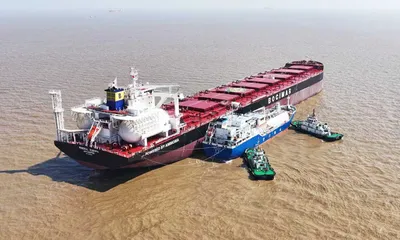
For shipping, perhaps the most important development is the growing requirement for dedicated liquefied CO₂ carriers. These vessels are designed to transport CO₂ under controlled pressure and temperature conditions, allowing industrial emissions to be moved economically to storage locations that may be hundreds of kilometers away.
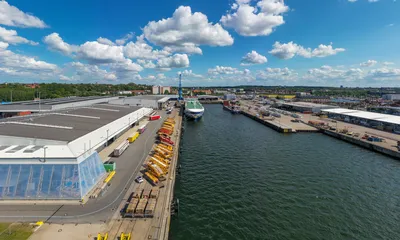
At Sluiskil, the captured CO₂ will be liquefied and held in storage tanks until a Northern Lights vessel arrives for collection.
The economics also extend beyond physical transport. By permanently storing captured emissions, Yara can avoid European carbon costs associated with the CO₂ volumes that are sent for permanent geological storage.
The project could also have implications beyond fertilizer production. Yara has indicated that lower-carbon ammonia could have applications in areas such as shipping fuel, linking carbon capture not only to industrial decarbonization but potentially to the future fuel supply chain of the maritime sector itself.
European policymakers increasingly view CCS as an important option for industries where eliminating emissions entirely through electrification or renewable energy remains difficult. Fertilizer, cement and waste processing are among the sectors where carbon capture can play a particularly relevant role.
For the maritime sector, this creates an emerging market worth watching. As more industrial facilities begin capturing CO₂, the demand for intermediate storage, specialized terminals, handling infrastructure and purpose-built vessels could grow alongside it.
Equinor has indicated ambitions to develop 30–50 million tones per year of CO₂ transport and storage capacity by 2035 across projects in Europe and the United States.
With the Sluiskil facility now connected to the Northern Lights network, CO₂ shipping is moving another step away from being a niche demonstration technology and toward becoming part of Europe's wider industrial logistics infrastructure.
Why this matters
- A new cargo market is developing: Large-scale CCS will require specialized ships capable of transporting liquefied CO₂ between industrial hubs and offshore storage facilities.
- Shipping can solve the infrastructure gap: CO₂ carriers can connect emitters that are too far from storage sites to justify dedicated pipelines.
- Ports will become part of the CCS chain: Terminals, storage tanks, loading systems and safety procedures will be needed alongside the vessels themselves.
- New opportunities for maritime technology: Ship design, cargo containment, monitoring, terminal operations and regulatory compliance could all become important areas as CO₂ transport scales up.
The Sluiskil project demonstrates that carbon capture is no longer only an onshore industrial challenge—it is also becoming a maritime logistics opportunity.
As Europe's CCS network expands, specialized CO₂ carriers could become an increasingly familiar part of the commercial fleet.
Source: gCaptain
Related Articles