India Targets Major Expansion of Ship Recycling Industry with Strong Government Support
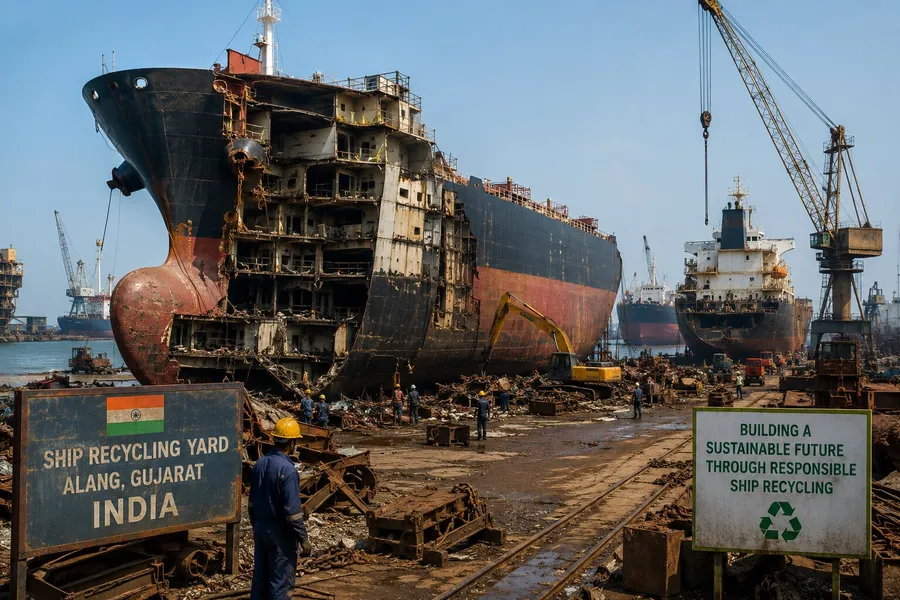
India is accelerating efforts to strengthen its position in the global ship recycling market, backed by significant government investment and ambitious capacity expansion plans. The move comes as the shipping industry prepares for a wave of vessel retirements driven by decarbonization, ageing fleets, and stricter environmental regulations.
Government Push Aims to Expand Recycling Capacity
According to the latest market outlook from Wirana Shipping, the Indian government has set an ambitious target of recycling 16,000 ships over the next decade. While the figure broadly aligns with BIMCO's projection for total global ship recycling during the same period, the target underscores India's determination to become a leading destination for responsible ship dismantling.
The report highlights that New Delhi has committed USD 8 billion to support the growth of both the shipbuilding and ship recycling industries. As part of the initiative, India also plans to double its ship recycling capacity, strengthening its ability to handle increasing numbers of vessels expected to reach the end of their operational lives.
Although achieving the 16,000-vessel target will depend on future market conditions and recycling demand, the investment signals a long-term strategy to build domestic capability and enhance India's role in the global maritime circular economy.
EU Approval Could Unlock New Business
A key part of India's strategy is securing approval for its recycling yards under the European Union's approved ship recycling list. If Indian facilities receive EU recognition, EU-flagged vessels would be permitted to undergo recycling in the country, opening access to an important segment of the global market.
According to the report, discussions on India's application are expected to take place among EU member states later this year before any final decision is made.
Industry experts believe the availability of compliant recycling capacity will become increasingly important as more vessels are retired over the coming years.
Recycled Steel Supports Decarbonization Goals
Wirana Shipping says ship recycling is becoming a strategic element of the maritime industry's sustainability transition.
Hitesh Vyas, Vice President for the Middle East and Green Recycling Coordinator at Wirana Shipping, noted that the expected rise in vessel recycling will require sufficient compliant facilities to safely process higher volumes.
Meanwhile, Chief Executive Officer Rakesh Khetan emphasized the environmental value of recycled steel. Since steel manufacturing remains a major source of global carbon emissions, recovering steel from retired ships can significantly reduce the need for energy-intensive primary production. As carbon intensity becomes an increasingly important factor in global trade, countries with efficient and environmentally responsible steel recycling industries could gain a competitive advantage.
Why this matters
- Growing recycling demand: An ageing global fleet and tighter environmental regulations are expected to increase demand for compliant ship recycling facilities.
- Opportunities for India: Expanding capacity and securing EU approval could position India as one of the world's leading destinations for responsible ship recycling.
- Supports maritime decarbonization: Recycling steel from end-of-life vessels helps lower emissions associated with new steel production.
- Benefits the shipping industry: Greater compliant recycling capacity gives shipowners more options for meeting environmental and regulatory obligations when retiring vessels.
Conclusion
India's latest investment plans demonstrate that ship recycling is becoming a strategic pillar of its maritime industry. If capacity expansion and international approvals progress as planned, the country could play an increasingly important role in supporting the global shipping sector's transition towards a more sustainable and circular future.
Source: All About Shipping
Related Articles