Evergreen Returns to the Red Sea as Major Container Lines Reassess Suez Canal Routes
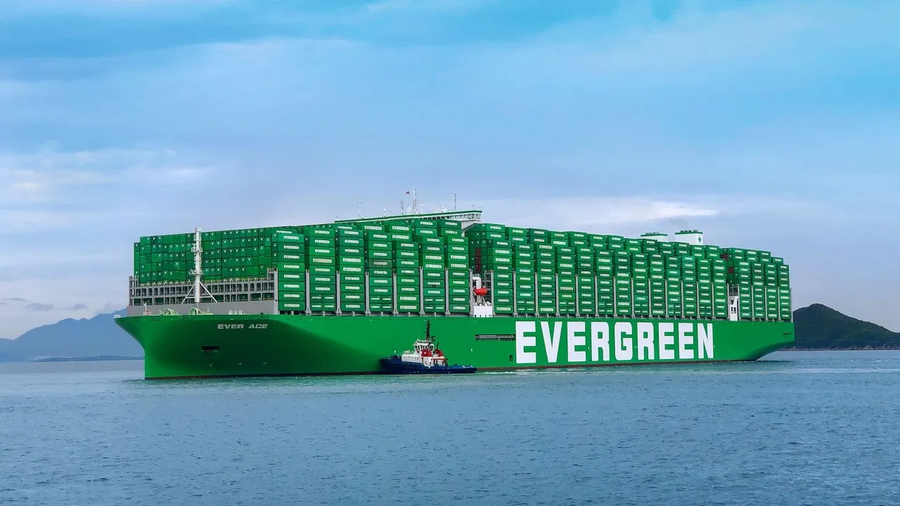
The return of Taiwanese carrier Evergreen to the Red Sea marks another important development in the gradual recovery of commercial shipping through the Suez Canal. After nearly three years away, the company's latest transit suggests that confidence in the Asia–Europe shipping corridor is improving.
However, the resumption of services does not mean the security threat has disappeared. Shipping companies continue to balance shorter transit times and lower operating costs against regional geopolitical risks.
Main Article
Taiwanese container shipping giant Evergreen Marine has resumed Red Sea operations, becoming the latest major liner operator to reconsider its routing strategy following years of disruption around Yemen.
The milestone came on Saturday when the company's 16,500 TEU containership Ever Eon completed an eastbound transit through the Suez Canal while travelling from the Netherlands to Singapore.
The Suez Canal Authority confirmed the vessel's passage. Its chairman, Ossama Rabiee, welcomed the ship and arranged for senior canal pilots to present the master with a commemorative gift.
Built in 2025, Ever Eon operates on the Ocean Alliance NEU 7 service, connecting major ports along the Asia–Northern Europe trade route.
The transit represents Evergreen's first return to the corridor in several years. According to the Suez Canal Authority, the carrier is also planning additional voyages through the canal.
Major container operators gradually return
Evergreen's decision adds to a growing list of international container shipping companies that have resumed or maintained operations through the Red Sea and Suez Canal.
CMA CGM continued using the corridor for much of the disruption period, while Maersk, MSC, Hapag-Lloyd and COSCO have also returned to Red Sea operations.
The shift is commercially significant.
During the height of the security crisis, many shipping companies diverted vessels around the Cape of Good Hope at the southern tip of Africa. Although this alternative reduced exposure to attacks in the Red Sea, it substantially increased voyage distances.
Returning to the Suez route offers several operational advantages:
- Shorter sailing distances between Asia and Europe.
- Reduced fuel consumption and vessel operating costs.
- Lower voyage duration and improved schedule efficiency.
- Reduced tonne-mile demand across global container shipping.
For large container vessels operating on fixed weekly services, recovering even several days of sailing time can improve fleet utilisation and schedule reliability.
Security risks remain despite improving confidence
Despite the growing number of returning operators, the Red Sea cannot yet be considered a completely secure trading corridor.
The Houthi movement in Yemen continues to represent a security concern, particularly for vessels associated with countries and commercial interests it considers hostile.
Saudi-linked shipping has faced attacks in the southern Red Sea in recent months, while vessels connected to Israel remain exposed to potential targeting.
These risks mean that the decision to resume Suez Canal transits cannot be based solely on commercial considerations.
Shipowners and operators must continue evaluating vessel ownership, cargo interests, commercial relationships, flag, destination and the latest regional security advisories before approving a voyage.
Israeli-linked shipping remains particularly affected
One notable exception to the wider return is Israeli-linked container shipping company ZIM.
The company has continued avoiding the Red Sea corridor amid security concerns.
Disruption has also severely affected operations at Port of Eilat on Israel's Red Sea coastline.
Much of the traffic previously handled by Eilat has been redirected towards Israel's Mediterranean ports.
The impact has been substantial. Eilat received just 16 ships during 2024, representing barely more than one vessel per month.
After several years of reduced activity, the port's operators have indicated that the facility is no longer commercially profitable. Its long-term future therefore remains uncertain.
Why this matters
- For shipowners and operators: The return of major carriers could accelerate the recovery of Suez-based trading patterns, but voyage decisions must still account for regional security exposure and insurance requirements.
- For seafarers: More Red Sea transits mean renewed operational exposure to a high-risk maritime region. Bridge teams must remain alert to navigational warnings, security instructions and emergency response procedures.
- For container shipping: Shorter Asia–Europe routes can reduce fuel consumption, improve vessel utilisation and help shipping lines restore more predictable schedules.
- For global supply chains: A sustained recovery of Suez Canal traffic could reduce transportation costs, improve cargo delivery times and ease pressure on vessel availability across major trade routes.
Conclusion
Evergreen's return is another indication that international container shipping is gradually rebuilding confidence in the Red Sea–Suez corridor.
However, the commercial advantages of the shorter route will only translate into a lasting recovery if regional security conditions remain sufficiently stable to protect vessels, cargo and seafarers.
Source: The Maritime Executive
Related Articles