ClassNK Launches First Shipbuilding Carbon Footprint Notation to Strengthen Emissions Transparency
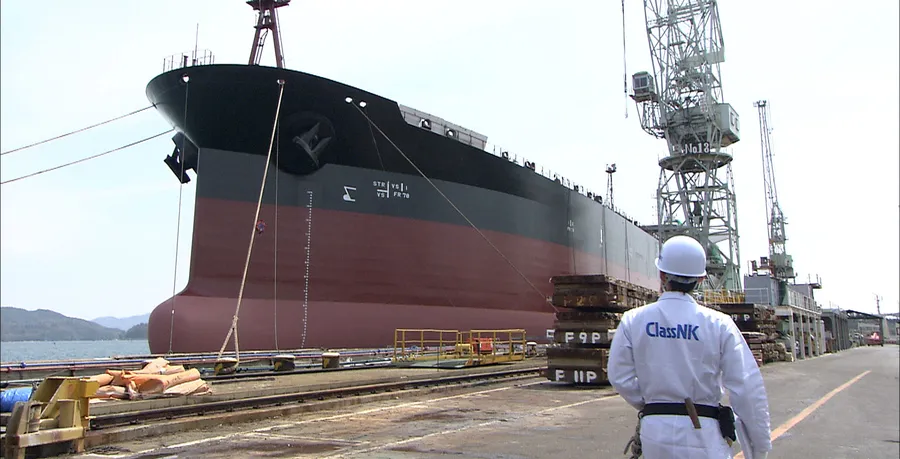
As the maritime industry expands its focus beyond operational emissions, ship construction is coming under greater scrutiny. ClassNK has responded by introducing a new notation designed to verify the carbon footprint generated during the shipbuilding process, helping the industry improve emissions reporting and supply chain transparency.
Classification society ClassNK has unveiled what it describes as the world's first notation dedicated to verifying greenhouse gas emissions produced during vessel construction.
Known as 'a-EA (CFP)', the notation has been incorporated into ClassNK's Environmental Guidelines and provides independent verification that a ship's construction-related carbon footprint has been calculated in accordance with ISO 14067, the international standard for carbon footprint assessment and reporting.
The initiative addresses growing demand from shipowners, shipyards, financiers, and regulators for greater visibility into emissions generated throughout a vessel's lifecycle—not just during its operation.
Construction-related emissions fall under Scope 3 Category 2 (Capital Goods), making them an increasingly important component of corporate sustainability reporting. Until now, many shipbuilding emissions have been estimated using generic emission factors or industry averages, which may not accurately capture the benefits of low-carbon materials, cleaner manufacturing methods, or emissions reduction measures implemented during construction.
With the new notation, shipyards can independently validate the environmental performance of their construction processes, providing evidence of efforts to reduce emissions through improved materials, production techniques, and energy use.
For shipowners and shipping companies, access to verified construction emissions data offers a more reliable basis for Scope 3 reporting, improving the accuracy of sustainability disclosures and supporting compliance with evolving environmental reporting expectations.
The move reflects the industry's broader shift toward measuring carbon emissions across the entire lifecycle of a vessel, from construction and operation to eventual recycling.
Why this matters
- For shipowners: Verified shipbuilding emissions improve the accuracy of Scope 3 carbon reporting and strengthen ESG disclosures.
- For shipyards: Independent certification provides a way to demonstrate investments in low-carbon construction practices and sustainable manufacturing.
- For maritime financiers and charterers: Verified lifecycle emissions data supports more informed investment and procurement decisions.
- For the shipping industry: Measuring emissions from vessel construction marks another step toward full lifecycle decarbonization rather than focusing solely on operational performance.
As environmental reporting standards continue to evolve, transparency throughout a vessel's entire lifecycle is becoming increasingly valuable. ClassNK's new notation provides the industry with a practical framework to recognize and verify lower-carbon shipbuilding practices
Source: Marilink
Related Articles