Bureau Veritas and Shenzhen Port Group Join Forces to Advance Green Shipping Corridors
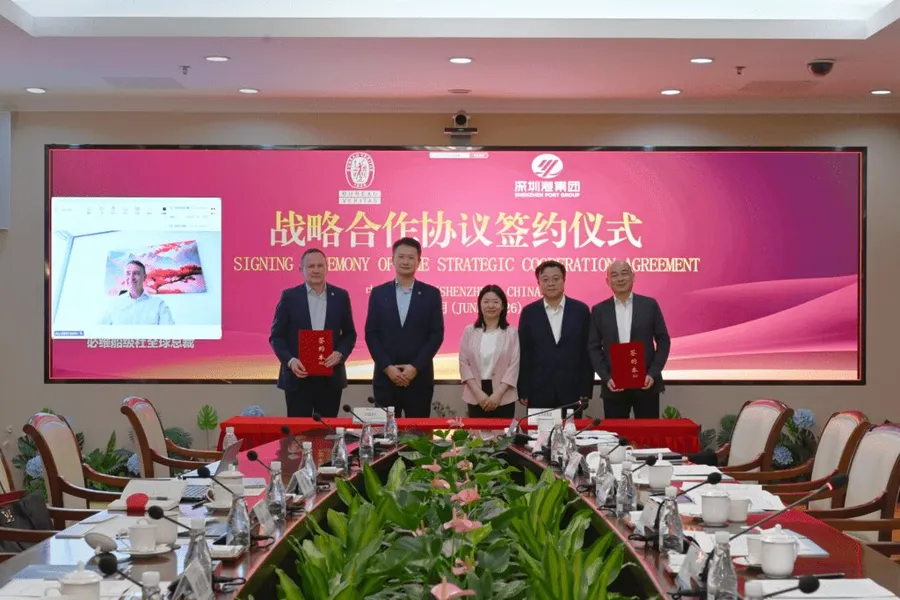
China’s push toward low-carbon shipping gained fresh momentum as Bureau Veritas (BV) and Shenzhen Port Group formalized a strategic partnership aimed at accelerating the development of green shipping corridors. The collaboration brings together technical expertise and port infrastructure to support the maritime industry's decarbonization goals.
Bureau Veritas Marine & Offshore and Shenzhen Port Group have signed a strategic cooperation agreement in Shenzhen, China, marking a new phase of collaboration focused on sustainable maritime transport and cleaner shipping operations.
The agreement, signed on 29 June 2026, outlines plans for the two organizations to combine their technical capabilities and operational resources to develop green shipping corridor projects. The partnership is intended to create solutions that can be replicated and expanded across other ports and trade routes.
As part of the collaboration, Bureau Veritas will provide technical guidance on evolving international maritime regulations and help translate new environmental requirements into practical measures that can be implemented by ports, shipowners, and other industry stakeholders. The classification society will also support efforts to align domestic practices with global standards.
Drawing on its international network, BV will contribute expertise across the entire green fuel value chain—from renewable energy production and fuel testing to bunkering infrastructure, inspection, certification, and compliance services. The company also brings experience from multiple green fuel projects already underway in China.
Speaking on the partnership, Alex Gregg-Smith, President of Bureau Veritas Marine & Offshore, emphasized that shipping's decarbonization cannot be achieved by individual organizations alone. He noted that closer cooperation between technical service providers and major ports is essential for developing practical, internationally aligned pathways toward lower-carbon maritime trade.
Hu Zhaoyang, Chairman of Shenzhen Port Group, described Bureau Veritas as a trusted global authority with extensive expertise in maritime decarbonization. He said the agreement will allow both organizations to combine Shenzhen Port Group's operational capabilities with BV's certification and technical knowledge to accelerate green shipping initiatives and deliver long-term value for the industry.
The partnership reflects the growing importance of collaboration between ports, classification societies, regulators, and fuel suppliers as the shipping sector prepares for stricter emissions regulations and wider adoption of alternative marine fuels.
Why this matters
- For shipowners and operators: Green shipping corridors will make it easier to access low-carbon fuels and comply with future emissions regulations.
- For ports: Strategic partnerships help develop the infrastructure and operational standards needed to support next-generation marine fuels.
- For maritime professionals: Harmonizing international and domestic regulations simplifies compliance and improves confidence in adopting new technologies.
- For the industry: Collaboration between ports and classification societies is becoming a key driver in turning decarbonization goals into commercially viable projects.
As shipping moves toward a lower-carbon future, partnerships like this will play an increasingly important role in connecting regulation, infrastructure, and technology. The Bureau Veritas–Shenzhen Port Group alliance is another step toward building practical and scalable green maritime trade routes.
Source: All About Shipping
Related Articles