Ammonia-Powered Shipping Reaches a Milestone as Mineral Europa Begins Operations
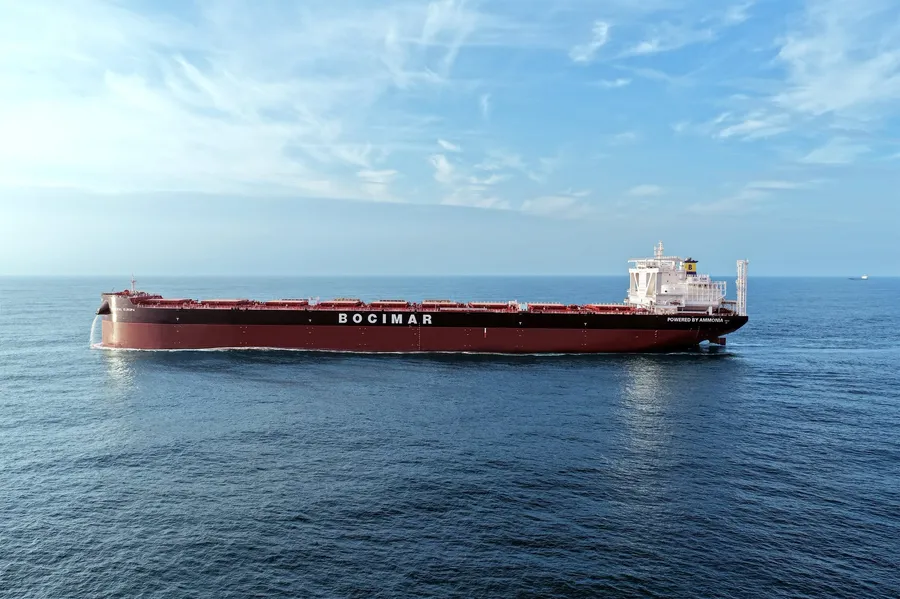
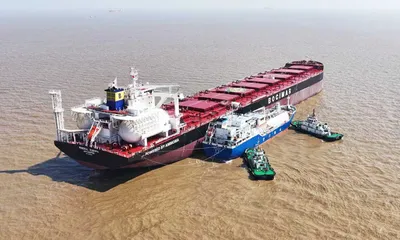
CMB.TECH’s Mineral Europa, the world’s first ammonia-powered dry bulk carrier, has embarked on its maiden voyage, marking a significant step towards alternative-fuel shipping.
Behind the vessel’s entry into service is years of engineering, safety development and crew preparation led in part by Anglo-Eastern. The project demonstrates how the maritime industry is moving beyond alternative-fuel concepts towards vessels capable of operating commercially.
A 210,000-DWT Bulk Carrier Built for Fuel Flexibility
Built by CSSC Qingdao Beihai Shipbuilding, Mineral Europa is a 210,000-dwt Newcastlemax bulk carrier equipped with a WinGD dual-fuel ammonia engine and a Sun Rui Ammonia Fuel Supply System.
The vessel can operate on ammonia or conventional marine fuel, allowing it to use alternative fuel while retaining operational flexibility as ammonia bunkering infrastructure develops.
For the shipping industry, this flexibility is important. Alternative fuels must be supported by reliable supply chains, suitable port infrastructure, effective safety procedures and commercially viable operating arrangements before widespread adoption becomes practical.
The vessel's entry into service represents a move from ammonia propulsion development towards real-world operational experience.
Eight Years of Engineering and Development
Anglo-Eastern's involvement began in 2018, when its technical services division started working with CMB.TECH to evaluate alternative marine fuels. The early assessments included hydrogen before the project moved towards ammonia.
By 2020, Anglo-Eastern Technical Services (AETS) was developing the vessel's safety philosophy, fuel-system arrangements and preliminary engineering. The design subsequently received Approvals in Principle from Lloyd's Register and ABS in 2021.
One of the project's main challenges was integrating the ammonia fuel system without compromising the ship's primary function as a bulk carrier.
Ammonia requires careful management because its toxicity creates significant risks if released. The engineering solution incorporated measures including ammonia storage arrangements, double-wall piping, ventilation, leak detection, containment and emergency shutdown systems.
These systems must operate together to protect crew members, safeguard the vessel and support safe cargo operations.
According to Arunava Sengupta, Managing Director of AETS, the challenge was to integrate the fuel technology, containment requirements and operational safety measures into a commercially functional ship.
Crew Training Takes Centre Stage
Developing the vessel's engineering systems was only part of the task. The ship also required crews prepared to handle ammonia fuel during normal operations, bunkering, maintenance and emergencies.
Anglo-Eastern supported newbuilding supervision and technical management while helping develop vessel-specific operating procedures.
Crew preparation included training using a three-dimensional digital twin, a fuel supply simulator and emergency scenarios. Senior officers also participated in shipyard activities and sea trials, giving them practical exposure to the vessel's systems before entering service.
This approach highlights an important consideration for future alternative-fuel vessels: new propulsion technology requires new operational competencies, not simply modified engine-room equipment.
Deck and engine personnel must understand fuel-system hazards, emergency isolation procedures, leak response and the specific precautions associated with ammonia handling.
A Potential Pathway for Future Fleet Development
Anglo-Eastern CEO Bjorn Hojgaard described Mineral Europa as an example of what can be achieved when a shipowner's commitment is supported by engineering expertise and operational preparation.
CMB.TECH CEO Alexander Saverys also identified the vessel's entry into service as an important milestone in the company's decarbonisation strategy, with further ammonia-powered vessels expected to follow.
Anglo-Eastern says it remains fuel-agnostic, helping shipowners assess different propulsion technologies according to their operational requirements rather than committing exclusively to a single fuel.
Ammonia's longer-term role in shipping will depend on several factors, including its lifecycle greenhouse-gas emissions, availability, production costs, bunkering infrastructure and the ability to manage its safety risks.
Why This Matters
- For shipowners and operators: Mineral Europa provides an opportunity to gain operational experience with ammonia propulsion while retaining the ability to use conventional marine fuel.
- For seafarers: Ammonia-powered vessels will require specialised training in fuel handling, toxic-release prevention, emergency response and maintenance. These competencies could become increasingly valuable as alternative-fuel fleets expand.
- For shipbuilders and marine engineers: The project demonstrates the complexity of integrating alternative-fuel systems into large commercial vessels while protecting cargo capacity and maintaining operational functionality.
- For maritime decarbonisation: Ammonia offers a potential pathway towards lower-emission shipping, but its environmental benefits depend on how it is produced and used. Safe infrastructure and commercially viable fuel supplies will be essential for wider adoption.
Conclusion
Mineral Europa marks an important transition from ammonia-fuel development to commercial vessel operations, combining dual-fuel propulsion with extensive safety engineering and crew preparation.
Its experience could help shape future ammonia-powered fleets, although scaling up the technology will depend on fuel availability, infrastructure investment, operational safety and demonstrable emissions reductions.
Source: Marine Link
Related Articles