Aegis Logistics Moves into Global Shipping with $809 Million Tristar Acquisition
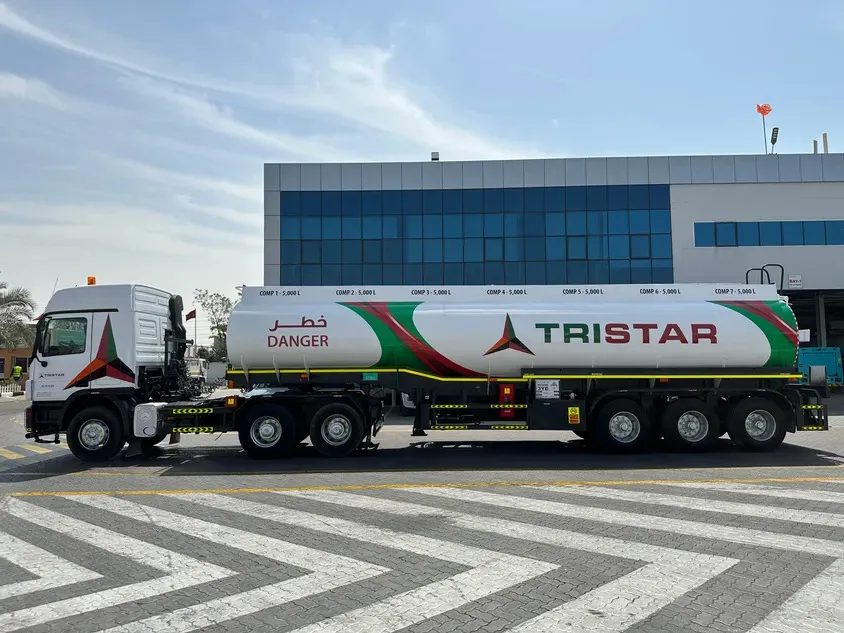
India’s Aegis Logistics is set to make a major entry into international energy shipping through an $809 million agreement to acquire a controlling stake in Dubai-based Tristar. The deal would expand Aegis beyond its established Indian storage and distribution operations into a global network spanning maritime transport, fuel logistics and energy supply.
For the shipping industry, the transaction highlights the growing strategic value of integrated energy logistics businesses that combine vessel operations with shore-based infrastructure and long-term customer contracts.
Aegis Targets 89.8% Stake in Tristar
The Mumbai-listed logistics group has agreed to acquire an 89.8% stake in Tristar through its Singapore-based subsidiary, Aegis Logistics International. The sellers include Agility, Gulf Investment Corporation and Diamond Holdings.
Tristar has been valued at approximately $1.5 billion on an enterprise-value basis and $882 million on an equity-value basis. The company generated around $1.4 billion in revenue and $257 million in EBITDA in 2025, operating across more than 30 countries.
The transaction remains subject to competition and other regulatory approvals, with completion targeted by the end of March 2027.
For Aegis, the acquisition represents a substantial international expansion from its existing focus on LPG and bulk-liquid storage, distribution and terminal infrastructure in India.
From Road Transport to International Ship-owning
Tristar was established in the United Arab Emirates in 1998 by Eugene Mayne, initially operating a small road transport business. Agility invested in the company in 2003, when the business was still relatively modest in scale.
Maritime logistics became part of Tristar's operations in 2004, but a significant expansion into ship-owning came later.
In 2016, Tristar acquired Emirates Ship Investment Company (Eships) from Germany's Oldendorff Group for $90 million. The deal brought seven ocean-going chemical tankers, including two LPG carriers, into the business, alongside an established maritime management operation.
Around the same period, Tristar took delivery of six new 50,000 dwt medium-range (MR) product tankers built by Hyundai Mipo Dockyard in South Korea under a programme valued at approximately $200 million.
Together, these investments expanded the group's owned shipping fleet beyond 20 vessels. By early 2017, following the consolidation of Tristar and Eships' shipping teams in Dubai, the company was treating ship-owning as a core business activity.
A Diversified Fleet with Further Growth Planned
At the end of 2025, Tristar had 26 ocean-going and coastal vessels, alongside more than 1,000 trucks, 14 fuel farms and over 60 remote fuel sites.
Through Eships, the group owns and operates chemical, oil and gas tankers as well as bulk carriers trading internationally. Much of its maritime capacity is employed under long-term contracts with major energy companies, providing a degree of revenue visibility.
Fleet expansion is also planned. Under Project Griffin, Tristar has agreed to build and operate four additional MR product tankers, with the first vessel scheduled to enter service in 2028. The ships are expected to provide between 32 and 52 years of combined contract coverage.
Shell Tankers remains Tristar's largest maritime customer, underlining the importance of established relationships with major energy companies to the group's shipping business.
What the Deal Means for Agility
Agility, Tristar's largest shareholder with a 65.12% stake, expects to receive up to $581 million from the sale. The payment structure includes $425 million at closing, a further $110 million one year later and a potential earn-out of up to $46 million.
For Aegis, the acquisition offers an established international platform rather than requiring it to build a global shipping operation vessel by vessel. The challenge will be integrating Tristar's maritime, transport and fuel infrastructure businesses while maintaining operational performance and customer relationships.
Why This Matters
- For shipowners and investors: The deal demonstrates continued interest in energy logistics businesses that combine owned vessels, transport infrastructure and long-term commercial contracts.
- For tanker operators: Tristar's product tanker and chemical tanker activities reinforce the role of specialized vessels in supplying global energy markets.
- For India's maritime sector: Aegis gains an established international shipping platform, potentially strengthening Indian corporate participation in global maritime logistics.
- For energy customers: An integrated network of ships, trucks, fuel storage and remote supply facilities can support more coordinated delivery operations across multiple markets.
The Bottom Line
Aegis Logistics' proposed acquisition of Tristar would transform the Indian group into a significantly more international energy logistics player, with direct exposure to tanker and dry bulk shipping. The longer-term test will be whether it can integrate the business effectively while sustaining fleet growth, reliable operations and strong customer contracts.
Source: splash247
Related Articles