India has initiated a discreet maritime security effort—internally referred to as Operation Urja Suraksha—to guide its merchant fleet through the increasingly sensitive waters of the Persian Gulf and Strait of Hormuz.
According to government-linked reports, the operation is being executed with minimal visibility but maximum caution. The objective is clear: safely steer Indian-flagged vessels carrying critical energy supplies out of high-risk zones without escalating tensions or drawing unnecessary attention.
At the time of the operation’s launch, Indian authorities had identified 22 vessels with over 600 seafarers in the western Persian Gulf, alongside three additional ships east of the Strait of Hormuz carrying 76 Indian crew members. Of these, around 20 ships were categorized as high priority, primarily due to their cargo—liquefied natural gas (LNG), liquefied petroleum gas (LPG), and crude oil.
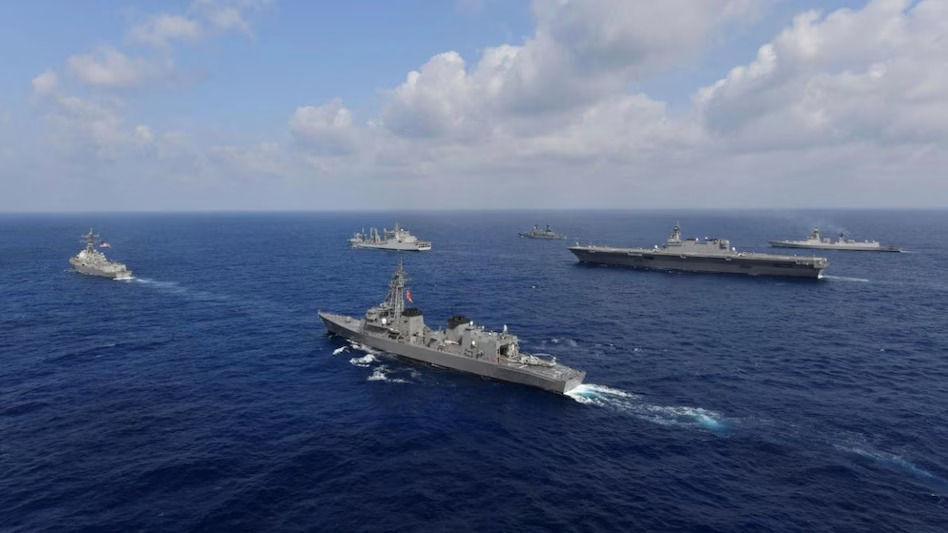
To support the effort, more than five Indian naval warships have been deployed. However, rather than entering the Strait directly, these vessels are strategically positioned in the Gulf of Oman. From there, they maintain continuous communication with merchant ships, offering navigational guidance and operational instructions.
A critical component of the operation involves diplomatic coordination. Indian authorities have reportedly engaged with Iran to secure transit permissions for their vessels. This is particularly important given that ships are being directed away from standard Traffic Separation Schemes and instead routed closer to Iranian coastal waters—an adjustment that demands precise navigation and strict compliance.
Each vessel is being guided individually, receiving tailored instructions on routing and transit procedures. This hands-on approach reduces the risk of miscommunication or deviation in a highly controlled maritime environment.
Once vessels successfully transit the Strait of Hormuz, they are met by additional Indian naval assets, including destroyers and frigates, which extend support across the Gulf of Oman. This layered escort system ensures continuity of protection until ships reach safer waters.
The operation is already delivering results. Several vessels, including LPG carriers and a crude oil tanker, have completed their transit and discharged cargo at Indian ports. Additional LPG shipments—totalling roughly 92,000 tonnes—were scheduled to arrive shortly thereafter, reinforcing domestic energy supply chains.
Coordination between India’s Ministry of Ports, Shipping and Waterways and its naval command structure has been central to the mission, reflecting a whole-of-government approach to maritime risk management.