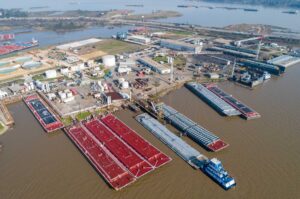
The US Department of Transportation, through the Maritime Administration (MARAD), has announced a major funding round of nearly $800 million targeting port infrastructure upgrades across the country.
A total of $774 million will be distributed among 37 projects spanning coastal ports, inland waterways, and Great Lakes facilities. The funding is part of the Port Infrastructure Development Program (PIDP), a federal initiative designed to strengthen freight mobility and modernize aging port systems.
This latest round stands out not just for its size, but for its scope. Projects include expanded rail connectivity to improve intermodal transfers, upgraded cargo inspection systems, new terminal construction, and dock enhancements designed to maintain operations in challenging weather conditions. The goal is straightforward: move cargo faster, safer, and with fewer bottlenecks.
The program itself is backed by long-term federal funding under the Bipartisan Infrastructure Law, which allocated $2.25 billion to port development between 2022 and 2026. This year’s allocation represents one of the largest single disbursements under that framework.
Notably, the funding model also prioritizes inclusivity within the port network. Around $122 million—roughly a quarter of the total—is earmarked for smaller ports handling lower cargo volumes. These facilities often play critical regional roles but lack the capital to modernize at the pace of major gateways.
The initiative aligns with the administration’s broader maritime strategy outlined in the 2026 Maritime Action Plan. That roadmap focuses on rebuilding US maritime capacity, strengthening domestic shipping capabilities, and reducing reliance on foreign-built and operated tonnage.
Officials have also introduced updated criteria for project selection. Greater emphasis is now placed on innovation, multimodal integration, and investments in economically underserved areas, including designated opportunity zones.
Beyond infrastructure, the underlying objective is strategic. By improving port efficiency and connectivity, the US aims to reduce logistics costs, support domestic energy flows, and create a more resilient supply chain amid ongoing global disruptions.