Valenciaport and Shanghai Strengthen Strategic Partnership as China–Spain Trade Grows
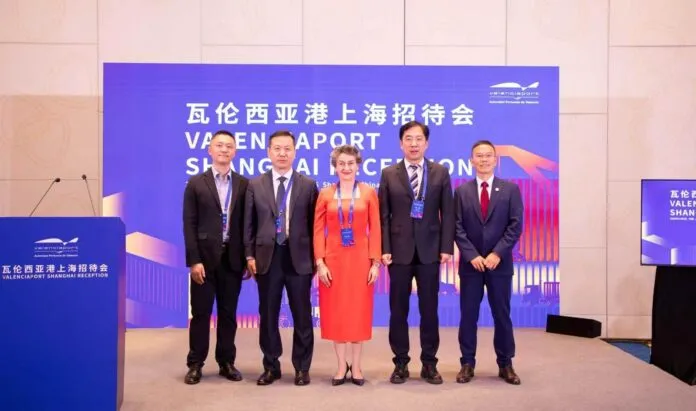
The growing trade relationship between China and Spain is creating new opportunities for port cooperation, container shipping and sustainable logistics. Valenciaport and Shanghai International Port Group (SIPG) are looking to strengthen their commercial relationship, with particular attention to digitalisation, green shipping corridors and port connectivity.
The latest engagement highlights the increasing importance of Mediterranean ports as gateways connecting Asian manufacturing centres with European consumer and industrial markets.
Main Article
The Spanish Port Authority of Valenciaport, and Shanghai International Port Group (SIPG) have stepped up efforts to strengthen commercial and operational cooperation between their respective port networks.
The two organisations hosted a joint business presentation at Shanghai Tower in China, bringing together representatives from shipping, logistics and international trade.
The event was led by Mar Chao, President of Valenciaport, and Sam Liu, Vice President of SIPG. Guoqiang Shi, CEO of CSP Spain, also participated.
The discussions focused on expanding business opportunities between the ports and developing cooperation in areas such as green shipping corridors, digital technologies and sustainable port operations.
China emerges as a major trading partner for Valencia
China remains Valenciaport's largest international market for container trade, with cargo volumes continuing to increase.
Between January and September 2026, trade between China and Valenciaport recorded:
Trade indicator - Performance
Container traffic - 714,691 TEU
Year-on-year TEU growth - 15.07%
Cargo volume - 7.66 million tonnes
Year-on-year tonnage growth - 15.75%
Shanghai itself represents approximately 36% of Valenciaport's trade with China, equivalent to around 2.3 million tonnes annually.
These figures demonstrate the importance of the China–Spain maritime connection and the role of container shipping in supporting bilateral trade.
For shipping lines, stronger cargo volumes along this route could create opportunities to expand services, improve vessel utilisation and strengthen connections between Asian export centres and European distribution networks.
Valencia positions itself as a European gateway
Valenciaport's geographical position in the Western Mediterranean gives it an important role in connecting Asian trade with Spain and the wider European market.
The port offers more than 100 regular shipping services connecting it with all five continents.
Its logistics advantages extend beyond maritime connectivity. Rail connections provide access to major Spanish industrial and logistics centres, while its extensive hinterland covers a significant portion of the country's economic activity.
Valenciaport also handles more than 40% of Spain's total import and export traffic, reinforcing its position as one of the country's most important international trade gateways.
During the Shanghai engagement, Valenciaport representatives highlighted these advantages to Chinese businesses seeking reliable access to Spanish and European markets.
Green corridors and digitalisation become cooperation priorities
Beyond increasing cargo volumes, both port organisations are looking towards the future of maritime logistics.
Three areas have been identified as important priorities:
- Digitalisation: Improving port efficiency through digital systems, smarter cargo management and better operational coordination.
- Innovation: Developing technologies that improve terminal productivity, logistics connectivity and maritime operations.
- Sustainability: Supporting cleaner shipping operations and cooperation on green maritime corridors.
Valenciaport has already been advancing its energy transition through its Net Zero Emissions Plan, which targets net-zero emissions by the middle of the next decade.
Its ongoing initiatives include port electrification, renewable energy deployment and shore-side electricity infrastructure for vessels.
Shore power is particularly important because it allows compatible ships to connect to electricity supplied from land while alongside, reducing the need to operate auxiliary engines during port stays.
For shipping companies, these developments could influence future vessel investment decisions, port selection and environmental compliance strategies.
Valenciaport strengthens its presence in China
The Shanghai visit also included participation by Mar Chao in the China International Import Expo.
Meetings with representatives from China's logistics, port and business communities were intended to increase Valenciaport's visibility and strengthen commercial relationships.
The broader objective is to position Valencia as a competitive European logistics partner for Chinese companies expanding their international operations.
Why this matters
- For shipping lines: Growing China–Spain cargo volumes could strengthen demand for regular container services and improve commercial opportunities along Asia–Mediterranean trade routes.
- For port operators: Cooperation between Shanghai and Valencia could encourage improvements in terminal efficiency, digital integration and international logistics connectivity.
- For seafarers: Greater shipping activity between Asia and Europe may support demand for container vessel operations, port calls and associated maritime services.
- For maritime decarbonisation: Green corridor cooperation, renewable energy and shore power infrastructure could accelerate the transition towards lower-emission port and shipping operations.
Conclusion
The strengthening relationship between Valenciaport and Shanghai reflects how international ports are increasingly competing through connectivity, technology and environmental performance rather than cargo-handling capacity alone.
As China–Europe trade continues to develop, cooperation between these two major maritime gateways could become increasingly important for global container logistics and sustainable shipping.
Source: Container News
Related Articles