Global Containership Orderbook Surges Past 15 Million TEU as Megamax Orders Approach
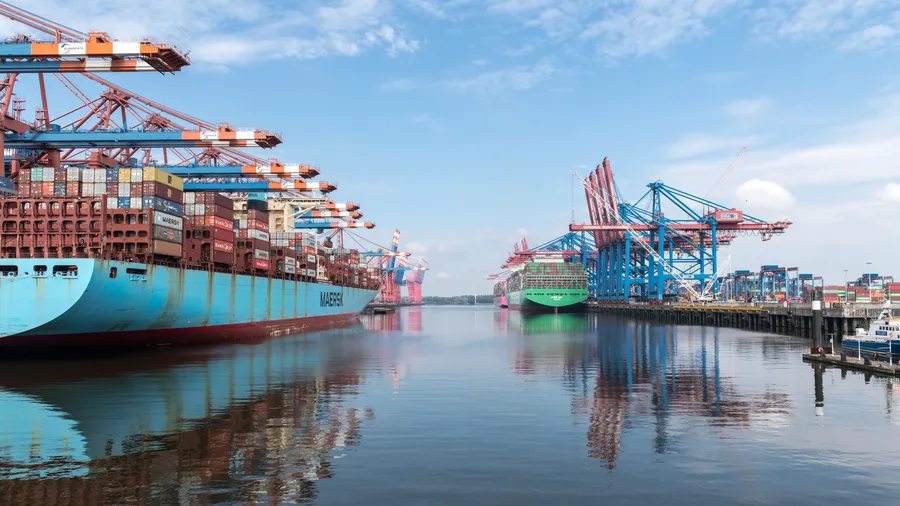
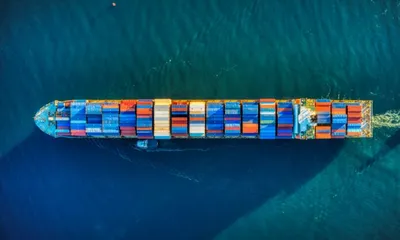
The global container shipping industry is entering another major fleet expansion cycle, with newbuilding orders exceeding 15 million TEU and potentially approaching 16 million TEU before the end of 2026. Major carriers are preparing additional megamax orders even as the industry faces the prospect of growing vessel supply and a possible correction in charter markets.
The situation presents an important question for shipowners and operators: will global cargo demand keep pace with the growing number of ships entering service?
Megamax Orders Push Fleet Expansion Further
According to Alphaliner, the global containership orderbook reached approximately 15.12 million TEU in October 2026, equivalent to 43.9% of the existing cellular fleet.
Around 40 additional large containerships could enter the newbuilding pipeline through prospective orders involving Maersk, Yang Ming, CMA CGM and MSC.
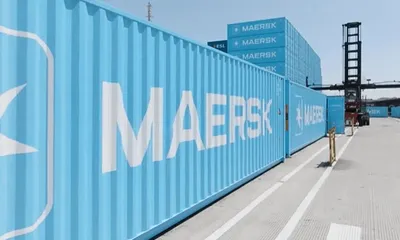
One of the most significant developments concerns Danish shipping giant Maersk, which is reportedly negotiating exclusively with Chinese shipyards for a potential order of twelve 24,000-TEU LNG dual-fuel containerships.
The proposed contract could also include options for another twelve vessels.
At an estimated $240 million per ship, the initial twelve-vessel programme would represent an investment of approximately $2.88 billion. If all additional options are exercised, the total value could reach $5.76 billion.
This would mark Maersk's entry into the 24,000-TEU megamax category, moving beyond its earlier generation of Triple-E vessels, which introduced distinctive twin-engine propulsion arrangements.
Chinese shipyards are reportedly attractive due to competitive construction costs and available building slots.
Meanwhile, additional orders from Yang Ming, CMA CGM and MSC could further increase the global pipeline, although some of the reported contracts remain unconfirmed.
Suez Canal Return Could Increase Effective Vessel Supply
The expansion in newbuilding orders is coinciding with another major development in global container shipping: the gradual return of services to the Suez Canal route.
Sea-Intelligence estimates that approximately 60% of deployed Asia-Europe container capacity is now operating, or scheduled to operate, through the Suez Canal rather than taking the longer route around the Cape of Good Hope.
If security conditions continue to improve, further service normalisation is expected during the first quarter of 2027.
This shift has significant commercial implications.
When vessels return to the shorter Suez route, they complete voyages in less time and can potentially operate more rotations annually. As a result, the same number of ships can deliver greater effective transport capacity to the market.
This additional capacity will arrive alongside substantial newbuilding deliveries.
Alphaliner projects global fleet capacity growth of:
- 9.2% in 2027
- 14.4% in 2028
The combination of shorter trading routes and accelerating fleet deliveries could therefore place considerable pressure on freight rates and vessel charter earnings.
Braemar has already warned that the simultaneous return of Suez services and expansion of the orderbook could create an unfavourable environment for charter rates.
Jefferies has also expressed concerns that vessel deliveries in 2027 could outpace growth in container cargo demand.
Charter Market Remains Strong Despite Supply Concerns
Despite the long-term supply outlook, the current charter market remains exceptionally tight.
Alphaliner's latest survey indicates that only 0.8% of the global cellular fleet is commercially idle.
Charter rates have also reached their highest levels in four years, supported by limited prompt vessel availability and ongoing geopolitical disruptions.
Some large containerships are reportedly securing daily charter earnings in six figures, demonstrating the strength of demand for immediately available tonnage.
However, the current market conditions may not last indefinitely.
As new vessels enter service and shipping lines restore shorter Asia-Europe rotations, the availability of charter tonnage could increase. This would give operators greater negotiating power and potentially reduce earnings for shipowners.
The industry is therefore experiencing a contrast between strong present-day charter conditions and growing concerns about future vessel oversupply.
LNG Dual-Fuel Technology Dominates New Orders
The fleet expansion is also changing the propulsion profile of the global containership industry.
LNG dual-fuel vessels now account for approximately 56% of contracted containership capacity, while methanol dual-fuel ships represent around 12%.
Conventional propulsion systems account for just under 32%.
Alphaliner recorded approximately 2.3 million TEU of new LNG dual-fuel orders during 2026. If the anticipated megamax contracts proceed, another 1 million TEU could potentially be added to this category.
Methanol-fuelled ordering, meanwhile, has slowed considerably.
This shift highlights how shipowners are currently approaching alternative-fuel investments, balancing regulatory expectations, fuel availability, vessel economics and long-term operating requirements.
For marine engineers, the growing LNG dual-fuel fleet also means greater demand for specialised fuel-handling knowledge, machinery operation, gas safety procedures and technical maintenance capabilities.
Why This Matters
- For shipowners: The growing orderbook creates opportunities to modernise fleets but also increases the risk of weaker charter earnings when additional capacity enters the market.
- For charterers and shipping lines: More vessel availability could improve negotiating power and provide greater flexibility in securing tonnage over the coming years.
- For seafarers and marine engineers: LNG dual-fuel adoption creates additional demand for crew familiar with alternative-fuel machinery, fuel systems and associated safety procedures.
- For maritime investors: The gap between current high charter earnings and projected fleet expansion makes 2027–28 particularly important for evaluating vessel investments and long-term market exposure.
Conclusion
The containership industry continues to invest heavily in fleet expansion, with megamax orders and LNG dual-fuel technology shaping the next generation of global shipping capacity.
However, the simultaneous return of Suez Canal services and a substantial wave of newbuild deliveries could transform today's strong charter market into a more competitive environment by 2027–28.
Source: splash247
Related Articles