Adani Ports Targets European Energy Markets with $2.9 Billion Evos Acquisition
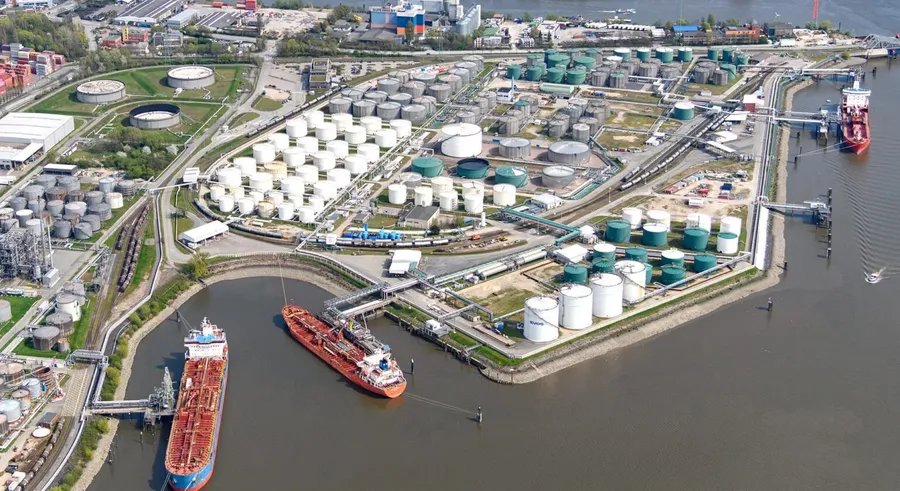
India's Adani Ports and Special Economic Zone (APSEZ) is making a major move into Europe's liquid bulk storage sector through a proposed $2.88 billion acquisition of Dutch operator Evos B.V.
The transaction will give Adani access to strategically located European energy terminals, expanding its international presence while strengthening its position in conventional and emerging fuel supply chains.
Main Article
India's largest private port operator, Adani Ports and Special Economic Zone (APSEZ), has agreed to acquire 100% of Netherlands-based Evos B.V. from investment firm Igneo Infrastructure Partners.
The proposed transaction is valued at €2.56 billion (approximately $2.88 billion), marking one of APSEZ's most significant international expansion moves.
Evos is Europe's second-largest independent liquid storage operator, with eight terminals spread across the Netherlands, Germany, Spain, Belgium and Malta.
Strategic access to Europe's major energy hubs
The acquisition provides Adani with an established network of liquid storage infrastructure across some of Europe's most important maritime and energy centres.
The Evos network includes:
- Storage capacity: 6.3 million cubic metres.
- Storage infrastructure: 452 tanks.
- Marine connectivity: 63 vessel and barge berths.
- Pipeline infrastructure: Extensive connections supporting liquid cargo movement.
- Geographical coverage: Eight terminals across five European countries.
Its facilities serve major energy and trading locations, including the Amsterdam-Rotterdam-Antwerp (ARA) region, Hamburg and Mediterranean markets.
These locations are strategically important because they connect international shipping routes with Europe's major fuel distribution and industrial networks.
Strong liquid cargo volumes and financial performance
Evos handled approximately 37 million metric tonnes of liquid cargo during 2025.
Its cargo portfolio includes conventional petroleum products such as gasoline, gasoil, marine fuels and aviation fuel. The company is also involved in the storage of emerging energy products, including sustainable aviation fuel (SAF), biofuels, methanol and bioethanol.
The company's financial performance provides another important attraction for Adani.
Financial indicator (2025) - Performance
Revenue - €392 million
EBITDA - €219 million
EBITDA margin - 56%
Average commercial occupancy - 99%
The high occupancy rate and significant contribution from long-term commercial contracts provide a relatively stable revenue base.
For Adani, this means acquiring not just physical infrastructure but also an established operating business with existing customers and commercial relationships.
Adani's global port network expands
Following completion, APSEZ expects its international network to grow to 28 ports and terminals across 10 countries.
The company already has overseas port interests in Sri Lanka, Israel, Tanzania and Australia, among other markets.
Managing Director Karan Adani described the Evos acquisition as an important step towards the company's ambition of handling one billion tonnes of cargo and developing an integrated global transportation platform.
The transaction also broadens Adani's business beyond conventional port operations into specialised energy logistics and storage infrastructure.
Financing and transaction structure
The proposed acquisition carries an equity value of €1.18 billion, with the transaction expected to be financed through debt.
Japan-based financial institution MUFG has provided financing commitments of up to €2.8 billion to support the proposed deal.
Completion remains subject to regulatory approvals and works council consultation. An expected closing date has not yet been announced.
Why this matters
- For the global shipping industry: Adani's entry into major European liquid storage hubs strengthens the connection between port infrastructure, tanker operations and international fuel distribution.
- For tanker operators: Additional investment in strategically positioned storage facilities could influence liquid cargo handling, terminal demand and commercial opportunities across European energy routes.
- For alternative fuel development: Evos already handles SAF, biofuels, methanol and bioethanol, giving Adani exposure to emerging fuel supply chains as shipping and aviation explore lower-carbon alternatives.
- For India's maritime ambitions: The acquisition demonstrates how Indian port operators are increasingly moving beyond domestic infrastructure to establish positions in major international logistics and energy markets.
Conclusion
Adani's proposed acquisition of Evos represents a significant shift from domestic port expansion towards integrated international energy logistics.
With access to Europe's major fuel storage hubs, the company is positioning itself to participate in both today's conventional energy trade and tomorrow's alternative fuel supply chains.
Source: gCaptain
Related Articles