Norway Backs $15.6 Million Project to Bring Nuclear Propulsion Closer to Commercial Shipping
Nuclear-powered ships are moving from research towards practical engineering trials in Norway. A new industry-led project aims to integrate a compact reactor with a vessel’s electrical and control systems, with the first offshore vessel installation targeted for 2031–32.
For offshore operators facing pressure to reduce emissions without sacrificing endurance or power, the project could offer a new direction for vessel propulsion.
Norway Funds Integrated Nuclear Propulsion Development
The Research Council of Norway has awarded NOK 20 million (approximately $2 million) in initial funding to the Marine Nuclear Propulsion System (MarNuPS) project, led by Emerald Nuclear Norway.
The programme brings together reactor developer Emerald Nuclear Norway, ship designer VARD Group, electrical systems specialist Vard Electro, offshore vessel operator Island Offshore, the Norwegian University of Science and Technology (NTNU), Imperial College London and Maskindynamikk.
The first development stage is expected to cost approximately NOK 150 million ($15.6 million), with funding also coming from project partners.
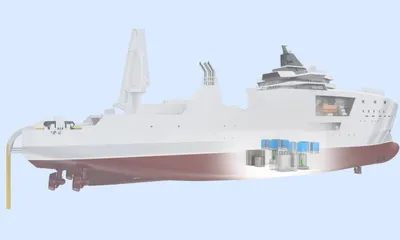
The objective is to move beyond reactor design and assess how an integrated nuclear propulsion system could function aboard an offshore vessel. This means bringing together power generation, electrical distribution, energy storage, automation and bridge control into a coordinated shipboard system.
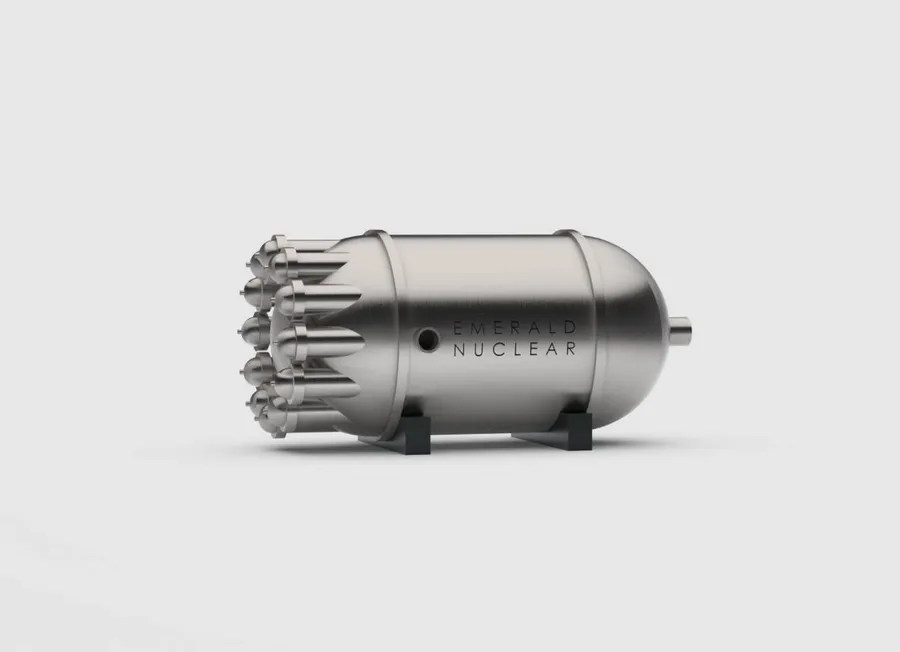
At the centre of the project is Emerald Nuclear’s 5 MWe Gem Microreactor, designed for maritime applications and floating remote-power installations.
Full-Scale Testing Planned for 2027
The first major milestone is an integrated test facility planned for 2027 at Stette, near Ålesund, Norway.
Rather than using nuclear fuel, the facility will use electric heating to reproduce the relevant thermal conditions. Engineers will assemble a full-scale representation of the proposed shipboard propulsion system and evaluate how its components interact.
The trials are expected to examine several operating scenarios, including:
- Power demand changes: How quickly the system responds when a vessel requires more or less propulsion power.
- System integration: How the reactor-related systems, energy storage, electrical conversion and vessel power management work together.
- Operational resilience: How the integrated arrangement performs during transient conditions and under system stress.
- Human-machine interaction: How crew members interact with the controls and automation during normal operations and changing operating conditions.
This stage is important because a marine propulsion system must do more than generate electricity. It must respond reliably to the changing demands of propulsion, onboard services and vessel operations.
However, the planned trials are not equivalent to operating a nuclear reactor at sea. They will test an electrically heated representation of the system, helping engineers identify integration challenges before progressing through further development and qualification.
Island Offshore Targets First Installation
Island Offshore intends to become the first shipowner to install the proposed reactor and energy system, with the initial vessel deployment targeted for 2031–32.
Under Emerald Nuclear’s proposed leasing model, the company would retain ownership and operational responsibility for the reactor, including management of the nuclear fuel cycle. Shipowners would purchase the power produced rather than independently owning and operating the reactor.
Such an arrangement could change how nuclear propulsion is financed and managed in commercial shipping. Nevertheless, its commercial viability will depend on the eventual cost of power, regulatory approval, safety requirements, insurance arrangements and the availability of suitable port infrastructure.
The partners also face broader challenges, including nuclear safety, radiation protection, security, waste management, emergency preparedness and the development of appropriate rules for nuclear-powered commercial vessels.
Island Offshore CEO Tommy Walaunet sees nuclear energy as a potential way to reduce emissions from offshore vessels while preserving the power output, endurance and flexibility these ships require.
MarNuPS also builds on earlier Norwegian research into maritime nuclear propulsion, including NTNU’s NuProShip programme, and is connected to demonstration work associated with the SFI SAINT national research centre.
Why This Matters
- For shipowners and offshore operators: Nuclear propulsion could eventually offer an alternative to conventional fuels for vessels requiring sustained power and long operating endurance. The leasing model may also provide a different approach to managing reactor ownership and operation.
- For marine engineers and technical teams: Integrating nuclear power with electrical propulsion, automation, energy storage and bridge systems creates new engineering requirements. System reliability and crew training will be critical to any future deployment.
- For seafarers: Nuclear-powered vessels would require specialised operating procedures, safety training and clearly defined responsibilities. The skills needed by deck and engine departments could evolve if the technology reaches commercial service.
- For the wider maritime industry: The project provides an opportunity to investigate whether nuclear energy can support lower-emission shipping in demanding offshore applications. Its eventual impact will depend on successful testing, regulation, safety and economics.
Conclusion
Norway’s MarNuPS project represents an important step towards evaluating nuclear propulsion as a practical option for commercial offshore vessels.
With testing planned for 2027 and installation targeted for 2031–32, the next challenge is proving that the technology can meet the maritime industry’s demanding standards for safety, reliability and commercial performance.
Source: Marine Link
Related Articles