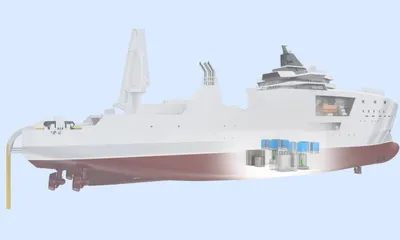
Balaena and Kongsberg Join Forces to Develop Arctic Hunter Autonomous Vessel for Royal Navy
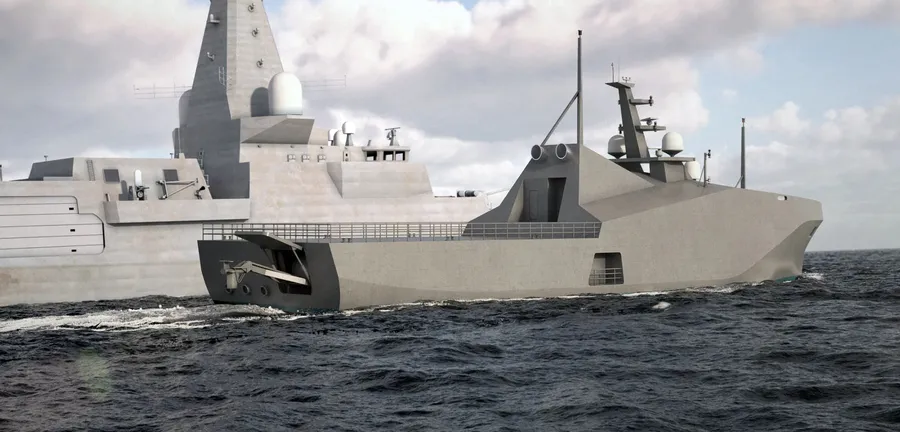
The development of uncrewed surface vessels (USVs) is gaining momentum in naval operations, particularly in regions where continuous maritime surveillance is difficult and operational conditions are extreme.
British shipbuilding group Balaena and Norway's Kongsberg Maritime have signed a strategic agreement to advance the Arctic Hunter, an autonomous naval vessel proposed for the Royal Navy's emerging Type 92 anti-submarine warfare programme.
The project highlights growing cooperation between European shipbuilders and defence technology companies to strengthen underwater surveillance capabilities across the North Atlantic and Arctic regions.
Main Article
British shipbuilding company Balaena and Norwegian maritime technology specialist Kongsberg Maritime have signed a memorandum of understanding (MoU) to develop the Arctic Hunter uncrewed surface vessel.
The agreement was signed on November 11 at Kongsberg Maritime's offices in Norway.
The collaboration aims to combine British shipbuilding and manufacturing capabilities with Norwegian vessel design, remote-control systems and autonomous maritime technologies.
The proposed vessel is being positioned as a potential solution for the Royal Navy's emerging Type 92 anti-submarine warfare requirement, with a particular focus on persistent submarine detection in the strategically important High North.
Arctic Hunter: Designed for autonomous naval operations
Arctic Hunter is being developed to operate without a conventional onboard crew, allowing it to undertake extended maritime surveillance missions in challenging Arctic conditions.
The proposed design combines Kongsberg Maritime's commercial vessel designs and autonomous operating technologies with specialist defence systems from British technology company Thales.
The planned technology package includes:
- Autonomous navigation: Remote and autonomous vessel-control capabilities.
- Submarine detection: Sonar technology intended to identify underwater threats.
- Military communications: Secure communications capabilities for naval operations.
- Arctic operations: A vessel design intended to withstand demanding environmental conditions in northern waters.
The central objective is to provide the Royal Navy with persistent underwater surveillance capabilities without requiring a conventional crewed warship to remain continuously deployed in the area.
This approach could support wider naval operations by providing additional maritime awareness and surveillance coverage.
UK shipbuilding to support vessel construction
Under the proposed programme, Arctic Hunter vessels would be constructed at Balaena's shipyard in Birkenhead, England.
The facility has substantial industrial infrastructure, including:
- Four large dry docks.
- A non-tidal wet basin.
- Dedicated fabrication facilities.
- A modular construction hall.
The companies intend to use a commercial shipbuilding approach to accelerate manufacturing and reduce the time required to deliver the vessels.
Their ambition is to produce units ready for military integration before the end of the decade.
Balaena is headquartered in Cornwall and employs more than 2,000 people. Its operations extend across the United Kingdom and Gibraltar, with shipbuilding, repair and engineering facilities supported by a network of 12 dry docks.
Strengthening security across the Arctic and North Atlantic
The High North has become increasingly important for maritime security due to its strategic geography, submarine activity and growing importance to international defence operations.
Monitoring underwater activity across such a large region presents significant challenges for conventional naval forces.
Uncrewed surface vessels could provide an additional layer of surveillance by operating for extended periods and transmitting collected information to shore-based or crewed naval command systems.
For the Royal Navy, the proposed Arctic Hunter programme could contribute to a broader approach in which autonomous vessels complement traditional warships and maritime patrol capabilities.
However, the project remains at the development and cooperation stage. The MoU establishes a framework for collaboration rather than confirming a final procurement contract or completed vessel order.
Why this matters
- For naval operations: Autonomous surface vessels could provide persistent submarine surveillance and improve underwater threat detection across strategically important maritime regions.
- For shipbuilders: The project demonstrates how commercial shipbuilding infrastructure and modular construction techniques can support specialised naval programmes.
- For maritime technology companies: The partnership highlights increasing demand for autonomous navigation, sonar integration, remote vessel control and advanced military communications.
- For seafarers and maritime professionals: The expansion of autonomous vessels will create new technical requirements in remote vessel operations, marine engineering, digital navigation, cybersecurity and autonomous system maintenance.
Conclusion
The Balaena–Kongsberg partnership reflects the growing role of autonomous vessel technology in modern naval strategy, particularly in challenging Arctic operating environments.
If successfully developed and selected for the Royal Navy's Type 92 requirement, Arctic Hunter could represent an important step towards integrating uncrewed platforms into future anti-submarine warfare operations.
Source: Marine Link
Related Articles