Maersk Becomes The First Global Shipping Line To Buy Containers Manufactured In India
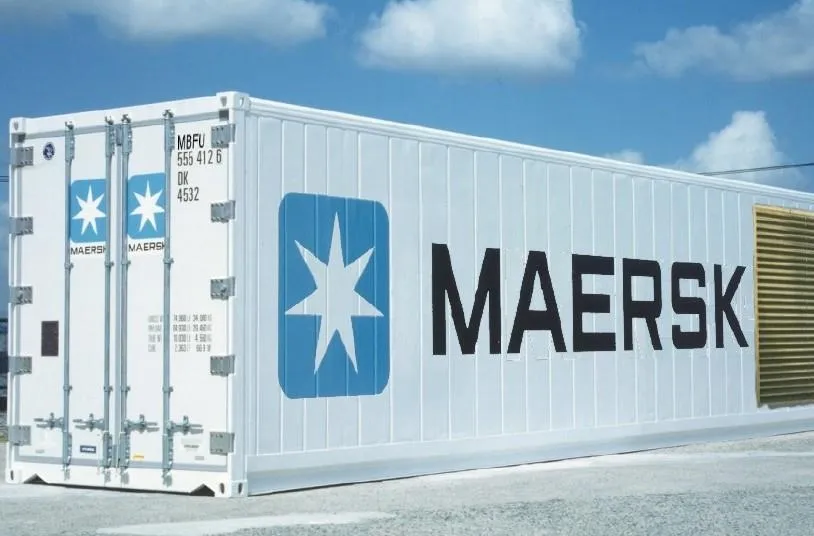
India has taken a significant step towards building a domestic container-manufacturing industry, with Maersk becoming the first global shipping line to procure an export-import container manufactured entirely in the country. The move could help reduce dependence on imported equipment while creating a new industrial opportunity within India’s maritime supply chain.
From importer to manufacturer
A.P. Moller-Maersk has purchased what is described as the first EXIM shipping container manufactured entirely in India by an international shipping line.
The container was unveiled on 3 July 2026 at the Maersk–Container Corporation of India (CONCOR) joint-venture Inland Container Depot at Dadri, Uttar Pradesh.
The milestone was marked in the presence of Union Minister for Ports, Shipping and Waterways Sarbananda Sonowal, underlining the strategic importance being attached to domestic container production.
More importantly, Maersk has followed the unveiling with an order for 1,000 additional Indian-made containers from the DCM Shriram Group.
For India, the significance extends beyond one shipment of equipment. Containers are essential infrastructure for global trade, and establishing local production gives the country an opportunity to build greater control over an important part of the logistics chain.
A 16-month journey from idea to container
The project can be traced back to February 2025, when Maersk Chairman of the Supervisory Board Robert Maersk Uggla met Indian Prime Minister Narendra Modi.
During that meeting, Modi encouraged Maersk to support the development of a world-class container manufacturing ecosystem in India.
What followed was a collaboration involving Maersk, Indian manufacturers, technical specialists and other industry experts.
Within approximately 16 months, the partners moved from the concept of an Indian-built container to a tested unit ready for international deployment.
The speed of development is notable because container manufacturing is not simply a matter of fabricating a steel box. Equipment operating in international trade must withstand repeated lifting, stacking, handling, weather exposure and long periods in demanding environments.
Built to international standards
The new EXIM container was manufactured by DCM Shriram Group to meet relevant ISO structural and dimensional requirements as well as the International Convention for Safe Containers (CSC).
DCM Containers brought experience from its history dating back to a 1993 joint venture with Hyundai Mobis.
During development, the prototype underwent structural testing in accordance with ISO 1496 requirements.
The trials included stacking, lifting, racking and floor-strength tests, along with weatherproofing assessments.
Testing was carried out under the supervision of a classification society and witnessed by Maersk representatives. After successfully meeting the required parameters, the container received CSC safety approval, clearing it for global deployment.
That certification is an important part of the story. For a shipping line, locally manufactured equipment only becomes commercially useful when it can perform to the same safety and durability expectations as containers sourced from established international manufacturing centers.
Government support targets a larger ecosystem
The development also comes as India seeks to create a much larger domestic container industry.
The Union Budget 2026 proposed a ₹10,000 crore container-manufacturing scheme, structured around a Production Linked Incentive (PLI) framework over five years.
The objective is to encourage investment, improve manufacturing competitiveness and close the cost gap faced by Indian producers.
The programe was developed with input from manufacturers and shipping companies, reflecting an attempt to align government policy with actual industry requirements.
If implemented effectively, such support could help India move from producing individual containers to establishing a wider ecosystem covering manufacturing capacity, components, technology, testing and skilled labour.
What it means for the maritime supply chain
For shipping lines, container availability is a fundamental operational requirement. Equipment shortages or excessive dependence on a limited number of manufacturing locations can create vulnerabilities across global logistics networks.
India already has a substantial role in international trade, ports and container logistics. Developing domestic container manufacturing could therefore connect another piece of the maritime supply chain within the country.
For shipowners, operators and logistics companies, the longer-term benefit will depend on whether Indian manufacturers can consistently deliver quality, cost competitiveness and production volume at global scale.
The initial Maersk order is therefore best viewed as a market test as well as a commercial commitment.
Why this matters
- For shipping lines: A reliable Indian source of containers could diversify procurement and reduce dependence on overseas manufacturing centers.
- For India's maritime industry: Domestic container production adds another strategic capability to the country's port, logistics and shipping ecosystem.
- For manufacturers: Maersk's procurement provides a high-profile validation of India's ability to manufacture equipment for demanding international trade.
- For seafarers and maritime professionals: A stronger domestic logistics ecosystem could generate additional opportunities across manufacturing, ports, container logistics, inspection and technical services.
Conclusion
The first Indian-made Maersk container is more than a new piece of cargo equipment—it is a test of whether India can build a globally competitive container-manufacturing industry.
The next challenge will be scaling production while maintaining international standards, competitive pricing and reliability across the global supply chain.
Source: Marine Insight
Related Articles