HD Hyundai Delivers CMA CGM’s First Lashing-Free Container Ship, Advancing Cargo Automation
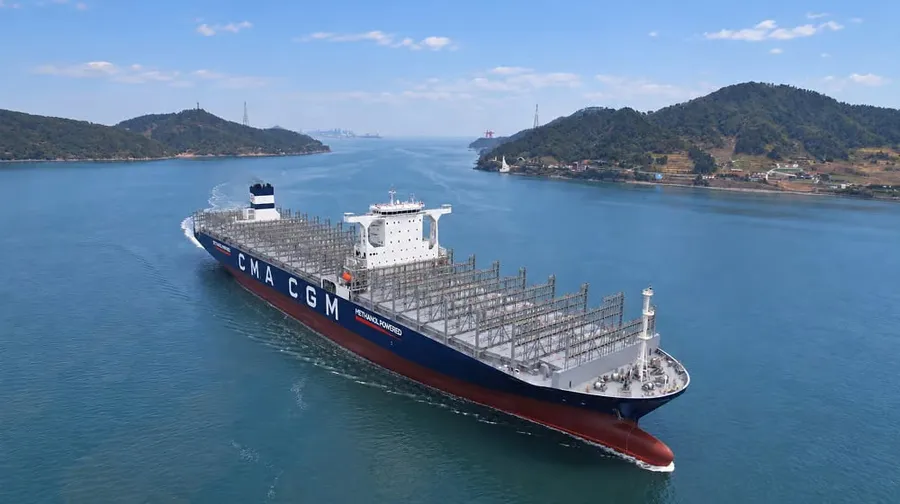
HD Hyundai has delivered a 13,000-TEU methanol-fuelled containership to CMA CGM featuring a system designed to eliminate conventional manual container lashing. The technology aims to improve cargo-handling efficiency, increase deck cargo capacity and reduce the risks associated with securing containers at sea.
The delivery marks a significant development in container ship design, with potential implications for crew safety, port operations and the wider automation of maritime logistics.
A New Approach to Securing Containers
The vessel incorporates HD Hyundai’s hybrid-type Lashing-Free Technology, developed by HD Hyundai Heavy Industries and integrated into the ship’s design and construction by HD Hyundai Samho. Sea trials were conducted in September.
Unlike conventional containerships, where crews or specialist workers secure containers using lashing rods and associated equipment, the new design extends the vessel’s cell guides above deck. These structures help keep containers aligned and supported in their stacks, reducing the need for manual securing operations.
HD Hyundai says the system is designed to support safer cargo operations while improving logistics efficiency. It could also help reduce the risk of containers being lost overboard due to securing failures, although performance will depend on the system’s design limits and operating conditions.
Engineering Changes Make the System Possible
One of the main challenges is accommodating extended cell guides without the conventional hatch-cover arrangement obstructing them.
To address this, HD Hyundai developed a standardised portable bench that fits between the cell guides. Designed to the dimensions of a 40-foot container, the structure can be moved using the same port cranes used for container handling.
For containers positioned outside the cell-guide area, the shipbuilder has also developed a Twistlock Rooting System, which secures them to the vessel’s structure.
Together, these features allow the ship to use a different approach to supporting and securing deck cargo without relying on conventional manual lashing throughout the vessel.
More Deck Cargo and Reduced Vibration
According to HD Hyundai, September’s sea trials showed significantly lower vibration during operation compared with conventional designs incorporating hatch covers and lashing bridges.
The company also reports that the system allows the vessel to carry more than 10% additional cargo weight on deck compared with conventional ships of the same type. This could provide operators with greater flexibility in cargo planning and improve the commercial use of available deck space.
The shipbuilder says the system is engineered to maintain stable container support in rough seas and strong winds, helping reduce cargo-loss risks and the potential for marine pollution.
These are manufacturer-reported benefits; the technology’s performance across different sea states, loading configurations and operational conditions will be important as more vessels adopt it.
HD Hyundai Targets Wider Adoption
HD Hyundai plans to extend the technology to small- and medium-sized containerships. The company is also developing a next-generation version that incorporates weathertight features.
If successfully scaled, lashing-free designs could contribute to greater automation across the maritime supply chain, from shipboard cargo operations to container terminals. Removing routine manual lashing could also change how ports organise cargo-handling teams and how operators plan vessel turnaround times.
Why This Matters
- Crew safety: Reducing manual lashing work could limit workers’ exposure to heavy equipment, suspended loads, working at height and other hazards associated with container securing.
- Commercial efficiency: The reported increase in deck cargo weight capacity could improve cargo utilisation, subject to vessel limits and the requirements of individual voyages.
- Ship design and operations: Extended cell guides and alternative structural arrangements show how cargo-securing systems can influence vessel architecture, maintenance and port-handling procedures.
- Maritime automation: The technology could help advance automated cargo operations, but operators will need to assess reliability, inspection requirements and performance in demanding weather before wider adoption.
Source: The Maritime Executive
Related Articles