Global Shipping Groups Urge IMO to Break Deadlock on Net-Zero Emissions Rules
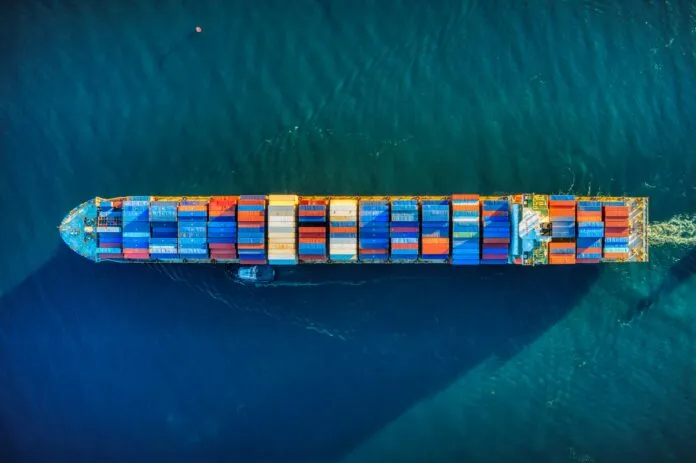
Nine major international shipping organisations are calling on governments to resolve the ongoing disagreement over the International Maritime Organization's (IMO) greenhouse gas regulations. With the next round of negotiations approaching, the industry wants a globally consistent framework that supports decarbonisation without creating unmanageable costs or operational uncertainty.
Shipping Industry Seeks Common Ground Ahead of MEPC 85
Nine maritime associations representing significant sections of the global commercial shipping industry have jointly urged IMO Member States to move towards an agreement on greenhouse gas (GHG) reduction measures.
In an open letter issued ahead of the IMO's 85th session of the Marine Environment Protection Committee (MEPC 85), scheduled in London from 30 November to 4 December 2026, the organisations called for a regulatory framework that is practical, enforceable and suited to the operational realities of international shipping.
The signatories include BIMCO, CLIA, IBIA, ICS, INTERCARGO, INTERFERRY, INTERTANKO, IPTA and the World Shipping Council (WSC).
While acknowledging that proposals submitted by governments remain under consideration, the groups stressed that the industry needs predictable regulations that account for the actual cost and availability of alternative fuels and technologies.
They believe future rules should encourage the development and commercial deployment of lower-emission marine energy while ensuring that the transition remains safe and technically achievable.
The associations also called for a fuel- and technology-neutral approach supported by reliable data, allowing different decarbonisation pathways to contribute towards the industry's emissions targets.
Industry Warns Against Fragmented Regional Regulations
One of the major concerns raised in the joint statement is the possibility of different countries and regions introducing separate emissions regulations.
According to the associations, fragmented national and regional requirements could expose shipping companies to overlapping compliance obligations and multiple charges for the same emissions.
For an industry operating across international borders, inconsistent regulations could increase administrative complexity, operating costs and uncertainty in long-term investment decisions.
The organisations therefore want the IMO to establish a common global framework that brings together the most effective elements of the different government proposals.
They argue that reaching an agreement will require constructive negotiations between Member States, with governments willing to identify common ground rather than remain divided over individual regulatory approaches.
Investment Depends on Regulatory Certainty and Fuel Availability
The shipping industry has already committed billions of dollars towards vessels capable of operating on alternative lower-GHG fuels, fuel-flexible propulsion systems and other innovative technologies.
However, the transition remains challenging. Commercially viable zero- and near-zero-emission fuels and technologies are not yet widely available for most of the existing global fleet.
The associations believe future regulations must recognise these limitations while providing shipping companies with sufficient flexibility to manage the transition.
Their recommendations include:
- Rewarding measurable emissions reductions: Compliance mechanisms should recognise independently verifiable improvements in vessel emissions performance.
- Encouraging further investment: Regulations should provide financial or technical incentives for companies investing in cleaner ships, fuels and technologies.
- Flexible compliance options: Both large and small shipping companies should have practical alternatives for meeting regulatory obligations.
- Clear and enforceable requirements: Stable global rules are necessary for shipowners, charterers, fuel producers, ports and financial institutions to make long-term investment decisions.
The organisations also highlighted the importance of commercially competitive alternative fuel production at scale. Without reliable supply chains and affordable fuel availability, even well-designed regulations could become difficult for operators to implement.
Why This Matters
- Shipowners and fleet operators: Clear global regulations will help companies make decisions on newbuild orders, retrofits, propulsion systems and alternative fuel investments.
- Seafarers and technical professionals: The transition towards alternative fuels will require new operational procedures, technical knowledge and safety training onboard vessels.
- Marine fuel suppliers and ports: Regulatory certainty could accelerate investment in alternative fuel production, storage, distribution and bunkering infrastructure.
- Global shipping competitiveness: A unified IMO framework could reduce overlapping compliance costs and provide a more consistent operating environment for international shipping companies.
Conclusion
The shipping industry's message ahead of MEPC 85 is clear: decarbonisation needs ambitious targets supported by commercially realistic and enforceable regulations. Breaking the IMO deadlock will be essential to restoring investment confidence and keeping the global maritime energy transition on track.
Source: Shipping Telegraph
Related Articles