Former LNG Carrier Set for New Life as Floating LNG Storage Unit in Gabon
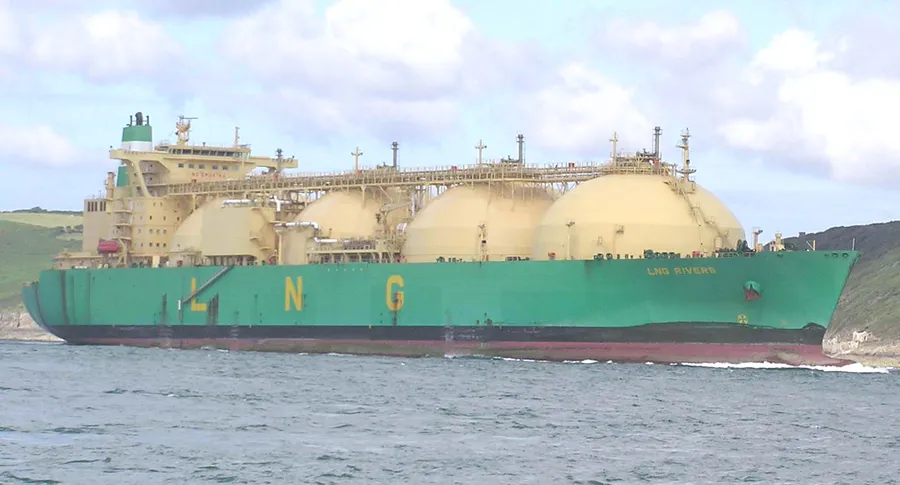
An LNG carrier is being given a second career as a floating storage unit (FSU) for Gabon’s Cap Lopez offshore gas development.
Supported by Lloyd’s Register, the conversion highlights how existing LNG tonnage can be repurposed to support new energy infrastructure without building an entirely new floating facility.
A former LNG carrier is undergoing a major transformation in Dubai that will eventually see it become part of Gabon’s emerging LNG infrastructure.
The vessel, formerly known as LNG Bayelsa, is being converted at Drydocks World Dubai and now carries the name FSU LNG Cap Lopez. Once the work is completed, it will provide LNG storage capacity for the Cap Lopez gas project in Gabon.
Lloyd’s Register (LR) is providing classification and technical assurance throughout the conversion and life-extension programme.
From LNG carrier to floating storage
The converted vessel will support a wider offshore gas chain involving the liquefaction, storage and export of LNG from a near-shore barge.
The Cap Lopez development is also intended to make better use of Gabon’s natural gas resources while helping reduce routine gas flaring and improve overall energy efficiency.
Transforming an existing LNG carrier into an FSU requires considerably more than changing its operational role.
The project involves major steel modifications, new piping systems and installation of a boil-off gas module. The vessel will also undergo life-extension work so that its structure and systems are suitable for its new long-term operating requirements.
Why conversion can make commercial sense
For offshore gas developers, converting an existing LNG carrier can offer an alternative to commissioning a completely new floating storage facility.
The basic ship structure and LNG containment infrastructure already exist, potentially reducing construction time and capital requirements compared with a newbuild solution.
However, conversion projects also bring their own engineering challenges. Existing structures, machinery and systems must be assessed against the requirements of the vessel's new function, while modifications need to maintain appropriate structural integrity and safety standards.
That is where classification and technical assurance become particularly important.
Lloyd's Register oversees conversion programme
LR is involved across the conversion and life-extension process.
Its responsibilities include plan approval, surveys and technical oversight, with the classification society assessing whether the vessel's modifications meet applicable structural, safety and regulatory requirements.
LR is working with Dixstone Lower Gulf FZCO, a sister company of Perenco, together with the shipyard during the conversion.
The project reflects a wider trend in offshore energy: operators are increasingly looking at ways to adapt existing maritime assets for new roles rather than relying exclusively on new construction.
Supporting Gabon's gas ambitions
Once operational, FSU LNG Cap Lopez will become an important component of the wider Cap Lopez development.
The project is intended to increase the utilisation of Gabon's natural gas resources for both domestic consumption and LNG exports.
For Gabon, the development represents more than another offshore energy project. Establishing additional gas infrastructure could provide the country with a more substantial foundation for developing its domestic gas market while creating an export pathway.
For the maritime sector, meanwhile, the project demonstrates how LNG carriers can remain useful beyond their original trading careers.
Why this matters
- For shipowners: Conversion can extend the commercial life of older LNG carriers and create alternative revenue opportunities for existing tonnage.
- For offshore operators: Repurposed vessels can provide flexible infrastructure for gas developments without necessarily requiring a completely new floating unit.
- For seafarers and technical teams: Converted vessels introduce new operational requirements, making familiarity with LNG systems, boil-off gas management and modified machinery increasingly valuable.
- For the energy transition: Reducing routine gas flaring and improving LNG infrastructure efficiency can deliver environmental benefits while natural gas remains part of the global energy mix.
Conclusion
The conversion of LNG Bayelsa into FSU LNG Cap Lopez shows how established maritime assets can be adapted to meet the infrastructure needs of new offshore energy projects.
As operators look for faster and more flexible development solutions, LNG carrier conversions could become an increasingly important bridge between existing tonnage and future floating energy infrastructure.
Source: Container News
Related Articles