Fincantieri Invests €100 Million in AI and Robotics for Next-Generation Shipyards
Fincantieri is advancing shipyard automation through artificial intelligence, collaborative robotics and digital technologies, aiming to improve productivity, workplace safety and manufacturing efficiency.
The Italian shipbuilding group's BOOST² programme is moving from technology trials towards wider industrial implementation. For the maritime sector, the initiative highlights how digitalisation is reshaping not only vessels, but also the facilities responsible for building them.
BOOST²: From Innovation to Industrial Deployment
Launched three years ago, BOOST² – The Shipyard of the Future is Fincantieri's industrial innovation programme for identifying, developing and integrating advanced technologies into shipbuilding operations.
The initiative has involved more than 450 employees across 13 shipyards in Italy and overseas, including facilities in Romania and the United States. Its investment plan allocates almost €100 million to advancing these technologies as part of the group's wider industrial strategy.
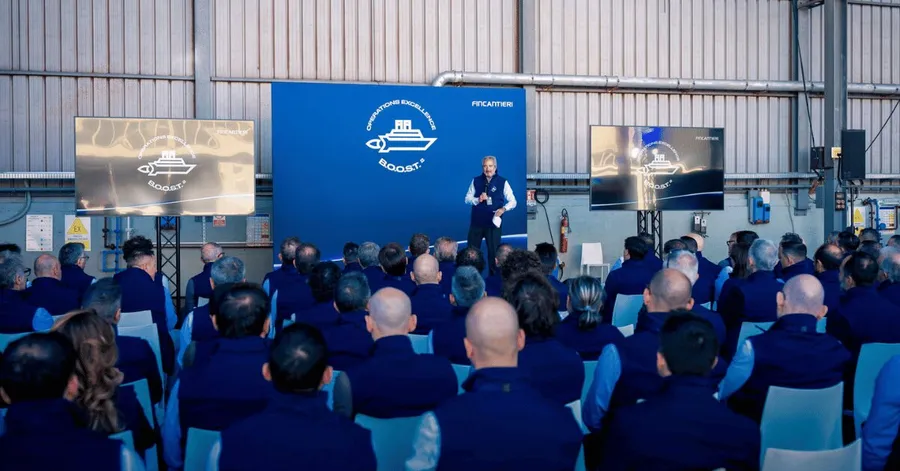
Fincantieri recently showcased the programme's progress at its Castellammare di Stabia shipyard. Demonstrations included technologies already being used in operations, systems undergoing validation and solutions still being developed.
The next phase focuses on moving successful innovations into everyday production and gradually extending their use across the group's shipyards.
Physical AI and Robotics Take Centre Stage
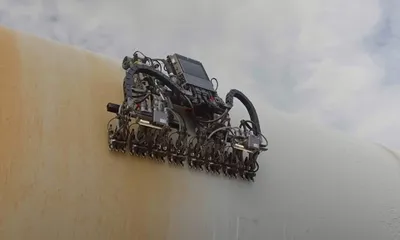
A central element of the programme is Physical AI — technology that enables intelligent systems to perceive, interact with and perform tasks in the physical environment.
Combined with collaborative robotics, these systems are intended to assist workers with demanding or complex industrial activities. Rather than focusing exclusively on replacing manual work, the approach aims to improve how people and machines operate together.
Fincantieri is also developing several complementary capabilities:
- Digital Twins: Virtual representations of shipyard assets and processes that can support monitoring, planning and operational management.
- Smart Supply Chains: Digital systems designed to improve coordination across material procurement, logistics and production.
- Additive Manufacturing: Layer-by-layer production techniques that can support the manufacture of selected components and specialised parts.
- Automated Industrial Equipment: Automation solutions intended to improve consistency and efficiency across manufacturing tasks.
Together, these technologies can strengthen the connection between engineering design, production planning, material availability and work carried out on the shop floor.
Collaboration Drives Practical Results
Fincantieri's Open Innovation strategy brings external technology providers, including small and medium-sized enterprises and start-ups, into the development process.
The aim is to adapt emerging technologies to the specific requirements of shipbuilding rather than introduce generic automation systems that may not suit complex industrial environments.
Shipyard employees and production teams also participate directly in testing and evaluating solutions. Their involvement helps identify practical limitations, improve usability and determine whether technologies can be replicated across facilities with different operational requirements.
This approach is particularly important in shipbuilding, where projects involve complex structures, varied production stages and close coordination between numerous trades.
The emphasis is now shifting from demonstrating what new technologies can do to establishing how reliably and effectively they can operate at industrial scale.
Why This Matters
- For shipbuilders and shipowners: More efficient construction processes could improve production planning, reduce delays and strengthen the competitiveness of shipyards delivering increasingly complex vessels.
- For shipyard workers and seafarers: Robotics and intelligent assistance systems could reduce exposure to certain hazardous or physically demanding tasks. However, wider adoption will also increase the importance of digital skills, technical training and human-machine safety.
- For maritime technology companies: Fincantieri's collaboration model creates opportunities for specialist firms and start-ups to develop solutions for large-scale industrial applications.
- For the wider maritime industry: Digital Twins, AI and automated manufacturing could help shipbuilders improve coordination between design and construction, supporting more predictable production and better use of resources.
Conclusion
Fincantieri's BOOST² programme demonstrates how AI, robotics and digital manufacturing are becoming integral to the future of shipbuilding, backed by a planned investment approaching €100 million.
Source: Marine Link
Related Articles