Retrofit Readiness Rises, But Regulation Keeps Shipowners on Hold
The shipping industry is gearing up technically for engine retrofits—but investment decisions remain cautious. A lack of regulatory clarity is slowing conversions, even as viable fuel solutions and retrofit pathways continue to mature.
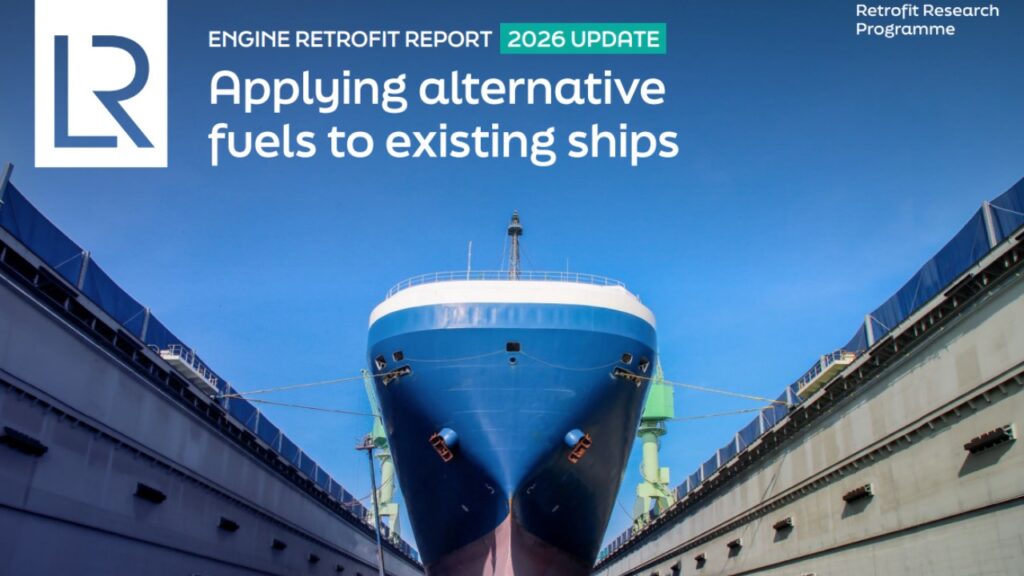
The latest findings from Lloyd’s Register highlight a growing imbalance in the retrofit market: capability is accelerating, but commitment is not. According to its recent engine retrofit report, uncertainty around future emissions rules is causing shipowners to delay large-scale decisions. The longer vessels continue operating on conventional fuels, the more pressure will build to retrofit them later—potentially creating a surge in demand that could strain shipyards and inflate costs. While 2025 saw only modest growth in confirmed retrofit projects, the technical groundwork advanced significantly. A notable milestone was the successful methanol conversion of a large two-stroke engine aboard the container vessel COSCO Shipping Libra. This project demonstrated that deep-sea methanol retrofits are no longer experimental—they are becoming scalable and repeatable. Engine manufacturers are also expanding their retrofit portfolios. Companies such as Wärtsilä and WinGD are pushing solutions for LNG and ethanol, while Everllence has reported successful performance across both two-stroke and four-stroke ethanol-compatible engines. LNG remains attractive as a transitional fuel, largely due to its established infrastructure and the option to shift toward bioLNG or synthetic methane in the future. At the same time, ethanol is gaining credibility as a flexible marine fuel. Trials by Maersk showed that ethanol can be blended with methanol and marine diesel without compromising engine performance—opening the door to higher blend ratios and gradual adoption strategies. One advantage shaping future decisions is the compatibility between methanol and ethanol. Engines designed for methanol are expected to handle ethanol with minimal modification, and existing methanol systems could be adapted relatively easily. This flexibility may prove valuable as fuel availability and pricing evolve. Beyond full fuel conversions, many operators are opting for interim upgrades. These “bridge retrofits”—including propulsion optimisation, engine tuning, and control system enhancements—help reduce emissions in the short term while preparing vessels for future fuel transitions. However, these projects are also consuming shipyard slots and engineering capacity, adding another layer of complexity to long-term planning. Looking ahead, Lloyd’s Register emphasizes that regulatory direction will ultimately determine the pace of adoption. Without a clear global framework to support zero- and near-zero emission fuels, the industry is likely to remain in a state of technical readiness rather than full-scale execution.
Why This Matters
Compressed retrofit timelines: Delayed decisions today could lead to bottlenecks, higher costs, and limited yard availability later.
Fuel flexibility is emerging: Methanol and ethanol compatibility offers shipowners more optionality in uncertain fuel markets.
Bridge solutions are strategic: Incremental upgrades can deliver immediate efficiency gains while keeping future retrofit pathways open.
Regulation drives investment: Clear global rules will be the trigger for large-scale capital deployment in retrofits
The retrofit market is no longer a technical challenge—it’s a timing and policy challenge. For shipowners, the next move will depend less on engineering feasibility and more on regulatory certainty.