The Ecosailor

Nuclear Propulsion Moves Closer to Reality as Class Societies Back New Ship Concepts

Back

Nuclear Propulsion Moves Closer to Reality as Class Societies Back New Ship Concepts

Nuclear Propulsion Moves Closer to Reality as Class Societies Back New Ship Concepts

As shipping searches for long-term alternatives to fossil fuels, nuclear propulsion is again entering the conversation. Recent approvals from two major classification societies suggest the industry is beginning to seriously evaluate how nuclear technology could fit into commercial fleets of the future.

Two separate concept studies involving nuclear-powered merchant vessels have received Approval in Principle (AiP), marking another step in the industry’s effort to meet increasingly ambitious decarbonisation targets.

While an AiP does not mean construction is imminent, it confirms that a proposed design is technically feasible and aligns with current safety and regulatory expectations. For shipowners and technology developers, it represents an important early milestone on the path toward commercial deployment.

Molten Salt Reactor Concept for Car Carriers

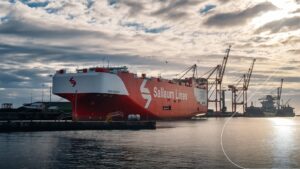
Lloyd’s Register has granted Approval in Principle for a pure car and truck carrier design incorporating a molten salt reactor (MSR), developed through a joint project involving Hyundai Heavy Industries, HD Korea Shipbuilding & Offshore Engineering (HD KSOE), Hyundai Glovis, G-Marine Service and the Korea Atomic Energy Research Institute (KAERI).

The study examined how an advanced small modular reactor could be integrated into a large vehicle carrier from both engineering and operational perspectives.

Participants assessed reactor placement within the vessel, radiation shielding requirements, and the effect of reactor weight on stability and trim. The project also evaluated how the nuclear installation would influence cargo deck arrangements and vehicle carrying capacity.

Beyond the technical aspects, the consortium studied propulsion system layouts and operational flexibility compared with conventional fuel-powered car carriers, whose voyages are often influenced by bunkering requirements and route limitations.

Each partner contributed expertise from its respective field. HD Hyundai companies handled vessel design and technology reviews, Hyundai Glovis provided operational insights based on its experience managing large PCTCs, while G-Marine Service focused on safety, maintenance, crew support and long-term reliability. KAERI supplied nuclear technology expertise, and Lloyd’s Register led hazard identification and preliminary risk assessments related to integrating nuclear systems with traditional shipboard equipment.

According to Lloyd’s Register, understanding these challenges at the concept stage is essential for supporting future progress in commercial nuclear propulsion.

ABS Approves Nuclear-Assisted Cargo Ship Design

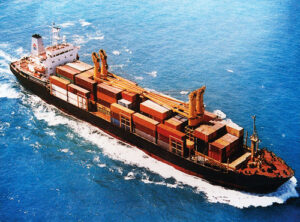
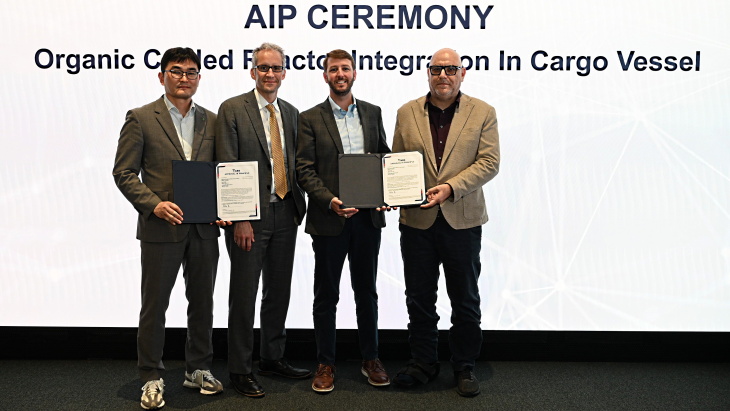
In a separate development, the American Bureau of Shipping (ABS) awarded Approval in Principle for a nuclear propulsion arrangement created by the Massachusetts Institute of Technology (MIT), HD KSOE and Capital Maritime Group. The concept features a reactor system that transfers heat using a specialised synthetic fluid. Operating at near-atmospheric pressure, the design could allow for lighter reactor vessels and support modular construction methods, simplifying transportation and installation. ABS reviewed the interface between the reactor and the vessel’s machinery systems to ensure compatibility with class requirements. The approval represents the first major outcome from the MIT Maritime Consortium, a collaboration bringing together academia and industry stakeholders to develop next-generation technologies for commercial shipping. Project partners emphasised that nuclear propulsion remains an emerging technology, but argued that exploring unconventional solutions will be necessary if shipping is to achieve its long-term environmental goals while maintaining high standards of safety and vessel integrity.
Decarbonisation Driving Interest in Nuclear Energy

Global shipping consumes roughly 350 million tonnes of fossil fuel each year and contributes around 3% of worldwide carbon emissions.

Following the IMO’s commitment to achieve net-zero emissions by or around 2050, shipowners and technology developers are evaluating multiple pathways, including alternative fuels, electrification, wind-assisted propulsion and now advanced nuclear systems.

Although significant regulatory, operational and public acceptance hurdles remain, the latest approvals indicate that nuclear-powered commercial vessels are moving from theory toward practical engineering studies.

Why This Matters

  • Shipowners gain another potential decarbonisation pathway beyond conventional alternative fuels.
  • Seafarers and ship managers will face new training and safety requirements if nuclear propulsion becomes commercially viable.
  • Classification societies are beginning to establish frameworks that could shape future regulations for nuclear shipping.
  • Early concept work today may determine which technologies dominate the post-2050 fleet.

Nuclear propulsion is still far from widespread adoption, but momentum is clearly building. With major industry players and classification societies now involved, commercial nuclear shipping is gradually shifting from a futuristic concept to a subject of serious maritime planning.

Leave a Comment

Your email address will not be published. Required fields are marked *

Leave a Comment

Your email address will not be published. Required fields are marked *