Port of Long Beach and MARAD Partner to Explore Nuclear-Powered Shipping Future
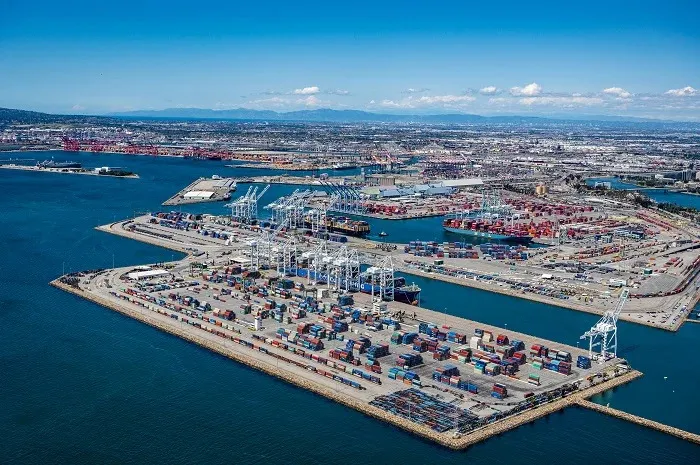
The Port of Long Beach has become the first U.S. port to formally partner with the U.S. Maritime Administration (MARAD) to explore small modular reactor (SMR) technology for commercial shipping. While the agreement does not approve nuclear-powered vessels, it signals growing momentum behind nuclear propulsion as the industry searches for long-term decarbonization solutions.
Main Article
In a landmark move for the U.S. maritime sector, the Port of Long Beach and MARAD have signed a nonbinding Memorandum of Cooperation to jointly study the use of small modular reactors (SMRs) in commercial maritime operations.
The partnership establishes a framework for collaboration on nuclear technology that could eventually support commercial ships, port infrastructure, and other maritime assets. It follows MARAD's request earlier this year for industry proposals on developing a commercially viable, U.S.-built SMR specifically designed for the nation's marine transportation system.
The initiative reflects increasing global interest in nuclear propulsion as shipping seeks alternatives to conventional fuels. SMRs are being viewed as a potential pathway to reducing carbon emissions while providing vessels with greater operational range and long-term energy security.
Port of Long Beach CEO Noel Hacegaba described the collaboration as an opportunity to combine federal leadership with private-sector innovation to accelerate the safe development of next-generation maritime energy technologies. He said the project aligns with the port's broader vision of becoming the "Port of the Future."
MARAD Administrator Stephen Carmel said the agreement supports the U.S. government's broader strategy to strengthen domestic shipbuilding while advancing national energy capabilities. According to MARAD, the partnership will help evaluate advanced reactor technology while preparing future maritime professionals to operate in an evolving energy landscape.
As part of the initiative, the Port and MARAD will work alongside the U.S. Coast Guard, Department of Energy, and Nuclear Regulatory Commission to develop safety standards, operational procedures, inspection frameworks, and regulatory best practices required for any future deployment of SMR-powered vessels.
Importantly, the agreement does not authorize the construction of nuclear-powered ships, approve any reactor technology, or commit either party to funding or procurement decisions. Instead, it serves as a collaborative platform to address the technical and regulatory groundwork needed before such vessels become commercially viable.
The announcement also complements a recently signed lease between the Port of Long Beach and BlueCore Energy Inc., which plans to assemble, test, and store maritime power modules at the port—bringing private industry into the broader effort.
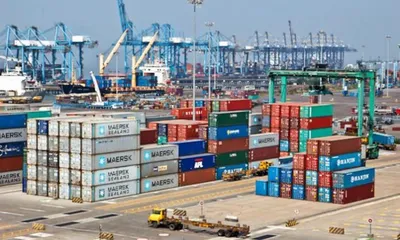
The initiative also supports the port's long-term expansion strategy. Long Beach aims to increase annual container throughput to 20 million TEUs by 2050, a target expected to drive substantial growth in electricity demand as terminals continue shifting toward electrified cargo handling equipment.
Board of Harbour Commissioners President Frank Colonna said the partnership reinforces the port's long-standing commitment to testing innovative technologies while maintaining its position as a leading gateway for trans-Pacific trade.
Beyond commercial operations, the Port of Long Beach also plays a strategic national role. It hosts two MARAD Ready Reserve Force vessels—SS Cape Island and SS Curtiss—and is one of only 18 designated Commercial Strategic Seaports that support U.S. military logistics during national emergencies.
Although recent industry studies suggest SMRs could allow oceangoing vessels to operate for decades without re-fueling while eliminating operational carbon emissions, experts agree that significant regulatory, infrastructure, safety, and public acceptance challenges must be addressed before nuclear-powered commercial shipping becomes a reality.
Why This Matters
- For shipowners: Nuclear propulsion is gaining attention as a potential zero-emission solution for long-distance shipping, offering extended operating range without frequent re-fueling.
- For ports: Preparing infrastructure and regulatory frameworks today could position major ports for future generations of low-carbon vessels.
- For seafarers: New propulsion technologies will require specialized training, updated safety procedures, and new operational standards.
- For the maritime industry: The partnership highlights growing U.S. investment in alternative marine energy alongside ongoing decarbonization efforts.
Conclusion
The Port of Long Beach-MARAD partnership marks an important early step toward evaluating nuclear propulsion for commercial shipping in the United States. While widespread deployment remains years away, the initiative demonstrates that the conversation around maritime decarbonization is expanding beyond conventional alternative fuels.
Source: gCaptain
Related Articles