HD Hyundai Restarts Subic Shipbuilding With First Vessel Launch
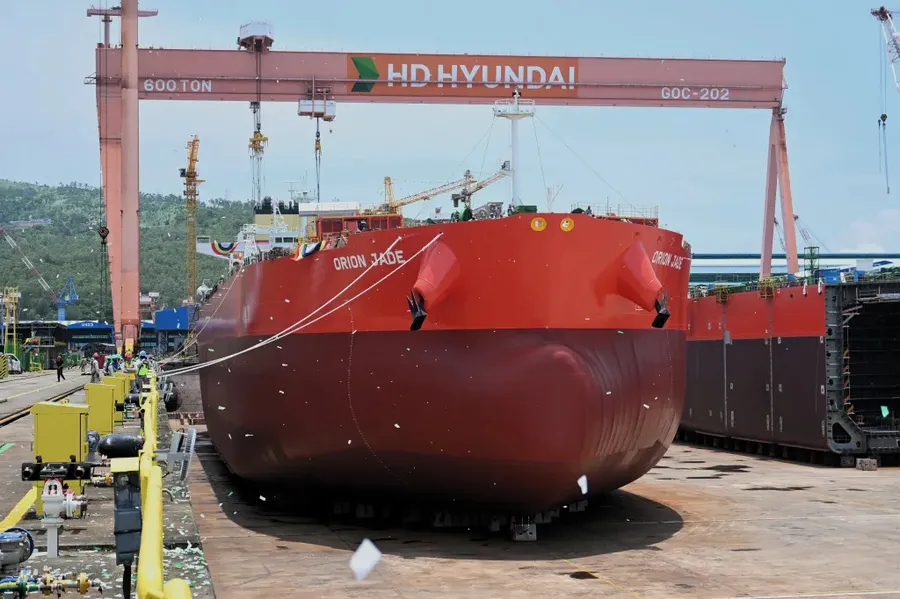
HD Hyundai Restarts Subic Shipbuilding With First Vessel Launch
HD Hyundai has taken a major step in rebuilding shipbuilding capacity in the Philippines, launching the first vessel constructed at its Subic facility. The milestone moves the yard from revival to active production—and could reshape the regional supply of new ships and skilled maritime labour.
Subic yard moves into full-scale production
The first vessel built at HD Hyundai Heavy Industries Philippines (HHIP) has entered the water, marking a significant milestone for the company's renewed shipbuilding operations at Subic Bay.
Named Orion Jade, the vessel is the first of four ships currently covered by the yard's initial order. It measures approximately 250 meters in length, 42 meters in breadth and 21 meters in depth.
Shipbuilding work began in September 2025, when steel cutting formally started in an event attended by Philippine President Ferdinand Marcos.
The launch is more than a single-vessel milestone. For HD Hyundai, it represents the beginning of a broader strategy to establish Subic as an important production center in Southeast Asia while reducing some of its reliance on shipbuilding capacity in South Korea.
A new production base for HD Hyundai
The Subic facility gives HD Hyundai an additional location from which to serve the growing demand for commercial vessels.
The group already has major shipbuilding operations centered around its Ulsan complex and HD Hyundai Samho in South Korea, as well as HD Hyundai Vietnam Shipbuilding. It is also involved in International Maritime Industries in Saudi Arabia.
In the United States, HD Hyundai has not yet established an owned shipyard but is expanding its presence through partnerships.
The Philippine facility therefore adds another geographical layer to a shipbuilding network that is becoming increasingly international.
Jobs and skills become a key part of the project
The impact of the revived Subic yard is already extending beyond the waterfront.
The project has generated around 4,000 jobs in Subic Bay and nearby provinces. That figure could increase to approximately 8,000 positions as production activity expands.
For the Philippine maritime sector, however, the bigger challenge will be developing enough skilled workers to support sustained production.
HD Hyundai is working with the Technical Education and Skills Development Authority (TESDA) to establish vocational programs designed around modern shipbuilding requirements. Training is expected to support the development of welders, fabricators and other specialized workers needed at the yard.
For a shipyard to operate at scale, steel and machinery are only part of the equation. Skilled labour, production discipline and technical training are equally important—and the Subic project is putting workforce development directly into the expansion strategy
Source: splash247
Related Articles
INS Mahendragiri Joins Indian Navy, Strengthening Indigenous Naval Capability in the Indo-Pacific
INS Mahendragiri Joins Indian Navy, Strengthening Indigenous Naval Capability in the Indo-Pacific