Carbon Capture and Storage (CCS) for Shipping: A Revolutionary Step Towards Sustainable Maritime Transport
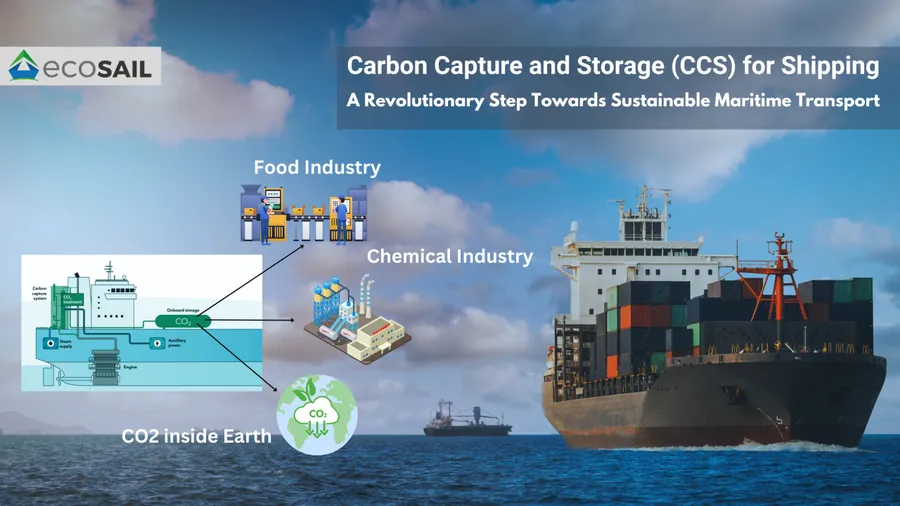
Carbon Capture and Storage (CCS) for Shipping
The global shipping industry plays a pivotal role in the world economy, transporting over 80% of goods traded internationally. However, this essential sector is also a significant contributor to greenhouse gas emissions, responsible for approximately 2.5% of global CO2 emissions. As the world intensifies its efforts to combat climate change, the maritime industry faces increasing pressure to reduce its environmental footprint. Among the promising solutions is Carbon Capture and Storage (CCS), a groundbreaking technology that has the potential to significantly decarbonize shipping and help meet global climate targets.
The International Maritime Organization (IMO) has set an ambitious target to neutralize the shipping industry’s carbon emissions by 2050. As the industry explores various pathways to achieve this goal, CCS stands out as a key technology that can help reduce emissions without requiring a complete overhaul of existing fleets. Let’s dive into how CCS works, its potential benefits for the shipping industry, and the challenges it faces on the road to wide-scale adoption.
What is Carbon Capture and Storage (CCS)?
Carbon Capture and Storage (CCS) refers to a series of technologies designed to capture carbon dioxide (CO2) emissions from sources like power plants or industrial processes and store them safely, preventing the CO2 from entering the atmosphere. In the context of shipping, CCS technologies aim to capture CO2 directly from a ship’s exhaust system, compress it into a liquid form, and store it on board for later disposal or permanent storage at port.
This technology presents a unique opportunity for the maritime industry to dramatically reduce its carbon emissions, even with the current reliance on fossil fuels. By implementing CCS, shipping companies could achieve substantial reductions in emissions without needing to switch to new fuels or retrofit engines completely, making it an attractive short-to-medium-term solution for reducing the environmental impact of maritime transport.
Featured News
Related Articles