Australia Bans Bulk Carrier for 90 Days Over Repeated Crew Rest Record Falsification
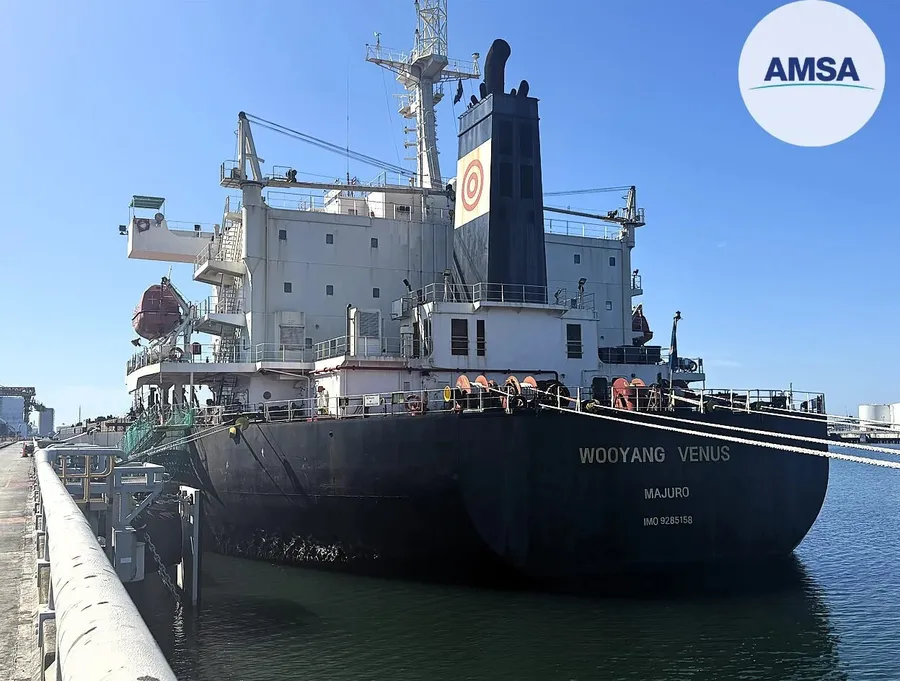
Australia has imposed a 90-day port ban on a bulk carrier after inspectors uncovered repeated falsification of crew work and rest records, raising renewed concerns over seafarer fatigue and onboard safety management.
The case involving the Wooyang Venus highlights a critical issue across commercial shipping: when working-hour records are manipulated, the consequences can extend beyond labour compliance to the safety of the entire vessel.
Repeated Deficiencies Lead to 90-Day Port Ban
The Australian Maritime Safety Authority (AMSA) has prohibited the Marshall Islands-flagged bulk carrier Wooyang Venus from entering Australian ports for 90 days.
The action follows a port State control inspection conducted in Newcastle on October 29, 2026, after a complaint was submitted under the Maritime Labour Convention (MLC).
During the inspection, AMSA officers found that the vessel's crew work and rest records did not accurately reflect the hours actually worked. The authority determined that the records had been deliberately falsified to conceal excessive working hours.
The latest enforcement action is particularly significant because it marks the vessel's third detention in Australian waters in less than three years.
Previous inspections had already identified similar failures in monitoring and recording crew working hours.
Earlier Detentions Raise Crew Welfare Concerns
The Wooyang Venus was previously detained in August 2026 after AMSA inspectors identified deficiencies in the recording and monitoring of crew work and rest periods.
The vessel had also been detained in December 2023 over incorrect working-hour records.
That earlier case involved additional concerns about crew welfare. According to AMSA's 2023 Maritime Labour Convention annual report, inspectors responding to a complaint from the International Transport Workers' Federation (ITF) discovered:
- Falsified work and rest records.
- Poor-quality food provisions.
- Evidence that the vessel's master had physically assaulted a seafarer.
Following the 2023 detention, the operator submitted a corrective action plan that included arrangements for crew repatriation, improvements to food provisions and additional training on working-hour compliance.
However, the recurrence of similar deficiencies indicates that previous corrective measures may not have been sufficient to prevent further violations.
For maritime operators, repeated findings of this nature can raise questions about whether corrective actions are genuinely addressing the underlying causes or merely resolving individual inspection deficiencies.
Fatigue Management Becomes a Maritime Safety Priority
AMSA Executive Director of Maritime Safety and Environmental Compliance Greg Witherall warned that falsifying records designed to protect seafarers creates serious risks for both crew welfare and vessel safety.
Poor fatigue management can reduce alertness, impair decision-making and slow reaction times. These effects become particularly dangerous during navigation, watchkeeping, cargo operations and other safety-critical duties.
A fatigued officer may struggle to respond effectively to an unexpected situation, increasing the risk of collisions, groundings and serious injuries.
Under the MLC, shipowners and operators are required to maintain minimum standards for seafarers' working and living conditions, including mandatory rest periods.
Accurate work and rest records are therefore more than an administrative requirement. They are an essential tool for identifying excessive workloads, monitoring fatigue and demonstrating that the vessel is operating within established limits.
AMSA imposed the 90-day ban under Section 246 of Australia's Navigation Act 2012, citing the deliberate falsification of records, repeated deficiencies and concerns about the effectiveness of the vessel owner's and operator's safety management systems.
The authority has also identified crewing and fatigue management as key enforcement priorities under its 2026–27 National Compliance Plan.
Witherall reiterated that AMSA would take strong action against serious or repeated failures to meet maritime safety and labour obligations.
Why this matters
- For seafarers: Accurate rest-hour records help protect crew members from excessive workloads and provide a formal basis for raising fatigue-related concerns.
- For shipowners and operators: Repeated MLC violations can lead to detentions, port bans, commercial disruption and increased scrutiny from maritime authorities.
- For deck officers and chief engineers: Fatigue directly affects watchkeeping, machinery operations, emergency response and other safety-critical responsibilities.
- For the maritime industry: The case reinforces the importance of genuine fatigue management rather than relying on paperwork that may not reflect actual onboard working conditions.
Conclusion
The Wooyang Venus case demonstrates that repeated falsification of crew rest records can carry significant operational and regulatory consequences.
For the shipping industry, effective fatigue management must begin with realistic workloads, accurate records and a genuine commitment to seafarer welfare and safe vessel operations.
Source: gCaptain
Related Articles



ABS Urges IMO to Balance Decarbonization Goals with Industry Realities
As the maritime industry moves toward stricter greenhouse gas regulations, leading classification society ABS is calling for a more practical and flexible approach to compliance. In a newly released position paper, ABS argues that achieving shipping’s decarbonization targets will require multiple…