Europe is keeping its guard up in one of the world’s most fragile shipping corridors.
The Council of the European Union has extended Operation Aspides, its defensive Red Sea naval mission, until 28 February 2027—signaling that Brussels sees maritime security in the region as a long-term priority, not a temporary deployment.
A Defensive Posture That’s Here to Stay
Launched in February 2024, with operational activity beginning on February 19, Operation Aspides was Europe’s response to Houthi attacks targeting merchant shipping in and around the Red Sea.
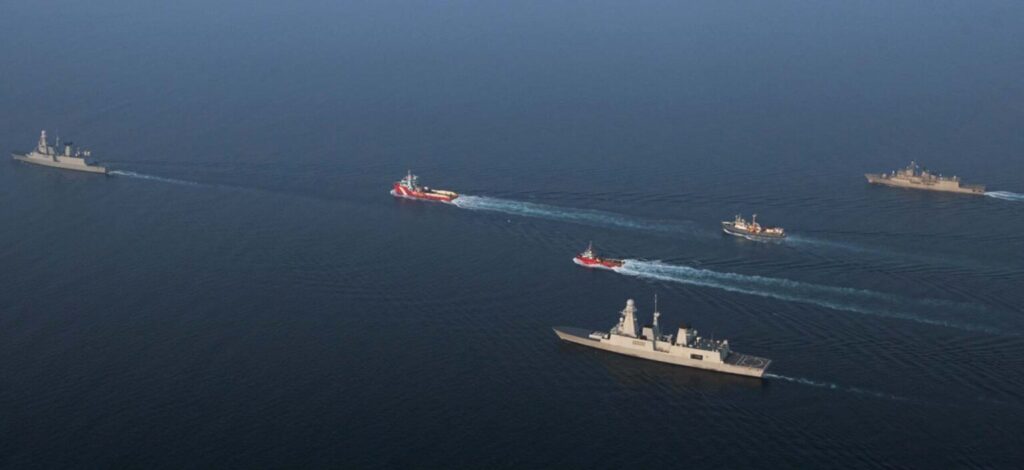
Unlike the more offensive U.S.-led actions that struck Houthi positions ashore, the EU mission has maintained a strictly defensive mandate: escorting and protecting commercial vessels while supporting freedom of navigation.
Although no Houthi attacks have been reported since September 2025, threats have not disappeared. The risk environment remains volatile, and European policymakers are clearly unwilling to assume that calm equals resolution.
Operational Track Record
In its first 23 months, Aspides has supported more than 1,570 vessels, according to mission command.
The task force operates with three naval vessels contributed by EU member states including Greece, Italy, and Spain. The mission continues routine exercises and readiness drills to maintain rapid-response capability in case threats re-emerge.
From a political standpoint, the extension follows a broader strategic review of EU maritime operations in the region. The Council says the mission contributes to regional stability and the safeguarding of commercial sea lanes.
The Budget Behind the Mandate
The extension runs from 1 March 2026 to 28 February 2027.
To support the operation, the Council approved nearly €15 million (about $17.7 million) to cover common operational costs. That figure is slightly below the €17 million allocated the previous year, suggesting either efficiencies in deployment or adjusted operational planning.
For shipowners and operators, the message is straightforward: Europe intends to remain physically present in the corridor.
Shipping Lines Testing the Waters
Confidence in the route is slowly returning—but cautiously.
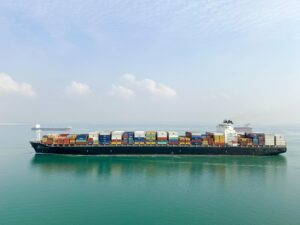
When Maersk and Hapag-Lloyd recently announced the gradual return of Gemini Cooperation services through the Red Sea, they emphasized that sailings would proceed only with naval security support.
In practical terms, that means coordinated convoy schedules, real-time threat monitoring, and close liaison between bridge teams and naval forces.
The reopening of Red Sea transits is not a return to business as usual—it is a managed re-entry under military oversight.
Why This Matters
Route Planning & Fuel Economics Continued naval presence increases the likelihood that operators can shift back from longer Cape routes—potentially reducing fuel burn and voyage time.
Risk & Insurance Calculations Underwriters closely monitor naval security commitments. A formal EU extension provides measurable reassurance in risk assessments.
Crew Safety & Operational Confidence Seafarers gain tangible security support when transiting high-risk waters, improving morale and bridge decision-making clarity.
Strategic Stability for Liner Alliances Long-term naval backing supports network reliability for alliances such as Gemini and other global carriers evaluating Red Sea redeployment.
For maritime professionals, this extension is more than a political formality.
It is a signal that Red Sea security remains fragile—and that naval escort capacity will continue to shape global trade flows, operational costs, and crew safety decisions through at least 2027.