The Ecosailor

Norway Invests $130 Million to Accelerate Fleet of Zero-Emission Vessels

Back

Norway Invests $130 Million to Accelerate Fleet of Zero-Emission Vessels

Norway Invests $130 Million to Accelerate Fleet of Zero-Emission Vessels

Major government funding will support battery, hydrogen, and ammonia-powered ships while expanding the infrastructure needed for cleaner maritime transport.

Norway has reinforced its position as a global leader in green shipping by committing more than $130 million to build 10 new zero-emission vessels. The investment is part of a broader strategy to decarbonise domestic shipping and develop the fuel infrastructure required to support the industry’s long-term energy transition
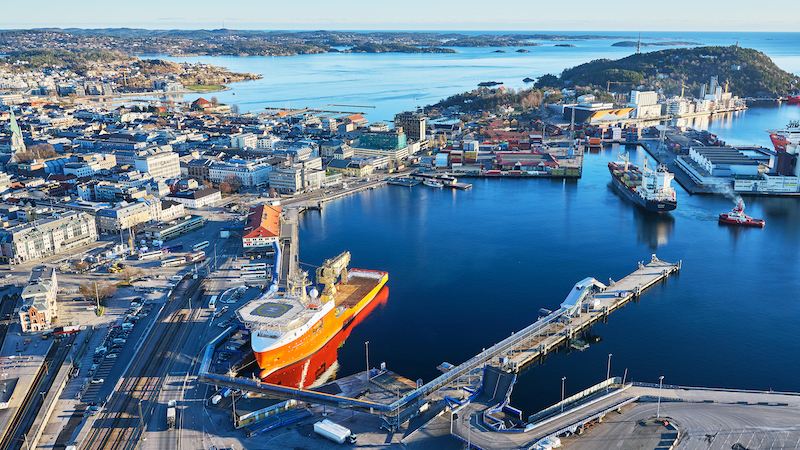
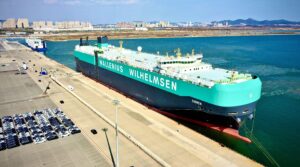
Norway Backs Next Generation of Clean Ships

Norway’s state-owned energy innovation agency, Enova, has awarded over $130 million in funding to seven Norwegian maritime companies to accelerate the construction of new zero-emission vessels.

The latest funding package covers six battery-electric vessels, two hydrogen-powered bulk carriers, and two ammonia-fuelled tankers, along with investment in supporting charging infrastructure.

These projects join 22 zero-emission vessels already under construction with Enova’s backing, further strengthening Norway’s reputation as the country with the world’s highest proportion of emission-free ships.

According to Norway’s Minister for Climate and Environment, Andreas Bjelland Eriksen, domestic shipping accounts for around 8% of the country’s greenhouse gas emissions, making fleet decarbonisation a key pillar of Norway’s climate strategy.

Battery-Electric Projects Lead the Investment

Battery-powered vessels received the largest share of this funding round.

Zen, the shipping electrification arm of the Eitzen Group, secured approximately $20 million to build two fully electric container ships. The vessels, already ordered from China’s Zhejiang Dongpeng Shipbuilding, will each feature battery systems exceeding 100 MWh, making them among the largest battery-electric container ships in commercial service when they enter operation in 2029.

Elsewhere, Nordic Sea Concept received around $8.6 million to develop an all-electric cruise vessel for Norway’s iconic fjords. Equipped with a 20 MWh battery system, the vessel will operate without emissions in environmentally sensitive waterways.

Aquaculture operator Seistar was also awarded approximately $13.6 million to construct a fully electric wellboat and supporting charging facilities, enabling emission-free transport and processing of fish between farming sites and processing plants.

Hydrogen and Ammonia Gain Momentum

Recognising that batteries alone cannot decarbonise every vessel type, Enova has earmarked nearly $80 million to strengthen hydrogen and ammonia-based shipping solutions.

LH2 Shipping received roughly $35 million to build two liquid hydrogen-powered bulk carriers, while Bergen Tankers secured about $44 million for the construction of two ammonia-fuelled tankers, both of which have already been chartered by Norwegian energy company Equinor.

Alongside vessel construction, Norway is continuing to invest in the infrastructure needed to support alternative fuels.

Earlier this month, Azane Infrastructure AS reaffirmed its commitment to completing three ammonia bunkering facilities at Mongstad, Risavika, and Fjordbase, projects that also receive Enova funding. The company has agreed to pay financial penalties should the projects fail to reach completion.

Building an Ecosystem for Zero-Emission Shipping

Acting Enova CEO Rune Holmen said the objective extends beyond reducing emissions from individual ships.

He explained that widespread adoption of batteries, hydrogen, and ammonia depends on developing the complete value chain—including fuel production, storage, distribution, bunkering, and vessel deployment. Growing each element together will lower investment barriers and encourage broader adoption across the shipping sector.

According to Enova, the newly funded projects are expected to reduce carbon dioxide emissions by more than 46,000 tonnes annually, equivalent to removing around 18,000 diesel passenger cars from the road.

Progress Continues, But Challenges Remain

Despite leading the world in zero-emission shipping, Norway acknowledges there is still work ahead.

Classification society DNV reports that the country operates approximately 3,785 domestic vessels, of which 112 are already zero-emission, representing around 3% of the fleet—currently the highest share globally.

However, Enova’s latest assessment indicates that the present pace of fleet renewal is still insufficient for Norway to achieve its ambition of eliminating greenhouse gas emissions from maritime transport by 2050.

Why This Matters

  • Alternative fuels are moving from pilot projects to commercial reality, with battery, hydrogen, and ammonia vessels entering regular service.
  • Infrastructure investment is proving just as important as vessel investment, ensuring operators have access to charging and bunkering facilities.
  • Shipowners gain greater confidence to invest when governments help reduce the financial risks of adopting new technologies.
  • Norway continues to serve as a global testbed, offering valuable lessons that other maritime nations can follow as international decarbonisation regulations tighten.

Norway’s latest investment demonstrates that achieving zero-emission shipping requires more than building cleaner vessels—it demands the simultaneous development of fuels, infrastructure, and supporting technologies. As regulatory pressure grows worldwide, integrated approaches like this could become the blueprint for the future of sustainable maritime transport.

Leave a Comment

Your email address will not be published. Required fields are marked *

Leave a Comment

Your email address will not be published. Required fields are marked *