The Ecosailor

Sallaum Lines Bets on Bigger, Greener Future with Order for 8,600-CEU Car Carriers

Back

Sallaum Lines Bets on Bigger, Greener Future with Order for 8,600-CEU Car Carriers

Sallaum Lines Bets on Bigger, Greener Future with Order for 8,600-CEU Car Carriers

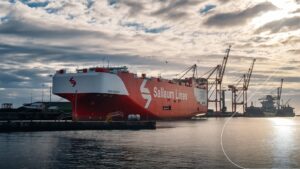
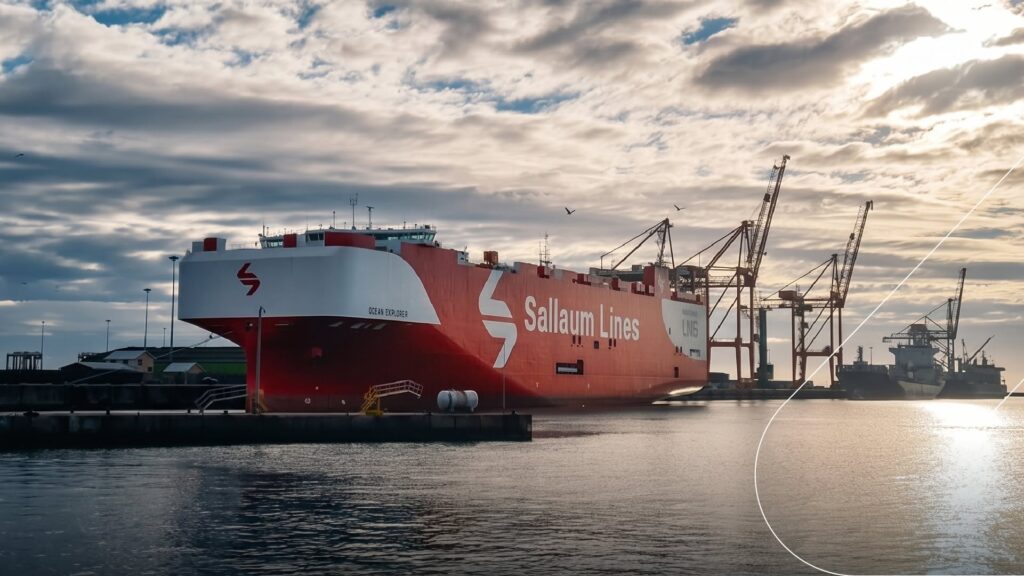
Vehicle carrier operator Sallaum Lines has placed one of the largest fleet investments in its history, ordering a new generation of dual-fuel car carriers designed to increase capacity while preparing for the next wave of maritime decarbonization.

Largest Ships Ever Ordered by Sallaum Lines

Sallaum Lines has signed a shipbuilding agreement with Xiamen Shipbuilding Industry (XSI) for two firm and two optional Pure Car and Truck Carriers (PCTCs), each capable of carrying 8,600 Car Equivalent Units (CEU). The vessels will become the largest ships in the company’s fleet, marking a significant milestone in its ongoing fleet modernization strategy. Coming shortly after the delivery of the company’s latest LNG dual-fuel vessels, the new order reflects Sallaum Lines’ efforts to expand capacity while aligning future investments with changing environmental requirements and customer expectations.
Built to Handle the Next Generation of Vehicle Logistics

Measuring nearly 200 meters in length with a beam of 38 meters, the vessels are being designed to maximize cargo flexibility across multiple market segments. Five liftable decks will allow the ships to transport a wide range of cargo, including passenger vehicles, commercial trucks, heavy machinery, and project cargo. The design aims to strike a balance between large cargo intake and broad port accessibility, enabling the vessels to operate efficiently across Sallaum Lines’ key trade routes connecting Europe, Africa, the Americas, the Middle East, and Asia. As automotive supply chains continue to evolve, flexibility is becoming just as important as capacity for vehicle carrier operators.

Future Fuels in Focus

A major feature of the newbuildings is their dual-fuel propulsion system. The vessels will be capable of operating on Liquefied Natural Gas (LNG), Very Low Sulphur Fuel Oil (VLSFO), and Marine Gas Oil (MGO), providing operators with greater flexibility as fuel markets and environmental regulations continue to evolve. Importantly, the ships are also being built with an ammonia-ready design. While large-scale green ammonia bunkering infrastructure is still under development, the design allows for future conversion if ammonia emerges as a commercially viable marine fuel. This approach reflects a growing trend among shipowners seeking to avoid locking themselves into a single fuel pathway while maintaining compliance with future environmental regulations.

Supporting Long-Term Sustainability Goals

The latest order forms part of Sallaum Lines’ broader environmental strategy, which targets carbon neutrality by 2050 and supports the company’s 2030 sustainability roadmap. Beyond alternative fuels, the company has been investing in several efficiency-enhancing technologies across its fleet, including: LNG-powered vessels Photovoltaic solar installations onboard Hull lubrication systems to reduce resistance Advanced anti-fouling coatings to improve fuel efficiency Together, these measures are intended to lower emissions while maintaining the operational performance required by global vehicle manufacturers and logistics customers.

Responding to Growing Automotive Trade Demand

The investment comes as global automotive logistics continues to evolve, driven by changing trade patterns, growing vehicle exports from Asia, and increasing demand for efficient finished vehicle transportation. Sallaum Lines serves a broad portfolio of international automotive manufacturers and has been expanding its presence in Asian markets, particularly through its China-focused operations and Far East trade lane development. The additional vessel capacity is expected to strengthen service coverage, improve operational flexibility, and support long-term partnerships with automotive customers facing increasingly complex supply chain requirements.

Why This Matters

  • For shipowners: The order highlights how fleet growth and decarbonization are increasingly being pursued together rather than as separate strategies.
  • For automotive logistics providers: Larger, flexible PCTCs help meet rising vehicle transport demand while improving operational efficiency.
  • For maritime professionals: Ammonia-ready designs demonstrate how owners are preparing for future fuel uncertainty without committing prematurely to a single technology.
  • For the shipping industry: The project reflects continued confidence in global vehicle trade despite ongoing regulatory and fuel-transition challenges.

Sallaum Lines’ latest newbuilding order signals a clear commitment to both growth and sustainability. By investing in larger, dual-fuel, ammonia-ready vessels, the company is positioning itself to serve tomorrow’s automotive supply chains while preparing for an increasingly low-carbon future.

Leave a Comment

Your email address will not be published. Required fields are marked *

Leave a Comment

Your email address will not be published. Required fields are marked *