India and Japan Launch First Joint Naval Defence Project with Advanced UNICORN Mast System
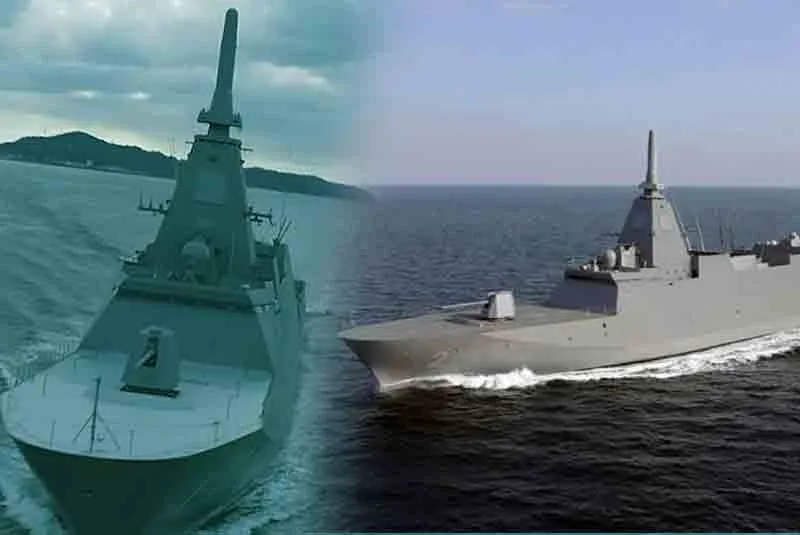
India and Japan have taken a significant step in strengthening their maritime defence partnership by signing their first-ever joint defence equipment development agreement. The project will see advanced integrated communication masts developed for Indian Navy warships, combining Japanese technology with Indian manufacturing under the "Make in India" initiative.
First Bilateral Defence Co-Development Project Begins
The agreement was announced during the 16th India-Japan Annual Summit in New Delhi and marks a milestone in defence cooperation between the two countries. The collaboration centers on the development and licensed production of the UNICORN (Unified Complex Radio Antenna) integrated mast system for the Indian Navy.
Originally developed by Japan's NEC Corporation and currently installed on the Japan Maritime Self-Defense Force's Mogami-class frigates, the UNICORN mast integrates multiple communication, surveillance and electronic warfare systems into a single structure.
Under the partnership, Japan will provide the design expertise and core technology, while Bharat Electronics Limited (BEL) will manufacture the systems in India with technical support from Japanese industry partners. BEL will also oversee system integration and localization, aligning the programme with India's domestic defence manufacturing goals.
Prime Minister Narendra Modi described the agreement as the beginning of a new chapter in India-Japan defence technology cooperation following discussions with Japanese Prime Minister Sanae Takaichi.
India plans to integrate indigenous sensors and antennas into the UNICORN mast before deploying it across Indian Navy warships. The system is expected to gradually replace conventional communication and sensor masts currently fitted on many naval vessels.
The project builds on earlier discussions between the two countries. In November 2024, India and Japan reached an understanding on exporting UNICORN multifunctional masts to India, and both governments have now confirmed that key technical issues have been resolved, allowing the program to move forward.
Integrated Design Improves Performance and Survivability
The UNICORN system, also known as the NORA-50 integrated mast, was jointly developed by NEC Corporation, Sampa Kogyo K.K. and The Yokohama Rubber Co., Ltd. between 2015 and 2016. It entered serial production in 2018 and was first deployed aboard Japan's Mogami-class frigates in 2019.
Unlike conventional naval masts carrying numerous external antennas, the UNICORN combines a wide range of systems into a single integrated structure. These include surveillance radar, Electronic Support Measures (ESM), Identification Friend or Foe (IFF), Link 16, Wi-Fi, VHF/UHF communications, UHF transmit and receive antennas, Tactical Air Navigation (TACAN), and a lightning protection system.
This integrated approach offers several operational advantages. By reducing the number of exposed antennas, the mast lowers maintenance demands, minimizes electromagnetic interference, and provides better protection for sensitive equipment in harsh marine environments. It also reduces a warship's radar cross-section, improving stealth characteristics and survivability during operations.
Broader Strategic Cooperation
Beyond defence, India and Japan agreed to deepen cooperation in economic security, resilient supply chains, clean energy, biotechnology, semiconductors, quantum technologies and advanced materials.
The two nations also committed to upgrading the Comprehensive Economic Partnership Agreement (CEPA), which has been in force since 2011, to better reflect changes in global trade. Discussions also covered India's concerns regarding non-tariff barriers affecting exports to Japan.
Officials from both countries indicated that the UNICORN program could serve as the foundation for additional joint defence technology projects in the years ahead.
Why this matters
- Strengthens naval capability: Integrated mast technology improves communications, surveillance, electronic warfare capability and operational efficiency aboard Indian Navy warships.
- Boosts indigenous defence manufacturing: Local production by BEL supports India's "Make in India" initiative while enabling technology transfer from Japan.
- Enhances future fleet readiness: Modern integrated mast systems improve stealth, reduce maintenance requirements and simplify future upgrades.
- Expands strategic maritime cooperation: The project signals deeper India-Japan collaboration in defence technology alongside broader partnerships in advanced industries.
Conclusion
The UNICORN mast program represents a major milestone in India-Japan defence cooperation, combining advanced Japanese naval technology with Indian manufacturing expertise. For the Indian Navy, it marks an important step towards building smarter, more capable warships equipped for the evolving demands of modern maritime operations.
Source: Marine Insight
Related Articles
INS Mahendragiri Joins Indian Navy, Strengthening Indigenous Naval Capability in the Indo-Pacific
INS Mahendragiri Joins Indian Navy, Strengthening Indigenous Naval Capability in the Indo-Pacific

WAR UPDATES – Hormuz on Edge: Ceasefire, Tariffs, and Shipping Disruptions Redefine Gulf Trade
A fragile ceasefire between the U.S. and Iran has reopened the Strait of Hormuz—but for shipping, the crisis is far from over. From military escalation to rising costs and regulatory risks, the past weeks have reshaped one of the world’s most critical maritime corridors.
Gulf War Disruptions Deepen: Freight Rates Rise, Tankers Targeted, Limited Transit Resumes
Tensions in the Gulf are now hitting shipping from every angle—costs, safety, and access. While some vessels are cautiously moving through Hormuz, the wider picture remains volatile and operationally complex. The ongoing conflict involving the United States, Israel, and Iran is reshaping maritime…