13 Ships Attacked in 12 Days: Maritime Security Crisis Deepens in the Strait of Hormuz
The security situation for commercial shipping in the Gulf is deteriorating rapidly. Within just 12 days of escalating regional tensions, multiple vessels have come under attack — raising serious concerns for seafarer safety and global trade flows.
Three More Ships Hit Near Strait of Hormuz
Three commercial vessels were struck by projectiles over the past 24 hours in and around the Strait of Hormuz, highlighting the growing dangers for ships operating in the region.
According to the Joint Maritime Information Center (JMIC), the incidents involved the container ship ONE Majesty and bulk carriers Mayuree Naree and Star Gwyneth. The attacks occurred between March 10 and March 11 along the Hormuz transit corridor and nearby Gulf waters.
These latest incidents follow a brief 72-hour pause in attacks but confirm that merchant ships remain exposed to long-range missile and drone threats.
An Indian seafarer was killed after an explosive-laden boat rammed the crude oil tanker Safesea Vishnu near Khor Al Zubair Port on March 11, 2026
while the vessel was conducting a ship-to-ship transfer in Iraqi waters. Officials described the strike as a suspected “suicide boat” attack targeting the Marshall Islands-flagged tanker operating off Basra. One Indian crew member died, while the remaining sailors — including 14 other Indians — were rescued and taken ashore for medical checks. India’s embassy in Baghdad confirmed it is coordinating with Iraqi authorities and assisting the affected seafarers.
Bulk Carrier Disabled After Engine Room Fire
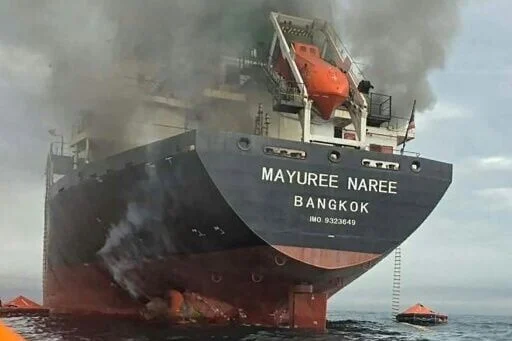
The most serious incident involved the Thai-flagged bulk carrier Mayuree Naree.
An explosive strike about 11 nautical miles off Oman triggered a major engine-room fire, forcing the crew to abandon the vessel. Oman’s navy rescued 20 crew members, while three seafarers remain missing and are believed to be trapped inside the engine room.
The other vessels reported lighter damage. ONE Majesty sustained minor projectile damage while underway near Dubai, while Star Gwyneth suffered hull damage while at anchor. Crews on both ships were reported safe.
Attacks, Disruptions, and Seafarers at Risk
The incidents bring the number of confirmed vessel attacks to 13 since February 28, according to reports compiled by the UK Maritime Trade Operations.
The International Maritime Organization estimates that seven seafarers have been killed during the conflict so far, while roughly 20,000 seafarers remain aboard vessels stranded in the Persian Gulf.
Traffic through the Strait of Hormuz — which normally carries about 20% of global seaborne oil shipments — has slowed sharply. Only seven commercial vessels transited the strait in the past 24 hours, compared with a typical daily average of around 138 ships.
Meanwhile, electronic warfare is adding further complications. More than 600 GNSS disruption events were reported across the region in a single day, causing navigational errors, AIS anomalies, and intermittent positioning failures.
Drone strikes have also targeted fuel storage facilities at the Port of Salalah, raising concerns that maritime infrastructure could become a wider target.
Security advisories warn that further missile or drone attacks against ships or ports could occur within the next 24–48 hours.
Why This Matters
Seafarer safety: Crews navigating the Gulf are increasingly exposed to missile strikes and navigational disruptions.
Strategic shipping route at risk: The Strait of Hormuz is one of the world’s most critical energy and trade corridors.
Operational uncertainty: Shipowners face difficult decisions on routing, insurance, and crew safety.
Supply chain impact: Reduced vessel traffic and stranded ships could trigger delays, congestion, and higher freight rates globally.
The rising number of attacks signals a dangerous phase for commercial shipping in the Gulf. For the maritime industry, safeguarding seafarers and maintaining safe passage through the Strait of Hormuz is now a critical challenge. ⚓