Back
Panama Port Dispute Escalates as China Freezes Infrastructure Talks
A legal ruling in Panama has triggered a geopolitical ripple effect that now stretches from Hong Kong to Washington.
After Panama’s Supreme Court declared CK Hutchison’s canal-area port contracts unconstitutional, Beijing has reportedly moved to halt infrastructure negotiations with the Central American nation — raising fresh uncertainty around one of the world’s most strategic maritime corridors.
Court Ruling Sparks International Fallout
Panama’s Supreme Court last week suspended the contracts that allow Hong Kong-based CK Hutchison to operate two key container terminals near the Panama Canal.
The court ruled that the agreements were unconstitutional, a decision Hutchison strongly disputes. The company says the terminals remain under its operational control for now and argues that Panamanian authorities failed to properly consider its communications during the legal proceedings.
Hutchison has responded by initiating arbitration in Hong Kong against the Panamanian government. Legal experts suggest the process could stretch over several years and, if the company prevails, may lead to significant compensation claims.
But this is no ordinary commercial dispute.
Geopolitics at the Canal
The court decision follows nearly a year of political pressure from the United States, where officials have expressed concerns about Chinese influence in the canal zone.
Washington has accused China of exerting undue control over canal-linked infrastructure — claims made without public evidence — and warned that it may act to safeguard U.S. treaty rights under the 1999 agreement that transferred canal control to Panama.
In parallel, CK Hutchison has been working on a proposed $23 billion global ports portfolio sale. Under that plan, its Panama port leases would be transferred to U.S.-based BlackRock, while the rest of the portfolio would go to Terminal Investment Limited (TIL), part of the Aponte family’s Mediterranean Shipping Company empire — subject to deal completion.
Against this backdrop, Beijing has publicly condemned Panama’s court decision. China’s Hong Kong and Macao Affairs Office described the ruling as politically driven and warned Panama of political and economic consequences if it is not reversed.
China Responds with Economic Leverage
According to Bloomberg and Reuters, Chinese state-owned enterprises have been instructed to suspend negotiations on new infrastructure projects in Panama. Given China’s active role in Panamanian construction and development projects, that pause carries real economic weight.
Additional reported measures include:
Heightened customs inspections on Panamanian agricultural exports
Potential cargo diversions to alternative ports
Broader trade pressure affecting Panama’s revenue streams
Panama’s government, however, has maintained a firm stance. President José Raúl Mulino has reiterated that the country respects judicial independence and will not interfere with court decisions.
What This Means for the Canal and Port Operators
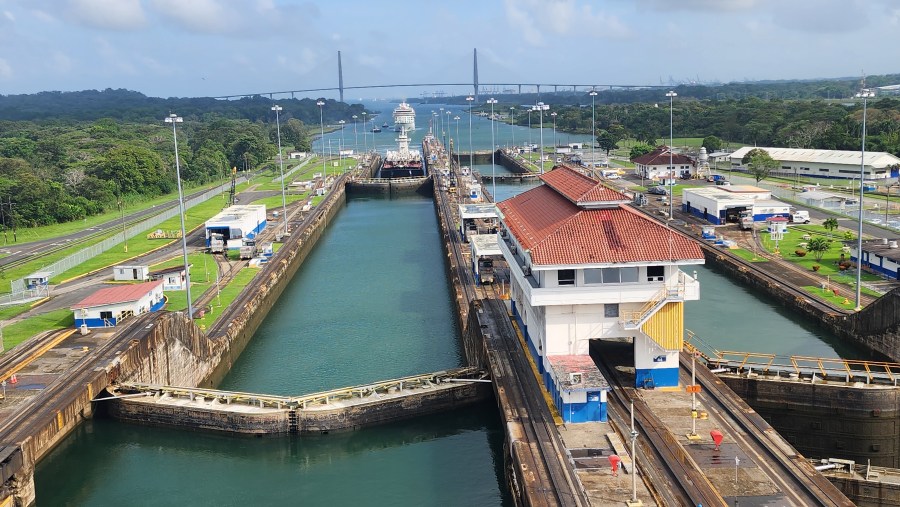
The Panama Canal remains operational, and Hutchison continues running its terminals — for now. But the situation introduces layers of legal and political uncertainty.
For shipping lines and port operators, the key questions are practical:
Could arbitration drag on while operational control remains contested?
Will geopolitical friction affect cargo flows or port access?
Could ownership changes alter long-term terminal strategy and service models?
The canal handles roughly 5% of global maritime trade. Even perceived instability in its surrounding infrastructure tends to ripple through freight markets and logistics planning.
Why This Matters
And when tensions build around a chokepoint like the Panama Canal, the entire industry pays attention


Training Gap Exposed After Tanker–Trawler Collision Sinks Fishing Vessel in Firth of Clyde

Maersk Slips Into Ocean Loss as Liner Market Turns — 1,000 Jobs to Go

USS John F. Kennedy Completes First Sea Trials as Ford-Class Program Advances

Panama Port Dispute Escalates as China Freezes Infrastructure Talks