Evergreen Bets on Mid-Sized Tonnage with $1.47 Billion Newbuild Program
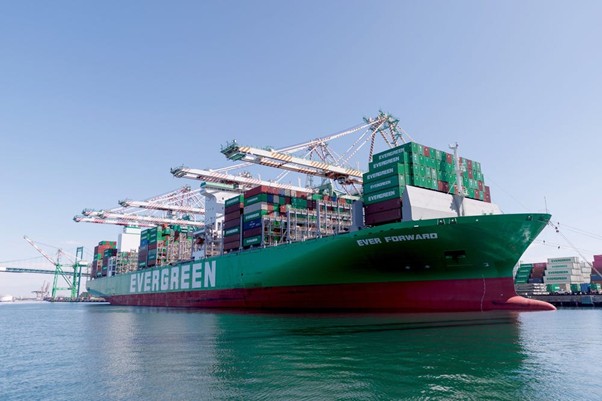
Evergreen Marine is expanding again — this time with 23 new containerships focused squarely on the mid-size segment.
In a market still navigating volatility, the Taiwanese carrier is doubling down on flexibility and fleet renewal.
A Targeted Fleet Expansion
Evergreen Marine Corporation has approved orders for 23 new container vessels valued at up to $1.47 billion, reinforcing its long-term growth strategy.
The contracts, cleared on January 27 by the board of Evergreen Marine (Asia) Pte. Ltd., cover: • Seven 5,900 TEU ships to be built by Jiangsu New Yangzi Shipbuilding • Sixteen 3,100 TEU ships at CSSC Huangpu Wenchong Shipbuilding
The seven larger units are priced between $469 million and $574 million, while the sixteen smaller vessels carry a combined value of $736 million to $896 million, according to regulatory disclosures. Both shipyards are independent counterparties, and pricing reflects prevailing market levels.
Evergreen’s Growing Orderbook
Evergreen currently operates 239 vessels with a total capacity of approximately 1.9 million TEUs, including: • 162 owned vessels • 77 chartered ships This places the company seventh globally by capacity, according to Alphaliner data. With the latest contracts added, Evergreen’s orderbook rises to 76 vessels totaling 925,000 TEUs. That represents nearly 47% of its existing fleet capacity — a substantial forward commitment. In practical terms, Evergreen is not making a marginal adjustment. It is reshaping nearly half of its current capacity pipeline.
Why Mid-Sized Ships Matter Now
The choice of 3,100 TEU and 5,900 TEU designs is strategic. While ultra-large container vessels dominate mainline Asia–Europe routes, mid-sized ships are increasingly valuable for: • Regional networks • Secondary trade lanes • Feeder and relay services • Ports with draft or infrastructure limitations As congestion continues to affect major hub ports and trade patterns remain fluid, vessels in the 3,000–6,000 TEU range offer carriers agility. They can redeploy faster, access a broader mix of ports, and support network adjustments without the scale constraints of mega-ships. For operators, this segment balances efficiency with optionality.
Chinese Yards Continue to Lead
Both selected shipbuilders — Jiangsu New Yangzi and Huangpu Wenchong — are among China’s most active container vessel constructors. The deal further highlights China’s sustained dominance in the global containership newbuild market, particularly in mid-sized and feeder classes where order activity has remained steady. Delivery timelines were not disclosed, but given yard backlogs, the vessels are likely to enter service progressively over the coming years.
Why This Matters
• For shipowners: Evergreen’s large orderbook signals confidence in long-term container demand and reinforces mid-sized tonnage as a strategic asset class. • For operators and planners: Flexible vessels in the 3,000–6,000 TEU range support network resilience as trade lanes shift and hub congestion persists. • For shipyards and suppliers: Chinese builders remain central to global container fleet renewal. • For maritime professionals: Nearly half of Evergreen’s existing capacity is now matched by forward orders — a strong indicator that fleet modernization and scale remain priorities despite market volatility.
Evergreen’s message is clear: growth will continue, but flexibility will define it. In today’s container market, being adaptable may matter just as much as being large.