Valenciaport Sets New TEU Benchmark as Profits Surge in 2025
Spain’s busiest container gateway has closed 2025 on a high note.
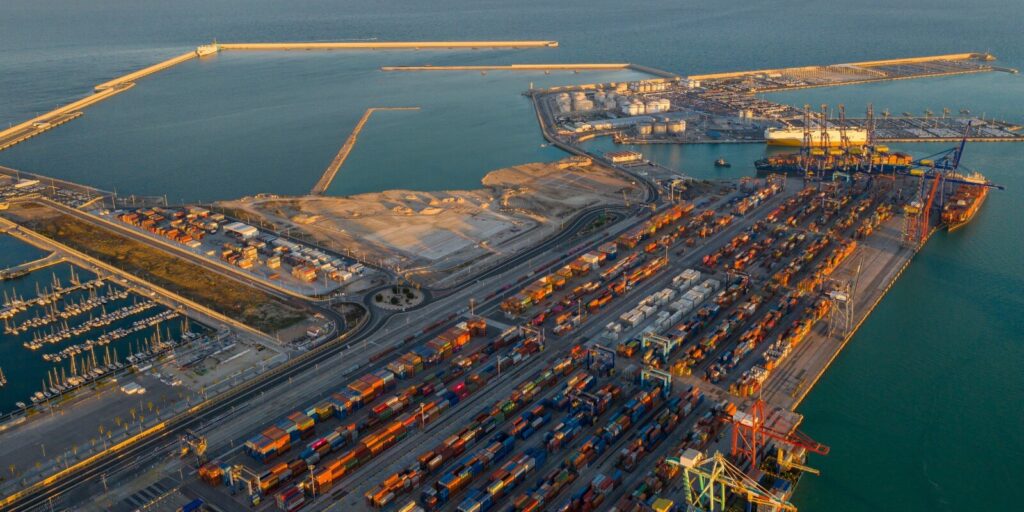
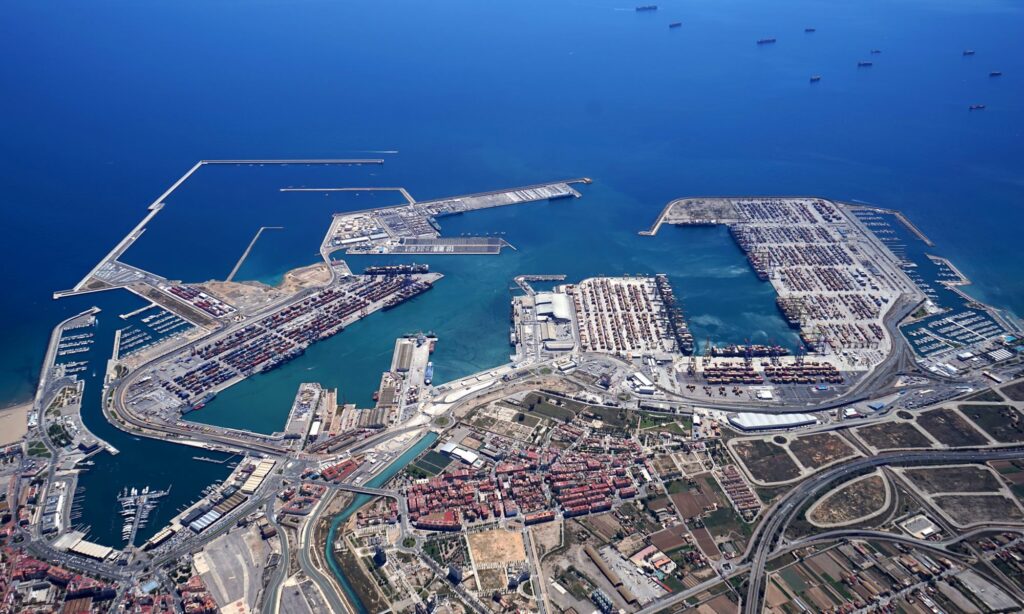
Stronger cargo flows, disciplined cost control, and steady carrier confidence pushed Valenciaport to record container volumes and sharply improved profitability — even as global trade conditions remained uncertain. The Port Authority of Valenciaport has reported its strongest container performance to date, handling 5.66 million TEU in 2025 — a 3.41% increase over 2024 and the highest annual total in its history.
Financially, the numbers tell the same story of momentum.
Net turnover rose 9.02% year-on-year to €164.3 million. Pre-tax profit climbed an impressive 50.51% to €43.7 million. Cash flow reached €82.8 million, up €12.3 million compared to the previous year.
According to Valenciaport President Mar Chao, the results reflect sustained investment in capacity expansion and operational efficiency. But she also acknowledged that global trade conditions remain complex — a reminder that resilience remains essential.
Traffic growth drives revenue
The revenue increase was largely powered by higher traffic volumes and port fees, which grew 10.27% to €139.9 million.
At the same time, operating expenses rose only 0.94%, reaching €135.96 million. The modest cost growth was mainly linked to external services, while impairment charges declined. The combination of higher throughput and controlled spending significantly strengthened margins.
For port operators and terminal managers, that balance between growth and cost discipline is increasingly the differentiator in competitive European markets.
Imports break new ground
On the trade front, 2025 marked a milestone: imports of full containers exceeded one million TEU for the first time, totaling 1,051,784 TEU.
China accounted for just over half of those imports, with volumes from the country rising nearly 20% year-on-year — underlining the continued strength of Asia–Mediterranean trade lanes.
Export activity also advanced, growing 5.56% to 919,570 TEU. The United States remained the leading export destination, representing 14.66% of full-container exports.
For shipping lines and freight forwarders, the data signals sustained two-way trade stability through Valencia, even amid geopolitical and macroeconomic uncertainty.
Passenger and cruise segments expand
Beyond containers, passenger traffic also moved higher.
Regular ferry services carried 861,748 passengers, up 3.54%, with the majority traveling between the mainland and the Balearic Islands. Traffic on the Algeria route rose nearly 18%, highlighting strengthening North Africa connectivity.
Cruise activity reached 799,050 passengers — a 3.23% increase — reinforcing Valencia’s role as both a cargo and tourism gateway.
Cold chain and digital push
The board was also briefed on Valenciaport’s participation at Fruit Logistica in Berlin, where the port promoted its capabilities in refrigerated cargo handling, multimodal logistics integration, and digital port services.
The complementary functions of Valencia, Sagunt, and Gandia were presented as a unified logistics ecosystem — positioning the region as a strategic Mediterranean hub for temperature-controlled and time-sensitive cargo.
Why This Matters
For shipowners and carriers: Stable volume growth and rising import/export flows reinforce Valencia’s role as a key Mediterranean node for Asia–Europe and transatlantic trade.
For terminal operators and port planners: Strong profitability improves the port authority’s ability to reinvest in infrastructure, automation, and capacity upgrades.
For reefer and agri-logistics players: Cold-chain promotion at Fruit Logistica signals further opportunity in temperature-controlled cargo.
For maritime professionals: The numbers show that disciplined cost control combined with infrastructure investment can deliver growth — even in volatile global markets.
Valenciaport’s 2025 results demonstrate a familiar truth in shipping: resilience, capacity planning, and trade connectivity remain the core engines of port success.