TUI Cruises to Retrofit Mein Schiff 6 with Compressor-Free Air Lubrication
A major cruise operator is turning to passive air lubrication to cut fuel burn and emissions.
Armada Technologies will install its next-generation system on Mein Schiff 6, aiming to improve efficiency without adding energy-hungry machinery.
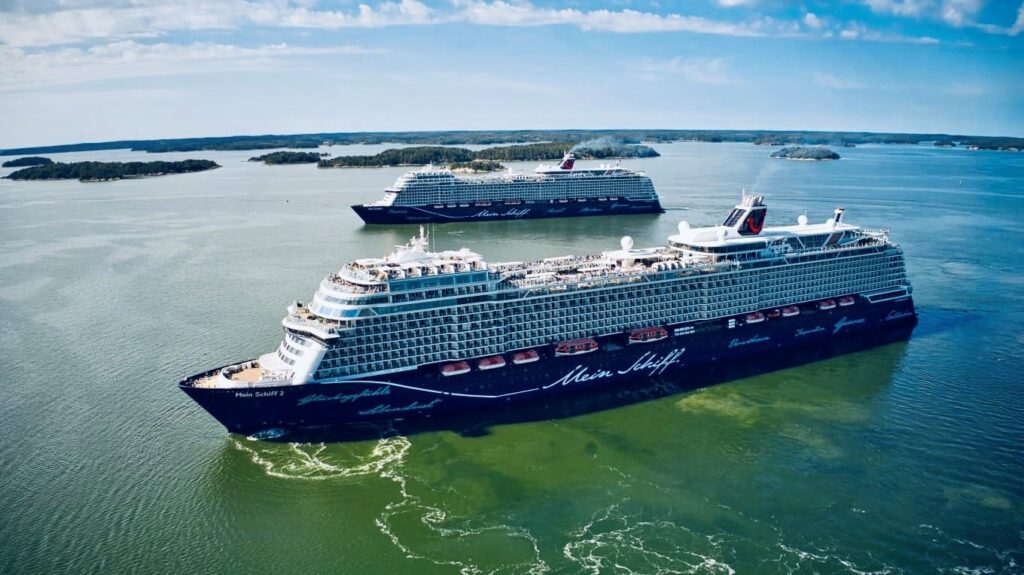
UK-based Armada Technologies has secured a contract with TUI Cruises to fit its Passive Air Lubrication System (PALS) on the cruise vessel Mein Schiff 6.
The 98,785 GT ship, built in 2017 and capable of carrying 2,534 passengers across 15 decks, is scheduled to receive the retrofit during a planned dry docking in Singapore in the first quarter of 2027.
TUI Cruises — a joint venture between TUI Group and Royal Caribbean Group — sees the installation as part of its wider decarbonisation and operational efficiency programme.
Air lubrication — without compressors
Unlike conventional air lubrication systems that rely on energy-intensive compressors to generate air bubbles beneath the hull, Armada’s second-generation PALS technology operates passively.
It uses the vessel’s forward motion and surrounding water flow to create a fine air–water layer along the hull surface. This reduces frictional resistance, maintains effectiveness in varied sea conditions, and lowers auxiliary power demand.
According to the company, the system offers a broader operating envelope than traditional systems — performing consistently across different speeds, drafts and sea states.
For chief engineers, that translates into potential fuel savings without additional electrical load or complex machinery maintenance.
Supporting EEXI and CII targets
The retrofit is expected to enhance fuel efficiency and lower greenhouse gas emissions, helping the vessel meet regulatory benchmarks under the International Maritime Organization framework.
Specifically, the system supports compliance with the Energy Efficiency Existing Ship Index (EEXI) and contributes to improved Carbon Intensity Indicator (CII) ratings — both critical metrics for vessels operating in increasingly regulated waters.
Beyond regulatory alignment, Armada claims lower lifetime operating costs compared to compressor-based systems, citing reduced inspection and service requirements.
Independent validation underway
Armada has pursued third-party verification of PALS performance across a range of operating conditions.
Testing has included cavitation tunnel studies, model tank trials on two separate hull forms, and collaborative research with Liverpool John Moores University’s Global Centre for Maritime Innovation.
The first commercial installation — onboard the LNG carrier Kool Husky, owned by CoolCo — is currently undergoing long-term independent performance evaluation at sea under a programme led by DNV.
The company has also secured design and installation approvals from RINA, DNV and American Bureau of Shipping.
A practical decarbonization step
For TUI Cruises, the installation represents a measured, efficiency-driven pathway toward net zero — targeting incremental improvements through scalable technology rather than headline-grabbing fuel switches.
The cruise segment faces particular pressure to demonstrate emissions reductions, especially in environmentally sensitive regions and in ports with stricter sustainability requirements.
If performance data confirms projected savings, passive air lubrication could become an increasingly attractive retrofit option for operators balancing regulatory compliance with commercial realities.
Why This Matters
For cruise and passenger operators: Retrofit technologies like passive air lubrication offer emissions reductions without major fuel system overhauls.
For chief engineers: Compressor-free systems reduce auxiliary load and potentially simplify maintenance compared to conventional air lubrication setups.
For fleet managers: Improved EEXI and CII performance strengthens regulatory positioning and charter competitiveness.
For clean-tech innovators: Independent verification and class approvals are becoming essential to win trust in high-stakes maritime applications.
In a sector where margins and emissions targets are both tightening, efficiency gains beneath the waterline may prove just as important as headline fuel transitions above it.