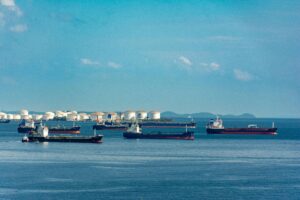
For centuries, ports and ships were engineered as rigid strongholds—designed to hold back waves, control nature, and create predictable operating environments. That model is now being challenged by a more adaptive philosophy taking hold across the maritime sector.
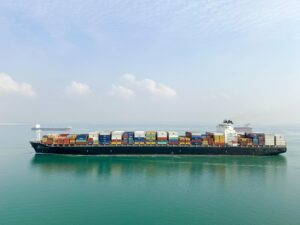
Modern vessels already reflect this shift. Dynamic positioning systems, real-time data integration, and autonomous technologies allow ships to respond continuously to environmental conditions. Offshore energy has followed a similar path, with floating wind and energy platforms designed to move with waves rather than resist them.
Port infrastructure, however, has been slower to evolve.
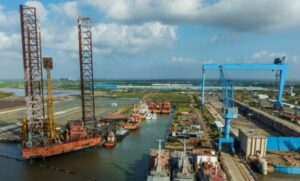
Traditional ports rely heavily on fixed structures and constant intervention—particularly dredging—to maintain operability. While effective in the short term, this approach creates a recurring cycle of sediment disruption, rising costs, and environmental strain. Maintaining depth and stability becomes an ongoing battle rather than a sustainable solution.
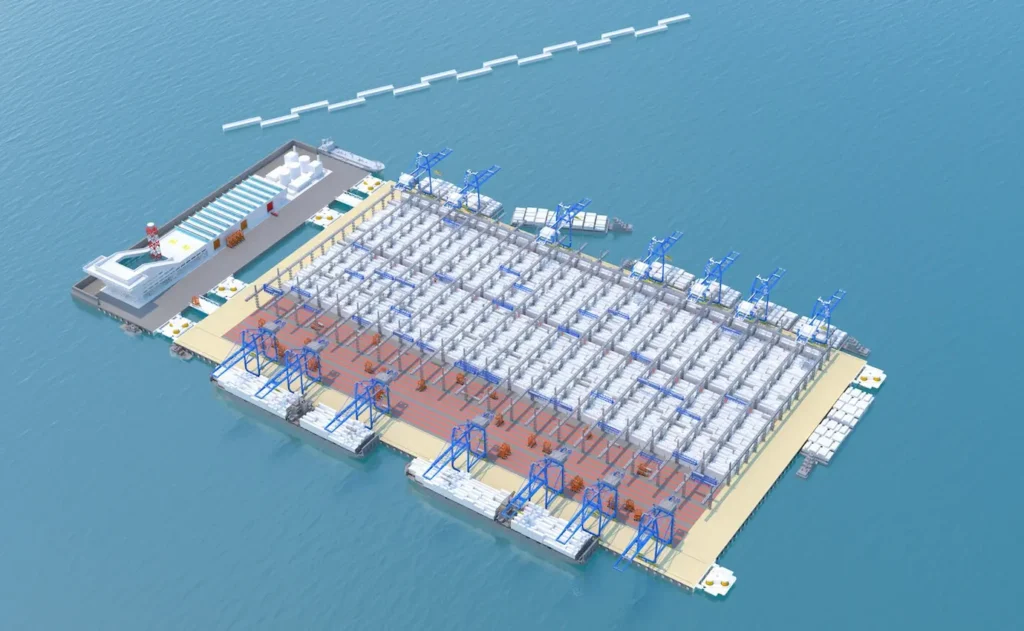
A new concept is beginning to gain traction: modular floating port infrastructure.
These next-generation platforms are designed to be flexible, scalable, and mobile. Instead of being permanently fixed to the seabed, they can be deployed where needed, expanded incrementally, and repositioned as trade patterns or environmental conditions change. This introduces a level of operational agility that conventional ports struggle to achieve.
One of the most significant advancements is the development of anchorless systems. Using ballast control and thrusters, these platforms can maintain precise positioning without touching the seabed. When paired with dedicated power units or shore-based energy sources, they become self-sustaining assets—capable of operating independently while leaving minimal environmental footprint.
Beyond logistics, these floating systems are being designed with environmental integration in mind. Built-in filtration and eco-restorative features can help reduce turbidity, stabilize sediments, and gradually improve water quality. Instead of degrading marine ecosystems, infrastructure begins to support them.
Energy is another key advantage. Floating platforms can integrate renewable generation—solar arrays, wind systems, and wave energy technologies such as oscillating water columns. This allows them to power their own operations while contributing to port electrification efforts, including shore power for vessels and support for electric harbor craft.
Operationally, the impact could be significant. Floating infrastructure can act as offshore extensions of congested ports—handling cargo staging, maintenance, or support services without requiring major onshore expansion. This reduces berth pressure and enables ports to scale capacity without large-scale land reclamation or reconstruction.
Industry initiatives such as Blue Vector Ocean Alliance are already pushing these concepts toward real-world deployment. Pilot projects are expected to test how these systems perform in live environments—evaluating positioning accuracy, energy generation, environmental benefits, and integration with existing port operations.
The direction is clear: maritime systems are evolving to operate in partnership with the ocean. Port infrastructure is now beginning to follow.