Panama Cancels Canal Port Concessions, Hands Temporary Control to Maersk and MSC
Two strategic terminals at the heart of the Panama Canal are changing hands — and the ripple effects could reach far beyond Central America.
Panama has formally annulled long-held port concessions tied to Hong Kong’s CK Hutchison and installed temporary operators, escalating a dispute that now touches geopolitics, global trade flows, and investor confidence.
A Legal Shift With Operational Consequences
Following publication in the official gazette, Panama’s Supreme Court ruling has finalized the cancellation of concessions previously held by Panama Ports Company (PPC), a subsidiary of Hong Kong-listed CK Hutchison Holdings.
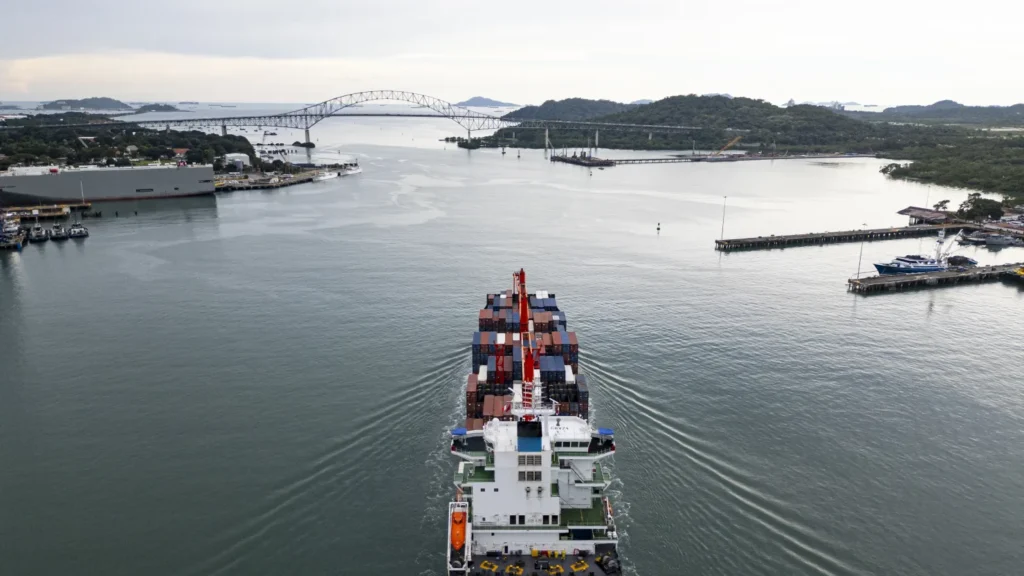
The concessions covered the Balboa and Cristobal terminals, located at opposite ends of the Panama Canal — a waterway that carries roughly 5% of global maritime trade.
For nearly 30 years, PPC operated both facilities.
Now, by executive decree, the Panama Maritime Authority (AMP) has assumed control to ensure continuity of operations.
Panama has approved temporary concessions of up to 18 months:
Balboa will be run by APM Terminals Panama, a subsidiary of Maersk.
Cristobal will be operated by TIL Panama, part of Mediterranean Shipping Company (MSC).
President Jose Raul Mulino stated that the move does not constitute expropriation, but rather temporary use of assets while the state determines their value and develops a new competitive concession framework.
Tensions on the Ground
CK Hutchison has strongly rejected the ruling, calling it unlawful and warning of legal action at both national and international levels.
According to the company, Panamanian authorities entered the terminals and instructed PPC employees to vacate, warning of potential criminal prosecution if they failed to comply. The company also claimed staff were directed not to communicate with CK Hutchison.
In its statement to the Hong Kong Stock Exchange, the conglomerate argued that the ruling and takeover pose operational and safety risks at both terminals.
Meanwhile, Hong Kong’s government expressed dissatisfaction and urged Panama to uphold contractual integrity and provide a fair business environment.
CK Hutchison’s shares fell 1.9% following the developments, in line with a broader decline in Hong Kong markets.
A Dispute With Geopolitical Undercurrents
The case unfolds against the backdrop of intensifying U.S.–China competition over strategic infrastructure.
The Panama Canal remains one of the most critical maritime chokepoints globally. Washington has been vocal about limiting Chinese-linked influence in canal-adjacent assets, and the ruling is widely viewed as a strategic win for U.S. interests.
Earlier this year, CK Hutchison notified Panama of an investment-protection treaty dispute after interest emerged from Maersk regarding the terminals. The company warned that any takeover without agreement could trigger legal action involving APM Terminals Panama.
Complicating matters further, the dispute may affect CK Hutchison’s proposed $23 billion global port sale to a consortium led by BlackRock and MSC, which includes the Panamanian assets.
For now, the AMP will oversee continuity while a new long-term concession model is prepared.
What Happens Next?
President Mulino has emphasized that employment and port operations will not be disrupted during the transition. The temporary contracts are framed as a stabilizing mechanism while the state designs a future concession process “without repeating past mistakes.”
However, arbitration claims, treaty disputes, and commercial counterclaims could follow — potentially extending the uncertainty.
For operators moving cargo through Balboa and Cristobal, the immediate priority is continuity. For investors, the concern is precedent.
Why This Matters
Canal Reliability Is Non-Negotiable With 5% of global trade transiting the Panama Canal, stability at both ends of the waterway is critical for liner schedules and chartering strategies.
Political Risk Is Rising in Port Concessions Long-term terminal agreements are no longer purely commercial — they are increasingly geopolitical.
Terminal Operators Face New Precedent The annulment of decades-old concessions may prompt reassessment of sovereign risk exposure in other strategic regions.
Crew and Operations Need Clear Communication In transition phases, safety, security, and reporting lines must remain transparent to avoid operational friction
For maritime professionals, this is more than a contract dispute.
It is a reminder that ports are strategic assets — and in today’s climate, strategic assets rarely remain outside political gravity for long.