Swire Shipping to Raise Freight Rates on New Zealand–Pacific Island Services from Mid-July
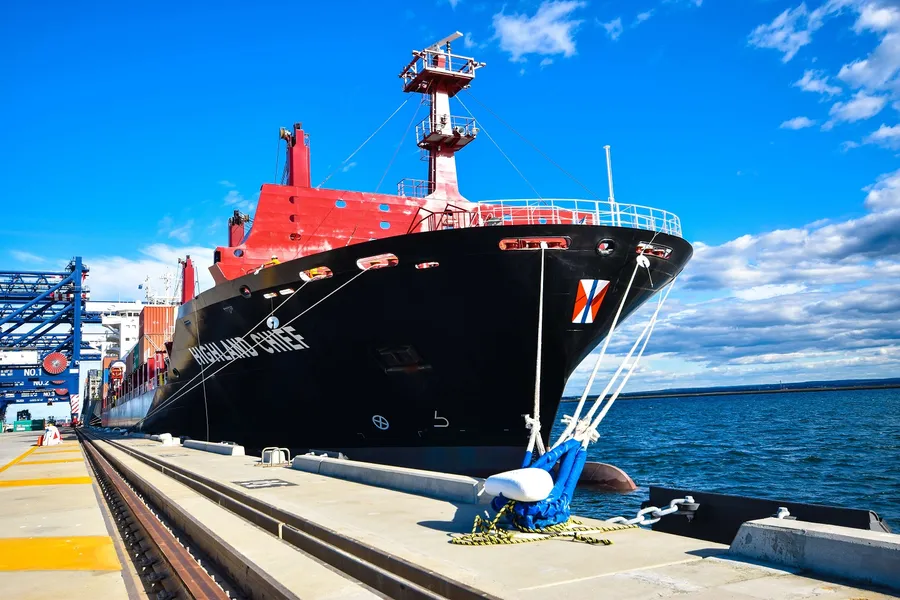
Swire Shipping has announced a General Rate Increase (GRI) on cargo moving from New Zealand to several Pacific Island destinations, citing rising operating expenses and higher vessel charter costs. The revised rates will take effect from mid-July and impact containerized shipments across key regional trade routes.
Swire Shipping will introduce a General Rate Increase (GRI) for cargo shipped from New Zealand to selected Pacific Island nations, with the new pricing applying to shipments carrying a bill of lading dated 15 July 2026 or later.
The rate adjustment covers cargo bound for American Samoa, the Cook Islands, Fiji, Niue, Samoa, Tahiti, Tonga, Tuvalu, and Vanuatu—markets where Swire Shipping provides regular liner services.
Under the revised tariff structure, customers will incur an additional US$75 per 20-foot container (TEU) and US$150 per 40-foot container (FEU).
According to the carrier, the increase is intended to offset the continued rise in operating costs, including higher vessel charter rates, which have placed additional financial pressure on regional shipping services.
Swire Shipping also noted that cargo moving on trade lanes regulated by the U.S. Federal Maritime Commission (FMC) will remain subject to the applicable regulatory notification requirements before the revised rates take effect.
The latest GRI reflects the ongoing cost challenges facing regional carriers as they balance service reliability with increasing operational expenses across Pacific shipping networks.
Why this Matters
- For shippers: Businesses exporting from New Zealand to the Pacific should factor the higher freight charges into their logistics and supply chain planning.
- For freight forwarders: The revised tariff may influence contract pricing and customer quotations for shipments after 15 July.
- For regional operators: Rising charter and operating costs continue to impact trade routes serving smaller island economies.
- For the maritime industry: The announcement highlights the cost pressures regional carriers face in maintaining reliable services across geographically dispersed markets.
Freight rate adjustments remain a common response to changing market conditions, particularly on regional trade routes with higher operating costs. Swire Shipping's latest GRI underscores the importance of balancing commercial sustainability with dependable connectivity across the Pacific.
Source: Container News
Related Articles


Wallenius Wilhelmsen Secures $420 Million Contract Extension with European Automaker
Wallenius Wilhelmsen has secured another major long-term agreement, extending its partnership with a leading European automotive manufacturer in a deal valued at approximately $420 million. Beyond providing stable business through 2031, the contract highlights how sustainability is becoming an…

Norway Invests $130 Million to Accelerate Fleet of Zero-Emission Vessels
Norway has reinforced its position as a global leader in green shipping by committing more than $130 million to build 10 new zero-emission vessels. The investment is part of a broader strategy to decarbonise domestic shipping and develop the fuel infrastructure required to support the industry’s…