Moscow vs Tehran: Discount Battle Intensifies as China Becomes the Main Prize
As India pulls back from Russian crude, Moscow and Tehran are fighting for the same buyers in China — and the discounts are getting deeper. For shipowners, charterers, and traders operating in Asian waters, this isn’t just geopolitics. It’s reshaping cargo flows, freight patterns, floating storage, and sanction risk exposure across the region.
India Steps Back — Barrels Move East
India’s imports of Russian crude could fall by as much as 40% from January levels, dropping to around 600,000 barrels per day, according to Rystad Energy. Those displaced volumes need a home. And increasingly, that home is China. But there’s a complication. China’s independent refiners — the so-called “teapots” — have traditionally absorbed discounted and sanctioned barrels. Yet their refining capacity represents only about one quarter of China’s total processing capability, and they operate under state-controlled import quotas. In other words: there’s demand, but it isn’t unlimited.
Discounts Deepen: The Price War Is On
With fewer Indian buyers and limited Chinese absorption capacity, both
Russia and Iran are slashing prices. Russia’s Urals crude is now trading at roughly $12 below ICE Brent, widening from a $10 discount last month.
Iran’s Iranian Light is selling at up to $11 below the global benchmark, compared with $8–$9 discounts in December. The two suppliers are competing for the same pool of Chinese private refiners — and margins are tightening.
Storage at Sea Is Rising
Not all the crude is finding immediate buyers. According to Kpler:
Around 48 million barrels of Iranian oil are now floating at sea — up from roughly 33 million earlier this month. – –
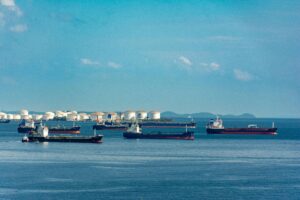
Much of it is accumulating in the Yellow Sea and the Singapore Strait.
Russian crude stored in Asian waters stands at about 9.5 million barrels. Sanctioned oil building up in both offshore and onshore storage suggests refiners may be nearing operational limits. Meanwhile, major Chinese state-owned refiners have largely avoided Iranian barrels and have scaled back participation in Russian trades.
Russia Gaining Ground — For Now
Despite the congestion, Russian crude appears to be winning market share. Deliveries to Chinese ports averaged 2.09 million barrels per day in the first 18 days of February, up about 20% from January and nearly 50% higher than December levels. By comparison, Iranian exports to China are running at roughly 1.2 million barrels per day so far this year, down about 12% year-on-year. Market analysts suggest Russian barrels are currently viewed as carrying comparatively lower geopolitical risk — partly due to optimism surrounding potential negotiations between Moscow and Kyiv, involving discussions with U.S. leadership.
Geopolitical Risk Still Looms
Iran’s position remains fragile. A potential U.S. strike or disruption to flows through the Strait of Hormuz could significantly impact exports. With American forces positioned across the Middle East and diplomatic tensions fluctuating, shipping risk premiums in the region remain highly sensitive. For tanker operators, any escalation could immediately alter voyage planning, insurance rates, and route selection.
Why This Matters
Freight & Tanker Markets: More barrels heading east mean longer-haul voyages and potential support for Aframax and VLCC demand — but floating storage can distort rates.
Sanctions & Compliance Risk: Operators trading discounted crude must navigate evolving regulatory scrutiny, particularly in Asia.
Refinery Margins: Deep discounts help Chinese teapots — but capacity limits cap demand growth.
Geopolitical Volatility: A disruption in the Strait of Hormuz or escalation in Ukraine could instantly reshape crude flows again.
For chief engineers, chartering desks, and shipping executives alike, this is a reminder: crude oil trade flows are no longer just about supply and demand — they are increasingly about politics, sanctions, and who can absorb risk. And right now, China is the battlefield.