The Ecosailor

Middle East Energy Shock: Oil and LNG Disruptions Send Ripples Through Global Shipping

Back

Middle East Energy Shock: Oil and LNG Disruptions Send Ripples Through Global Shipping

Middle East Energy Shock: Oil and LNG Disruptions Send Ripples Through Global Shipping

A widening conflict involving the United States, Israel, and Iran is now directly affecting the Middle East’s energy infrastructure. Production cuts, refinery shutdowns, and shipping disruptions around the Strait of Hormuz are tightening global supply and placing the maritime industry on high alert.
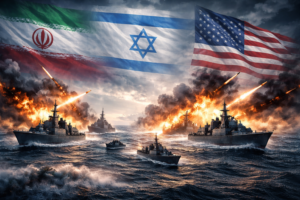
Production Across the Gulf Faces Sudden Slowdown

Energy production across several Gulf states has been disrupted as the conflict intensifies, forcing operators to scale back output and suspend key facilities.
In Iraq, oil production from the country’s main southern fields has dropped dramatically—falling roughly 70% to about 1.3 million barrels per day from around 4.3 million bpd before the crisis. The sharp decline comes as exports through the Strait of Hormuz remain effectively blocked.
Operators in Iraqi Kurdistan have also halted production at several fields as a precaution. The region had previously exported about 200,000 barrels per day to Turkey through pipeline infrastructure.
Elsewhere in the Gulf, Kuwait Petroleum Corporation declared force majeure and began curbing production after export routes were disrupted. In the United Arab Emirates, Abu Dhabi National Oil Company confirmed it is actively managing offshore production levels to maintain operational flexibility as storage constraints begin to build.
Even Saudi Arabia, the world’s largest oil exporter, has seen operational interruptions. Authorities temporarily suspended activity at the 550,000-barrel-per-day Ras Tanura Refinery and have begun redirecting crude shipments from eastern Gulf ports to Yanbu Industrial Port on the Red Sea coast.
Natural gas exports have also been hit. QatarEnergy halted operations at several liquefied natural gas facilities and declared force majeure, affecting plants responsible for roughly 20% of global LNG supply.

Shipping Risks Escalate at a Critical Maritime Chokepoint

The conflict has placed enormous pressure on maritime traffic through the Strait of Hormuz, one of the most strategically important shipping lanes in the world.
The narrow passage normally carries close to 20% of global oil and LNG shipments. But vessel traffic has slowed sharply after multiple ship attacks and escalating security threats in the region.
Iran’s Islamic Revolutionary Guard Corps has warned that vessels attempting to pass through the strait could face military action. Reports indicate that a tanker flying the Marshall Islands flag was struck in the area, while additional incidents involving commercial ships have been logged by United Kingdom Maritime Trade Operations.
The insurance market has reacted quickly. Several major marine insurers have withdrawn war-risk coverage for ships operating near Iran and in parts of the Gulf, significantly raising operational costs for shipowners.
At the same time, maritime analytics firm Windward reports widespread interference affecting navigation systems. More than 1,600 vessels are experiencing GPS and AIS disruption across a corridor stretching from Kuwait to Oman, adding another layer of risk for ships operating in the region.
The United States Navy has suggested that naval escorts could be provided for tankers transiting the strait, though shipowners remain cautious about resuming normal operations without stronger security assurances.

Asian Energy Importers Move to Secure Supply

The supply disruption is already sending shockwaves through global energy markets, particularly in Asia.
Refiners in China have begun reducing refinery throughput or advancing scheduled maintenance as crude cargoes from the Gulf face delays or cancellations. Several other Asian refiners are also trimming operations.
In India, the situation is especially sensitive. With crude reserves covering only around 25 days of demand, authorities have moved quickly to secure alternative supply, including increased imports from Russia.
New Delhi has also reduced natural gas allocations to certain industries and instructed refiners to prioritise liquefied petroleum gas (LPG) production, which remains a key household fuel.
Meanwhile, Indonesia is exploring higher crude purchases from the United States to compensate for reduced Middle Eastern flows.
Alternative supply from Brazil, West Africa, and the United States remains available. However, these cargoes take significantly longer to reach Asian markets and are becoming increasingly expensive as freight rates climb.

Why This Matters

For shipowners: War-risk premiums and security threats around the Strait of Hormuz could reshape tanker routes and tighten vessel availability.
For seafarers: Increased naval activity, navigation interference, and security risks are making Gulf transits more complex and potentially dangerous.
For charterers and operators: Longer voyage distances and supply shifts may push tanker rates higher and create volatility in both crude and LNG shipping markets.
For global energy trade: The disruption highlights how quickly geopolitical tension in a single chokepoint can impact nearly one-fifth of the world’s seaborne energy supply.

For the maritime industry, the unfolding crisis is a reminder that energy security and shipping security are tightly linked. As tensions persist around the Gulf, shipowners, operators, and seafarers will be navigating not only volatile markets—but one of the world’s most strategically sensitive waterways.

Leave a Comment

Your email address will not be published. Required fields are marked *

Leave a Comment

Your email address will not be published. Required fields are marked *