Japan Certifies First Autonomous RoRo for Commercial Service
Japan has taken another decisive step toward autonomous shipping, certifying a domestic RoRo vessel for fully autonomous navigation during commercial operations. The milestone reflects a broader push to modernise coastal logistics while addressing workforce and safety challenges at sea.
A Working RoRo Goes Autonomous
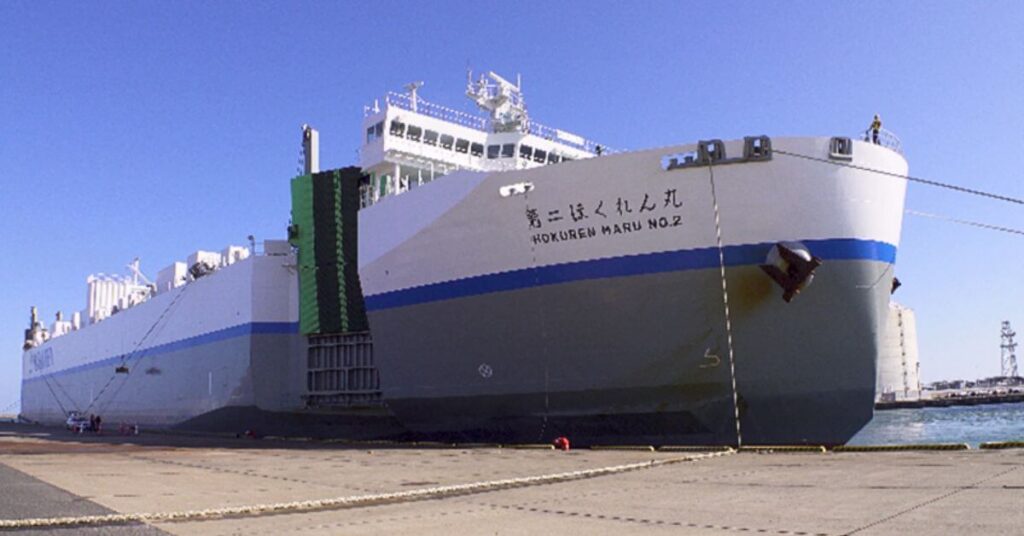
A 6,890-dwt roll-on/roll-off vessel, Hokuren Maru No. 2, has become the first RoRo to meet Japan’s licensing requirements for fully autonomous navigation in commercial service. Operated by Kawasaki Kisen Kaisha (“K” LINE), the vessel has now cleared both classification and statutory approvals, marking a practical shift from trials to real-world deployment.
Built in 2016 and measuring 173 metres, the ship operates on a demanding domestic route between Kushiro in Hokkaido and Hitachi, north of Tokyo. The corridor is known for heavy fishing traffic, limited visibility, and frequent rough weather—making it an ideal testing ground for autonomous navigation systems.
From Retrofit to Certification
The vessel was retrofitted with a network of sensors feeding real-time data into an autonomous navigation system. Development began in 2023 through a collaboration between K Line, Japan Radio, and YDK Technologies. Initial sea trials in late 2023 showed the system achieving a 96% operational rate in live conditions. Since then, the team has refined the technology, including enhancements to fully autonomous decision-making and automated speed control. In early 2026, the vessel reached a critical milestone:
Autonomous certification granted by ClassNK (Nippon Kaiji Kyokai) on January 27
Statutory inspection passed under Japan’s Ministry of Land, Infrastructure, Transport and Tourism on February 9
With both approvals in place, the ship is now cleared for autonomous navigation during commercial operations.
Part of a Larger National Push
The project sits within the MEGURI2040 initiative, launched by The Nippon Foundation in 2020. Its goal is ambitious: enable 50% of domestic vessels to operate unmanned by 2040. The driver is clear—Japan faces a shrinking and ageing maritime workforce. Autonomous systems are being positioned not as replacements, but as tools to reduce onboard workload, enhance safety, and cut human-error-related incidents.
Earlier phases of the programme have already demonstrated:
Autonomous navigation in congested waters such as Tokyo Bay
Long-distance voyages approaching 500 miles
Continuous operations exceeding 18 hours
Automated berthing capabilities
Building Toward Commercial Reality
The Hokuren Maru No. 2 is the third vessel in the programme to achieve autonomous classification. It follows a certified RoPax ferry and the development of Genbu, a purpose-built autonomous containership (8,597 dwt / 140 TEU).
Backed by a consortium of 53 companies, the initiative is also contributing to the development of international standards for autonomous shipping. The data collected from these vessels is expected to accelerate commercial adoption while strengthening supply chain resilience.
Why This Matters
For shipowners: Autonomous-ready vessels could reduce crewing pressure and improve operational consistency on short-sea routes
For seafarers: Systems aim to ease workload and enhance safety, not eliminate roles—especially in high-risk navigation environments
For operators: Improved route efficiency and decision support can reduce delays in congested or weather-affected waters
For the industry: Japan is setting a practical benchmark for regulatory approval and real-world deployment of autonomous ships
Japan’s first autonomous RoRo signals that smart shipping is moving beyond trials into daily operations. For the global maritime sector, the question is no longer if autonomy will scale—but how fast others can follow.