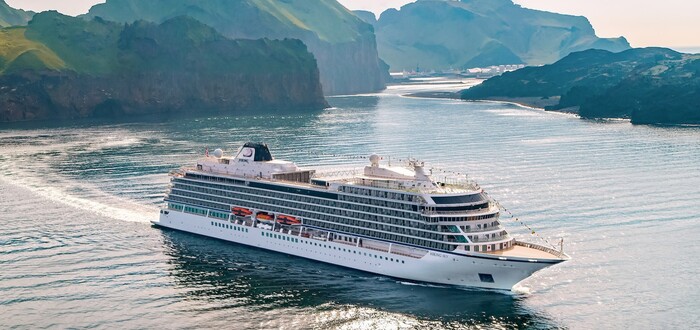
Italian shipbuilder Fincantieri has floated out what it describes as the world’s first hydrogen-fueled cruise ship, Viking Libra, at its Ancona yard. The vessel, ordered by Viking, is scheduled for delivery in late 2026 and marks a notable shift in propulsion strategy for passenger shipping.
Designed to carry just under 1,000 passengers across 499 cabins, the 54,300 GT vessel maintains Viking’s small-ship model. At 239 meters in length, it is positioned for premium, destination-focused itineraries rather than mass-market cruising.
What sets Viking Libra apart is its hybrid propulsion setup. The ship will integrate liquefied hydrogen with fuel cell technology, allowing for zero-emission operations under specific conditions. This capability is expected to open access to environmentally restricted zones—areas where conventional fuel-powered cruise ships are increasingly limited by regulation.
For the cruise industry, this project reflects a broader transition already underway. While LNG has dominated recent newbuild orders as a lower-emission alternative, hydrogen is gaining traction as a longer-term solution aligned with full decarbonization goals. That said, challenges remain—particularly around onboard storage, fuel availability, and overall cost efficiency.
The launch also highlights the long-standing collaboration between Fincantieri and Viking, which began in 2012. Including current orders and options, their joint pipeline now stands at 26 vessels, underscoring sustained investment in next-generation tonnage.
From an industrial perspective, the Ancona shipyard plays a central role. Spanning roughly 360,000 square meters, the facility is equipped to build vessels up to 60,000 GT and handle heavy lifts of up to 500 tons. With a monthly hull production capacity of around 1,200 tons, the yard has delivered over 20 ships since 2009.
Looking ahead, Fincantieri plans to expand Ancona’s output while advancing its “Operations Excellence” program. This includes deploying automation, robotics, augmented reality, and AI-driven systems—tools aimed at improving build precision, reducing turnaround times, and enhancing workforce productivity.