Hormuz on Edge: Naval Coalition Talk as Gulf Attacks Disrupt Global Shipping
Tensions across the Gulf have escalated sharply, with attacks on shipping, energy infrastructure, and port zones disrupting one of the world’s most critical maritime corridors. Calls for a multinational naval presence signal a possible shift toward coordinated security operations—but uncertainty remains high.
War Updates: Maritime & Energy Frontline
1. Push for Allied Naval Deployment in Hormuz
U.S. President Donald J. Trump has called for allied warships to join U.S. forces in securing the Strait of Hormuz.
Countries mentioned include China, France, Japan, South Korea, and the United Kingdom, though no confirmed deployments yet.
The move hints at a potential coalition-led maritime security framework to reopen disrupted shipping lanes.
2. U.S. Escalates Pressure on Iranian Coastal Targets
U.S. forces continue strikes along Iran’s Gulf coastline, including a major operation targeting facilities on Kharg Island.
Oil infrastructure has been deliberately spared—for now—but Washington warns this restraint could change if shipping interference continues.
Additional measures include possible naval escorts and a federal insurance backstop to encourage vessel transits.
3. Shipping Through Hormuz Near Standstill
Traffic through Hormuz has collapsed by ~97%, with only minimal crossings recorded.
Threats impacting navigation include:
– Missile and drone strikes
– Naval mine risks
– Small craft harassment
– Widespread GPS jamming
Operators are avoiding the route, effectively paralyzing a corridor that carries ~25% of global seaborne oil trade.
4. LNG Infrastructure Hit in Qatar
Missile strikes reportedly hit facilities in Ras Laffan Industrial City, linked to the South Pars Gas Field.
Damage to one of the world’s largest LNG production zones raises concerns about global gas supply stability.
The situation has triggered strong warnings from Washington, with threats of major retaliation if attacks continue.
5. Tanker Incident Near Fujairah Highlights Ongoing Risk
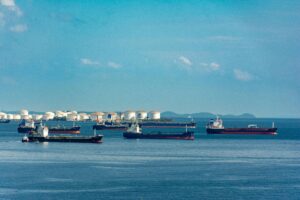
A tanker was struck while anchored off Fujairah, sustaining minor damage with no crew injuries.
Investigations suggest falling debris from intercepted threats rather than a direct hit.
The vessel is believed to be the LPG tanker Gas Al Ahmadiah, though identification was complicated by GPS interference.
The incident underscores persistent “low-intensity, high-frequency” threats even in anchorage zones.
6. Emerging “Controlled Transit” Model
Iran appears to be exerting selective control over vessel movements, with some ships rerouting through Iranian territorial waters.
This signals a potential shift toward a permission-based transit system, increasing operational uncertainty for global shipping.
7. Disruption Spreads Beyond the Gulf
AIS manipulation, “dark fleet” operations, and signal interference are complicating vessel tracking.
Iranian export strategies are shifting, with alternative routes emerging outside Hormuz.
Maritime risk is no longer localized—parallel security incidents are now reported in other regions, including the Black Sea.
Why This Matters
For shipowners: Insurance, routing, and chartering decisions are being reshaped in real time—Hormuz is no longer a reliable corridor.
For seafarers: Elevated threat levels—from missile debris to GPS spoofing—mean higher onboard risk even at anchor.
For operators: Voyage planning is becoming unpredictable, with rerouting, delays, and compliance challenges increasing costs.
For the industry: A prolonged disruption could redraw global energy trade routes and accelerate alternative supply chain strategies.
This is no longer just a regional conflict—it’s a direct stress test on global maritime trade, with the Strait of Hormuz at its center.