Maersk Slips Into Ocean Loss as Liner Market Turns — 1,000 Jobs to Go
The container cycle has clearly shifted.
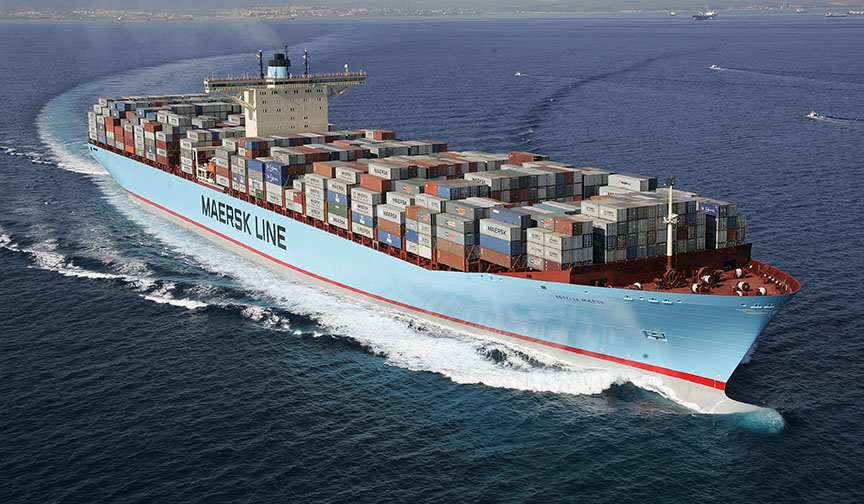
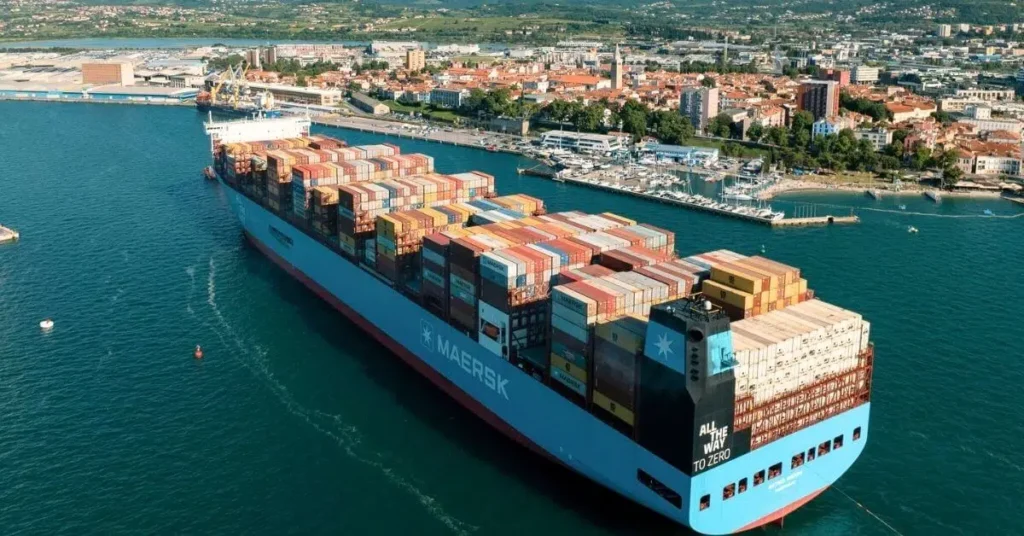
Maersk has reported a fourth-quarter loss in its ocean division and announced 1,000 job cuts, underscoring what many in the industry already feel: the pandemic-era boom is firmly behind us, and a tougher freight market is taking shape.
Ocean division back in the red
Maersk’s ocean business posted an EBIT loss of $153 million in Q4 2025, a sharp reversal from the $567 million profit in the previous quarter — and a dramatic fall from the $1.6 billion earned in Q4 2024.
The Danish carrier confirmed that cost discipline is now a top priority, announcing 1,000 layoffs in 2026 as part of wider efficiency measures. At the same time, the group unveiled a DKK 6.3 billion ($1 billion) share buyback programme, signalling confidence in its balance sheet despite operational headwinds.
CEO Vincent Clerc described 2025 as a year in which global trade and supply chains continued to be reshaped by “evolving geopolitics” — a diplomatic way of acknowledging the instability that has redefined trade lanes, transit times, and cost structures.
Not just Maersk
Maersk is not alone.
Japan’s Ocean Network Express (ONE) reported a Q4 2025 operating loss of $84 million and a net loss of $88 million, with CEO Jeremy Nixon warning of a “challenging operating environment.”
Analysts say the pressure is structural, not temporary.
Freight rates have continued to soften ahead of Chinese New Year, according to Linerlytica, with carriers struggling to halt the slide. Freightos warns the industry is entering a downcycle as a record wave of newbuildings hits the water, adding capacity into a market where demand growth is modest.
Drewry’s latest liner financial outlook goes further, suggesting the industry is approaching a “structural reset.” Pandemic windfalls have evaporated. Freight rates are normalising. The massive orderbook is delivering ships into an already crowded market.
The message from consultants is consistent:
Trade the boom mindset for discipline.
Capacity, Suez and the 6–8% question
A key variable now is the Red Sea.
Much of the industry’s recent capacity tightness has been artificially created by longer voyages around the Cape of Good Hope. A large-scale return to Suez Canal transits would effectively release 6–8% of global container capacity, according to Xeneta.
That capacity swing alone could significantly deepen oversupply.
AlixPartners advises carriers to prepare accordingly: push aggressive cost-saving programmes, manage capacity through slow steaming and vessel idling, and maintain strict capital discipline to avoid repeating past boom-and-bust cycles.
Maersk’s own 2026 outlook reflects this uncertainty. The company forecasts full-year EBIT ranging anywhere from a $1.5 billion loss to a $1 billion profit, depending largely on how and when Red Sea routes stabilise.
That is an unusually wide spread — and a clear signal that volatility remains high.
A different phase of the cycle
For much of 2021–2023, liner operators were managing record cash flows and capacity shortages. Today, the conversation has shifted to:
Cost containment
Capacity management
Margin protection
Capital discipline
Balance sheets remain strong across most major carriers. But revenue is under pressure, and the market is testing how disciplined operators can remain when rates fall toward pre-Suez disruption levels.
For shipowners, operators, and technical teams, this means a renewed focus on efficiency — from bunker consumption to crewing structures and fleet deployment strategies.
The easy money phase is over. Execution now matters more than expansion.
Why This Matters
For shipowners: Oversupply risk is real. Charter rates and asset values could face renewed pressure if Suez reopens fully and effective capacity jumps 6–8%.
For seafarers: Cost-cutting often translates into leaner crewing and tighter operating budgets. Efficiency, fuel management, and reliability will be under sharper scrutiny.
For operators and chartering teams: Capacity discipline, slow steaming decisions, and vessel idling strategies will directly influence earnings stability.
For maritime executives and investors: Strong balance sheets provide a cushion — but capital allocation decisions in 2026 will determine who avoids repeating past value-destructive cycles.
The container market is not collapsing — but it is recalibrating.
And in this phase of the cycle, discipline will separate the resilient from the reactive.