USS John F. Kennedy Completes First Sea Trials as Ford-Class Program Advances
The U.S. Navy’s next supercarrier has taken a significant step toward operational service.
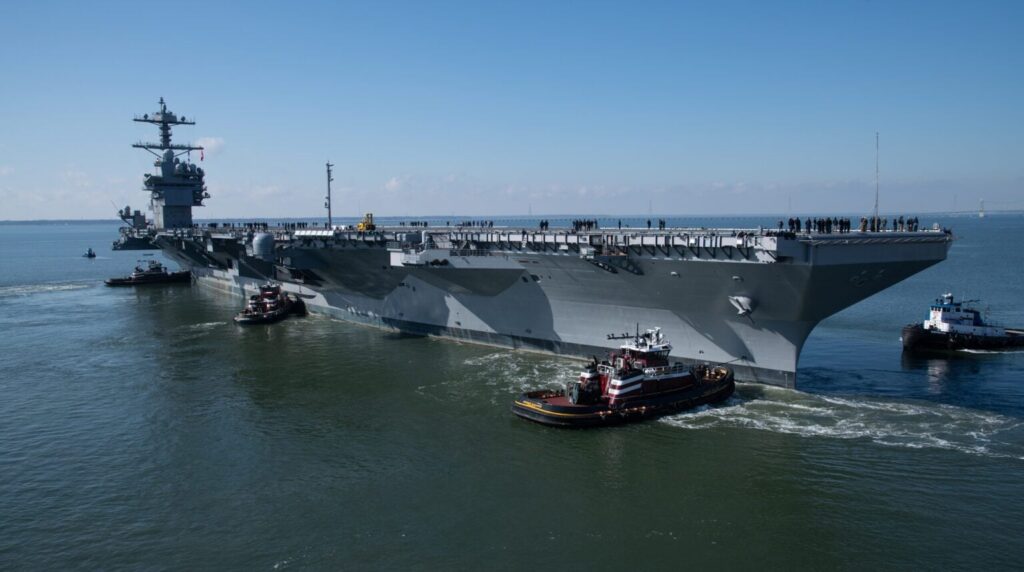
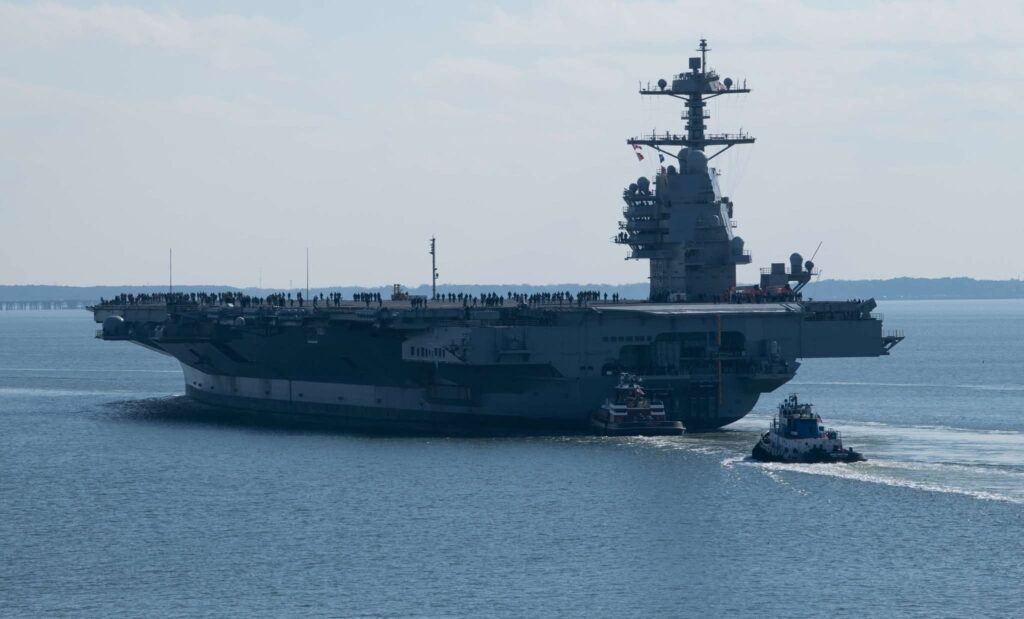
USS John F. Kennedy (CVN 79), the second vessel in the Gerald R. Ford-class series, has successfully completed its first Builder’s Sea Trials — a critical phase before formal Navy acceptance and eventual delivery.
For the U.S. naval shipbuilding sector, it marks tangible progress in one of the most complex warship programs in the world.
From Pier to Open Water
The sea trials brought together the ship’s pre-commissioning crew, engineers and shipbuilders from Newport News Shipbuilding, and personnel from multiple Navy commands.
This initial underway period focused on testing propulsion, electrical systems, navigation, and other mission-critical technologies under real operating conditions.
Before heading out to sea, the carrier completed a five-day “fast cruise” — a dockside simulation of at-sea operations designed to prepare the crew and stress-test onboard systems without leaving port.
Only after that intensive rehearsal did CVN 79 sail for open-water validation.
According to Navy officials, the trials represent a major confidence check for both the crew and the shipyard workforce responsible for delivering the 100,000-ton nuclear-powered vessel.
A Refinement of the Ford Design
As the second ship in class, John F. Kennedy benefits from lessons learned during the construction and early operational period of USS Gerald R. Ford (CVN 78).
The Ford-class carriers were designed to improve on the Nimitz-class fleet by introducing:
A next-generation nuclear propulsion plant
Increased onboard electrical generation capacity
Electromagnetic aircraft launch systems (EMALS)
Advanced weapons elevators
Reduced crew size compared to previous carriers
The class is engineered for a projected 50-year service life, with the goal of lowering total ownership costs while increasing sortie generation rates and combat flexibility.
Builder’s Trials serve as the first real-world test of how those systems perform as an integrated platform at sea.
What Comes Next
With Builder’s Sea Trials completed, the ship will return to Newport News for adjustments and corrections based on trial findings.
The next major benchmark will be Acceptance Trials, when the U.S. Navy formally evaluates the vessel before taking delivery. The timeline for that phase is still being finalized.
Delivery of USS John F. Kennedy is currently projected for 2027.
For the U.S. maritime industrial base — and particularly Newport News Shipbuilding, the nation’s sole builder of nuclear-powered aircraft carriers — this milestone reinforces continuity in large-scale naval construction at a time of rising global naval competition.
What Investigators Will Examine
As technical teams review wreckage data, maintenance records, cargo distribution logs, and crew training documentation, several operational questions emerge: • Were vehicle lashings adequate for expected sea conditions? • Were watertight integrity and drainage systems functioning properly? • Was passenger accounting accurate before departure? • Did emergency protocols trigger effectively once flooding began? For mariners, these are not abstract compliance points — they are frontline safety fundamentals.
Why This Matters
Why This Matters
Industrial capability: Carrier construction remains one of the most demanding undertakings in global shipbuilding, highlighting the depth of the U.S. naval industrial base.
Technology validation: Sea trials are the first integrated test of advanced systems designed to improve efficiency and combat readiness.
Lifecycle economics: Reduced crew requirements and improved power systems aim to cut operating costs over a 50-year service span.
Strategic signal: Progress on CVN 79 underscores continued U.S. investment in blue-water naval dominance amid intensifying maritime competition.
For maritime professionals, even outside the defense sector, programs like the Ford-class carriers illustrate where high-end ship design, power generation, automation, and lifecycle optimization are heading.
When a 100,000-ton nuclear-powered vessel clears its first sea trials, it’s more than a naval headline — it’s a benchmark in modern shipbuilding.